The Language of the Cloth
ARNELL COLLS · "DRESS FOR THE MAN YOU ARE BECOMING"
There is something profound in the choice a man makes when he gets dressed. Not simply the act of covering himself, but the quiet decision about who he wishes to be in the world. The fabrics we wear have never been merely functional. They have always been language speaking of origin, of discipline, of refinement, of aspiration.
Long before the rise of tailoring houses or fashion weeks, civilizations built their identity around the cloth they made. Egyptian priests wore linen to signal purity. Roman senators draped themselves in wool to communicate authority. Merchants of the Silk Road understood that the fabric crossing their hands held more value than most currency of the time. Fabric was, and remains, the first vocabulary of status.
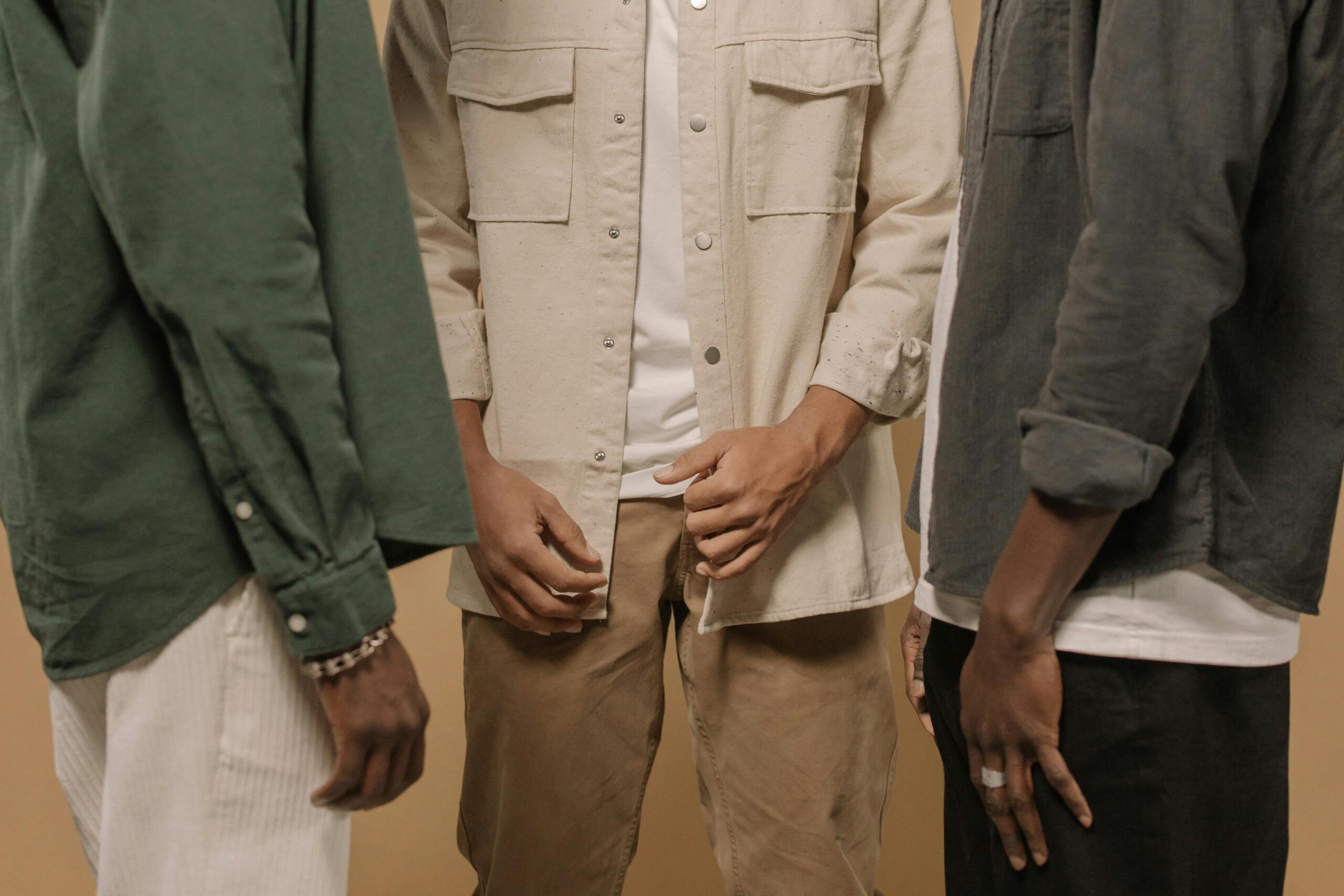
At Arnell Colls, we believe that dressing well is not vanity. It is intention. It is the deliberate act of becoming. The garments a man chooses should reflect not only where he has been, but where he is going. Rooted in this philosophy is a deep respect for the materials from which true menswear is built.
This editorial is a journey through the fabrics that have shaped menswear across centuries. From the sun-warmed cotton fields of ancient India to the highland sheep farms of Scotland, from the Italian silk looms of Como to the rugged denim mills of 19th-century America each fabric carries a story, a soul, a reason it has endured. Understanding these stories does not simply make you a more informed dresser. It makes you a more intentional one.
What follows is both an education and an invitation. An invitation to look more closely at what you wear, to feel the weight and weave of a fabric and understand its lineage, and to dress with the awareness that the best-dressed men in history were never those who simply followed trends they were the ones who understood quality, chose deliberately, and wore their garments with the quiet confidence of a man who knows exactly who he is.
Dress for the man you are becoming. It begins with the cloth.
THE PRINCIPAL FABRICS
Six Timeless Foundations of Menswear
COTTON
The Fabric of Civilization
ORIGIN
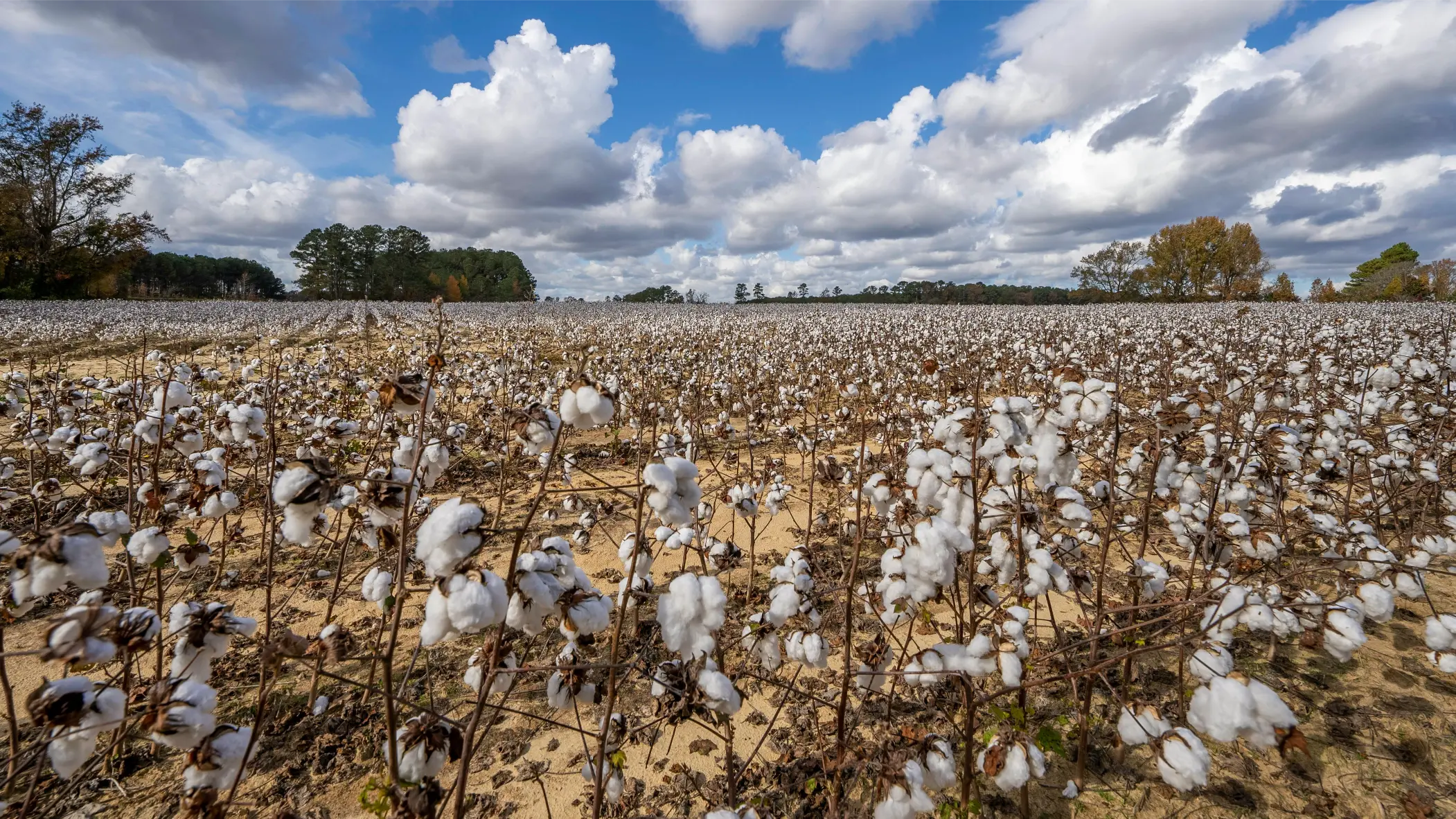
Few materials have shaped human history as quietly and comprehensively as cotton. Its story begins over seven thousand years ago, in the fertile valleys of what is now Pakistan and northwestern India, where the Indus Valley Civilization first cultivated the gossypium plant and discovered that its soft, white bolls could be spun into thread. Archaeological evidence from Mohenjo-daro one of the ancient world's most sophisticated urban centres confirms that cotton was woven into garments as early as 5000 BCE. These early craftspeople understood something that the world would slowly come to appreciate: cotton was not merely fabric. It was civilization made visible.
The ancient Egyptians cultivated their own cotton, though it was their linen that dominated ceremonial dress. In Mesoamerica, the Aztec and Inca civilizations wove cotton independently, dyeing it with extraordinary skill using pigments derived from plants and insects. The ancient Chinese traded cotton goods alongside silk. Every major civilization, it seems, arrived at cotton by necessity and stayed with it out of love.
What made cotton so universally significant was its generosity as a fiber. It grew in diverse climates, it was relatively easy to cultivate, and it rewarded patient hands with a material that was breathable, durable, soft against the skin, and capable of absorbing colour with exceptional vibrancy. It was the great democratizing fabric serving the pharaoh and the farmer, the priest and the merchant.
POPULARITY
Cotton's ascent to global dominance is inseparable from the story of trade. Arab merchants carried Indian cotton textiles across the globe for centuries before European powers began to take note. By the medieval period, cotton had become one of the most traded commodities in the known world, its fine weaves from Gujarat and Bengal commanding extraordinary prices in European markets.
The Industrial Revolution transformed cotton from a precious commodity into an industry. The invention of the cotton gin by Eli Whitney in 1793, combined with the mechanized spinning mills of Lancashire, England, created the conditions for mass textile production on an unprecedented scale. Suddenly cotton garments were within reach of the working and middle classes in a way they had never been before. Shirts, undergarments, trousers, and summer suits became more affordable, and the Western masculine wardrobe began to take on a shape that we would broadly recognize today.
Cotton became the backbone of menswear not simply because it was abundant, but because it was honest. It breathes well. It washes easily. It holds its shape under tailoring. It softens gracefully with age and wear, developing a kind of character that synthetic fabrics can never replicate. A fine cotton Oxford shirt, worn for years, becomes an almost personal garment shaped subtly by the man who wears it.
MANUFACTURING
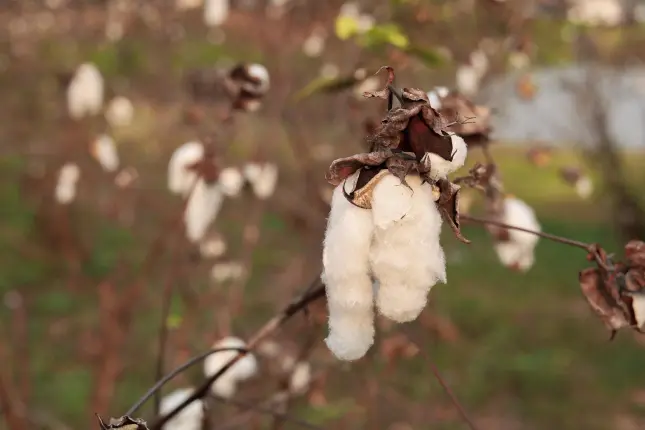
The journey from cotton boll to finished fabric is a study in transformation. It begins at harvest, where the white bolls which are, in essence, the seed casings of the cotton plant are separated from the plant either by hand or by machine. Raw cotton is then cleaned through a process called ginning, which removes seeds, debris, and excess moisture to leave behind pure cotton fibers, known as lint.
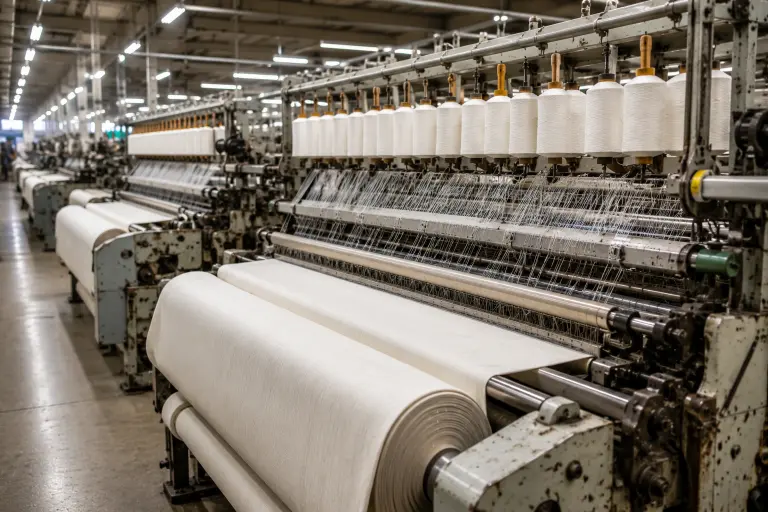
These fibers are then carded combed and aligned into a consistent mass and subsequently spun into yarn. The quality of the yarn depends enormously on the length of the individual fibers, known in the industry as staple length. Long-staple cottons, such as Egyptian Giza and Pima, produce silkier, stronger, and more lustrous yarns. It is these long-staple varieties that form the foundation of premium men's dress shirts and fine suiting linings.
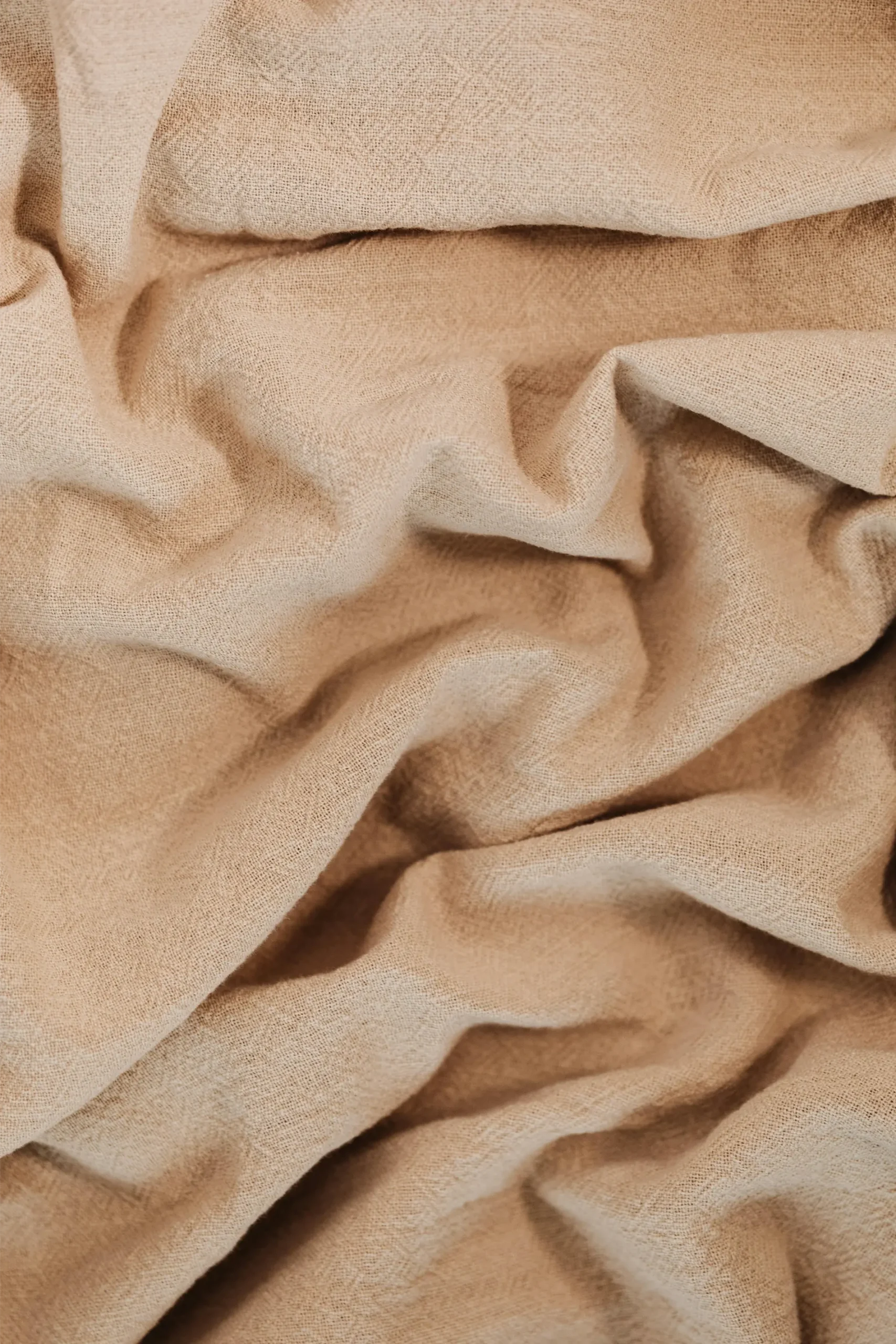
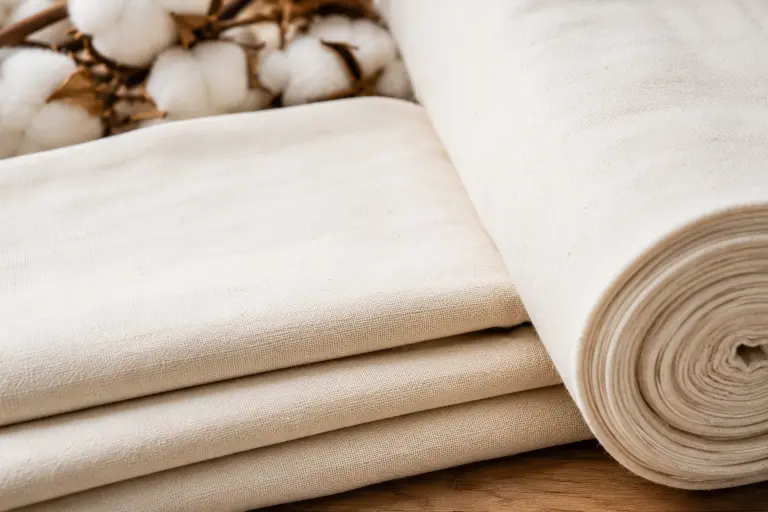
Once spun, yarn is woven or knitted into fabric. Weaving cotton produces the structured fabrics used in shirting Oxford weave, poplin, twill, and broadcloth while knitting creates the more relaxed jerseys and piqués used in polos and casualwear. The fabric is then finished: washed, bleached or dyed, and in some cases treated for additional properties such as wrinkle-resistance or mercerization, a process that increases lustre and dye absorption, creating the crisp, polished quality of fine dress cotton.
BEST WEATHER
Cotton's greatest virtue in terms of wearability is its breathability. The natural structure of the cotton fiber allows air to circulate freely through the weave, carrying moisture away from the skin and releasing it into the atmosphere. This makes cotton the premier fabric for warm climates and the warmer months of temperate seasons.
In spring and summer, a well-constructed cotton shirt is unmatched. It keeps the body cool, absorbs perspiration without discomfort, and maintains a crisp, clean appearance throughout the day. Lighter weaves poplin, batiste, voile are ideal in high heat, while heavier weaves like Oxford cloth and chambray provide more structure for cooler summer evenings or transitional autumn days.
Where cotton underperforms is in cold and wet conditions. Unlike wool, it does not retain warmth when wet, and it can become heavy and clammy in rain. The refined dresser understands this limitation and reaches for cotton as a warm-weather foundation, layering it beneath wool and cashmere as temperatures fall. In doing so, he uses cotton precisely as it was designed to be used as the skin closest to his own.
LINEN
The Fabric of Antiquity
ORIGIN
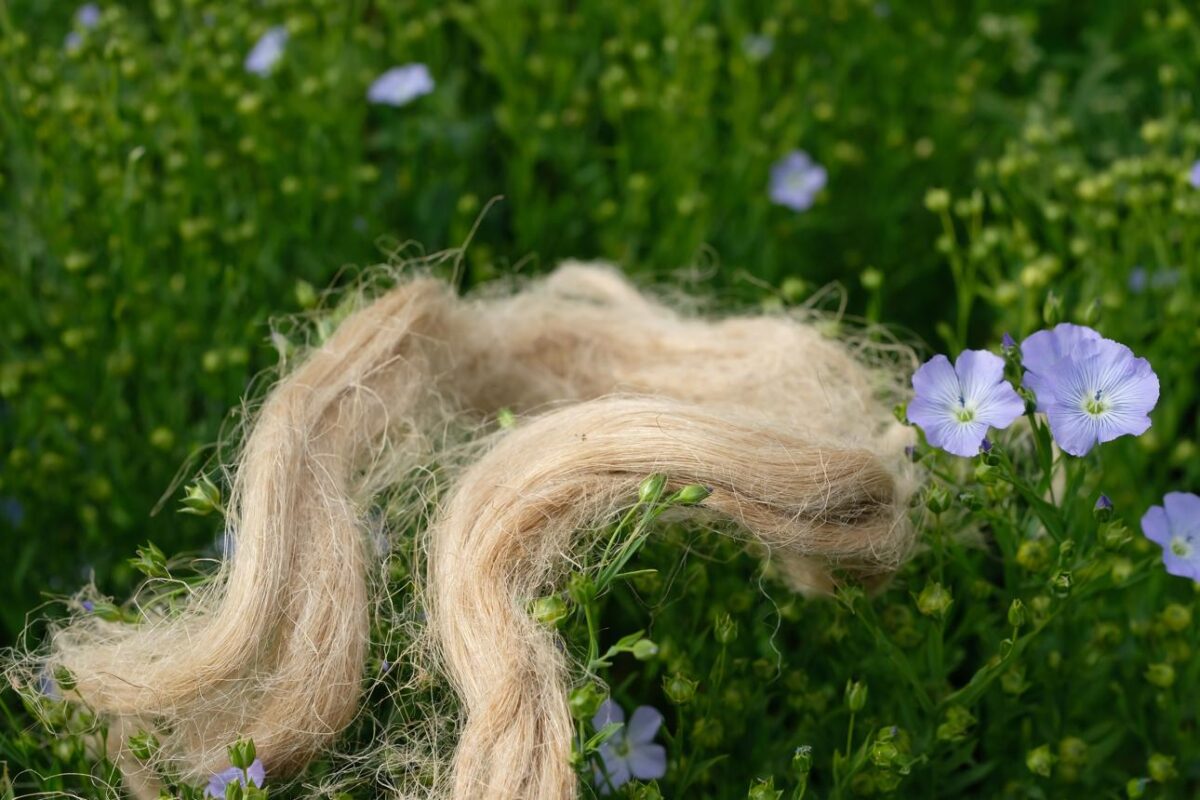
Before cotton reached the Western world, before silk had crossed the Silk Road into European consciousness, there was linen. Derived from the flax plant — Linum usitatissimum, a name that means, quite literally, "most useful" — linen is one of the oldest textiles known to humanity. Fragments of woven linen discovered in Swiss lake dwellings date to approximately 10,000 years ago, placing this fabric at the very dawn of human civilization. In ancient Egypt, linen was nothing less than sacred.
The Egyptians referred to linen as "woven moonlight" — a phrase that captures something essential about this fabric's luminous quality. It was used to wrap the mummified bodies of pharaohs and high priests, a symbol of purity and divinity. Temple priests wore only white linen, never permitting animal-derived fabrics near their sacred robes. The finest Egyptian linen, woven with as many as 200 threads per centimetre, was so sheer it was described as woven air. The Greeks called it byssus, and it was considered a luxury rivalling gold.
In ancient Rome, linen served in the sails of warships, the garments of emperors, and the bandages of soldiers. The Romans brought flax cultivation across their empire, and by the medieval period, linen production had spread throughout Europe — particularly in Flanders, Ireland, and the Rhine Valley, regions whose cool, damp climates proved ideal for flax cultivation. Irish linen, still considered among the finest in the world, traces its reputation directly to this medieval heritage.
POPULARITY
Linen's popularity in menswear has always been tied to warmth not the warmth of wool, but the warmth of climate. As European exploration opened trade routes to tropical and subtropical regions, linen became the fabric of colonial dress. British officers in India, merchants in Havana, plantation owners in the American South all turned to linen for relief from the heat. Its ability to become cooler as it absorbs moisture made it indispensable in hot, humid environments.
By the 19th century, the white linen suit had become the quintessential garment of tropical privilege. Writers and painters immortalized it: the plantation owner on his veranda, the novelist in his Havana cafe, the traveller arriving in Naples in summer. It carried a romanticism that cotton, for all its practicality, has never quite matched. Tom Wolfe wore white linen as a statement of literary independence. Tennessee Williams wrote in linen suits. The garment became synonymous with a certain kind of cultivated ease.
In contemporary menswear, linen has undergone a significant reappraisal. What was once associated with tropical tourism or weekend informality has been elevated by the great Italian and Japanese houses into something genuinely refined. Linen suits from Naples, linen shirts from Japanese artisan mills, and linen trousers with a clean, unconstructed drape are now staples of informed menswear worn not despite the fabric's natural textures and slight creasing, but because of them. Linen wrinkles. That is part of its beauty.
MANUFACTURING
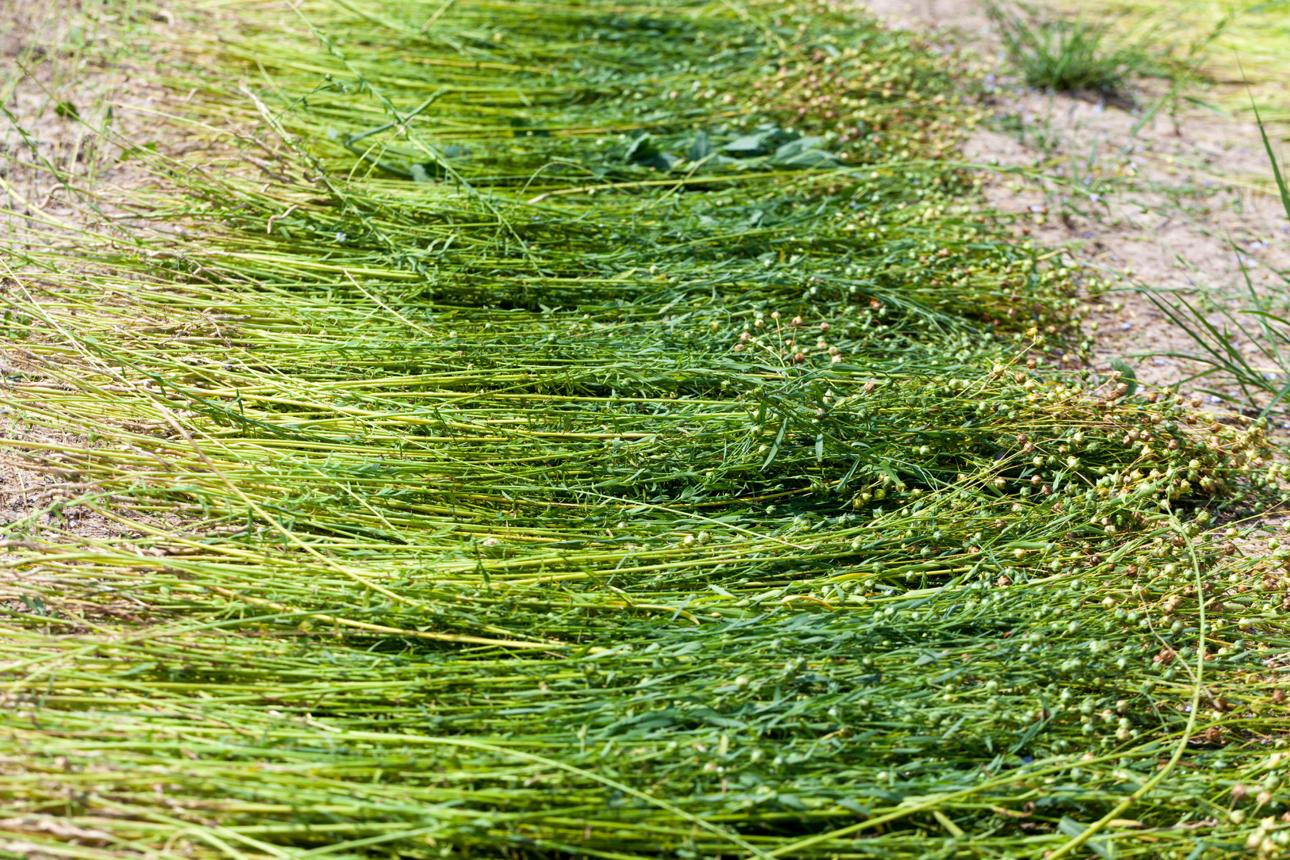
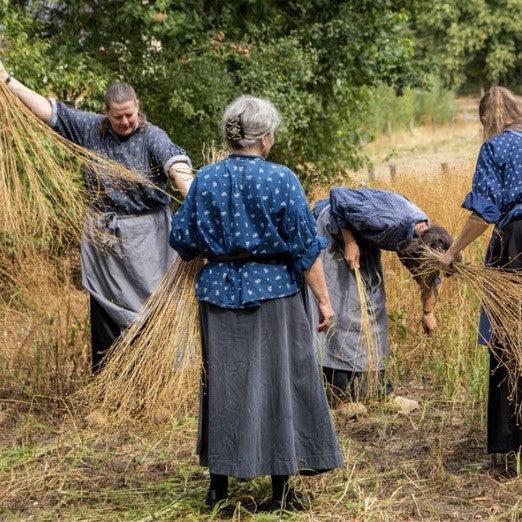
The production of linen begins with the flax plant, which is harvested by pulling roots and all rather than cutting, to preserve the full length of the valuable fibers within the stem. This careful harvesting practice has remained largely unchanged for millennia. After harvesting, the stalks undergo a process called retting, in which they are soaked in water or spread on damp fields to allow the natural decomposition of the woody outer casing, separating it from the valuable inner fibers known as bast fibers.
Following retting, the stalks are dried and then broken a process of passing them through rollers to separate the fibers from the remaining woody material. The fibers are then scutched, or beaten, to remove remaining debris, and finally hackled, or combed, into parallel alignment. What remains is a bundle of long, clean flax fibers, ready for spinning.
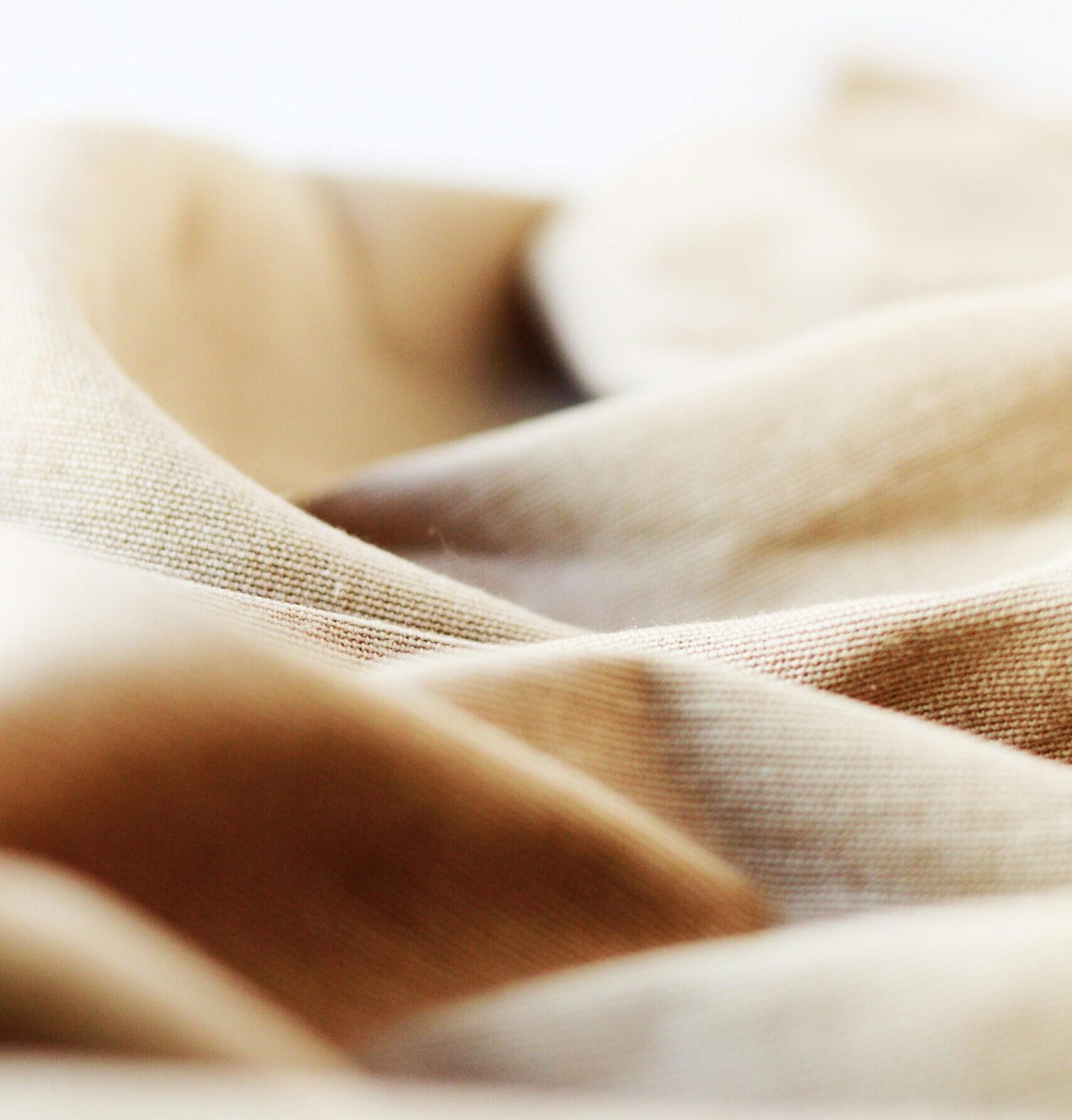
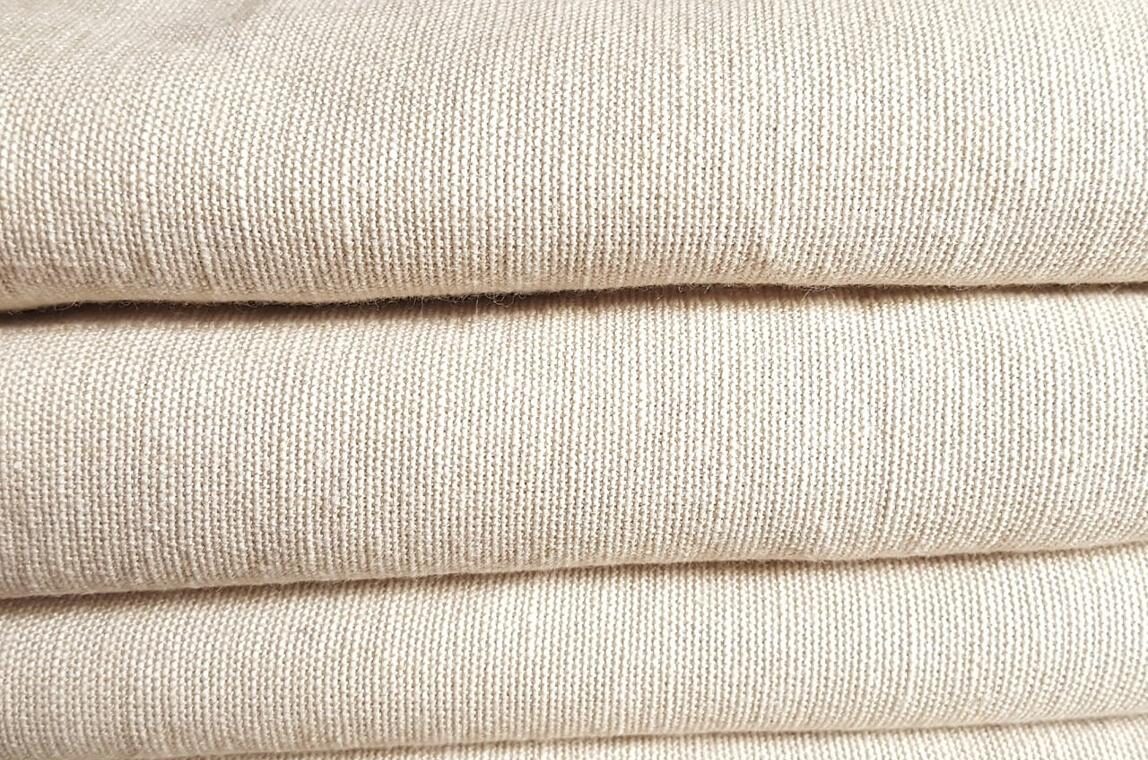
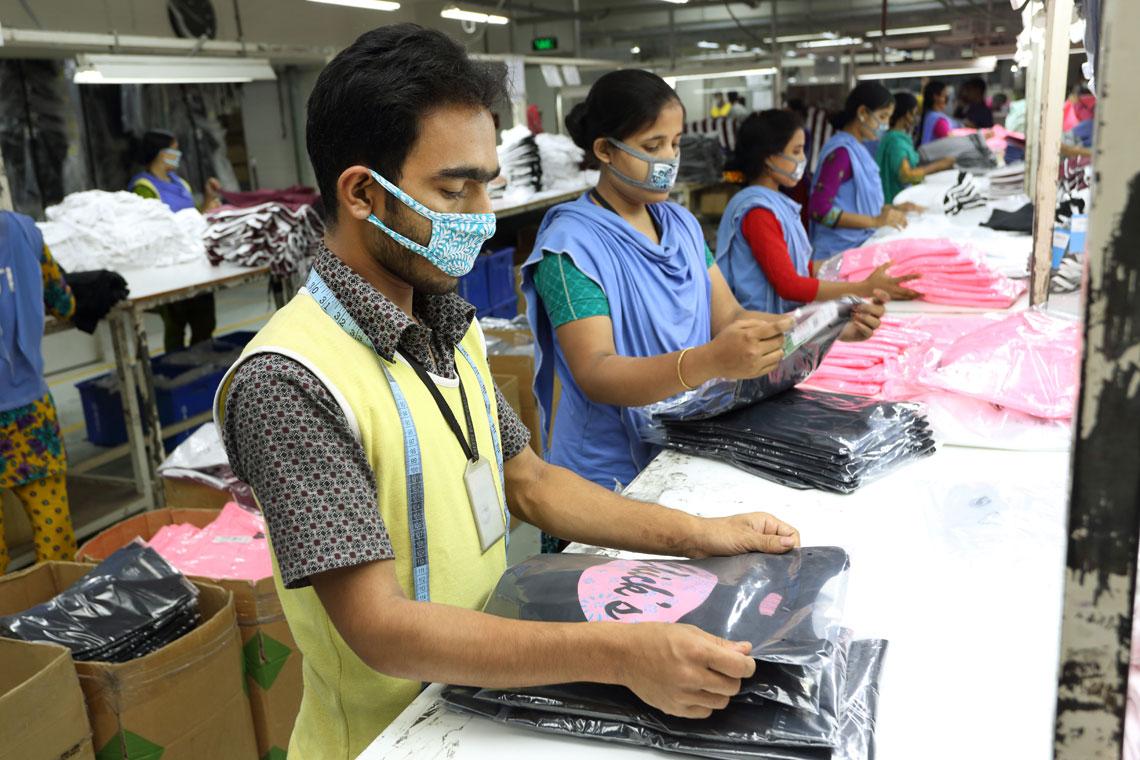
Linen yarn is spun into thread, which is then woven into fabric. The weaving of linen is more demanding than cotton; the fibers are less elastic and require careful tension management to produce a clean, even cloth. The finest linens are woven in Ireland, Belgium, and parts of Japan, where the traditional knowledge of handling flax fibers has been preserved across generations. After weaving, linen is washed, bleached if required, and finished sometimes with a light press to reduce initial wrinkling, sometimes left in its natural, slightly textured state for a more organic hand.
BEST WEATHER
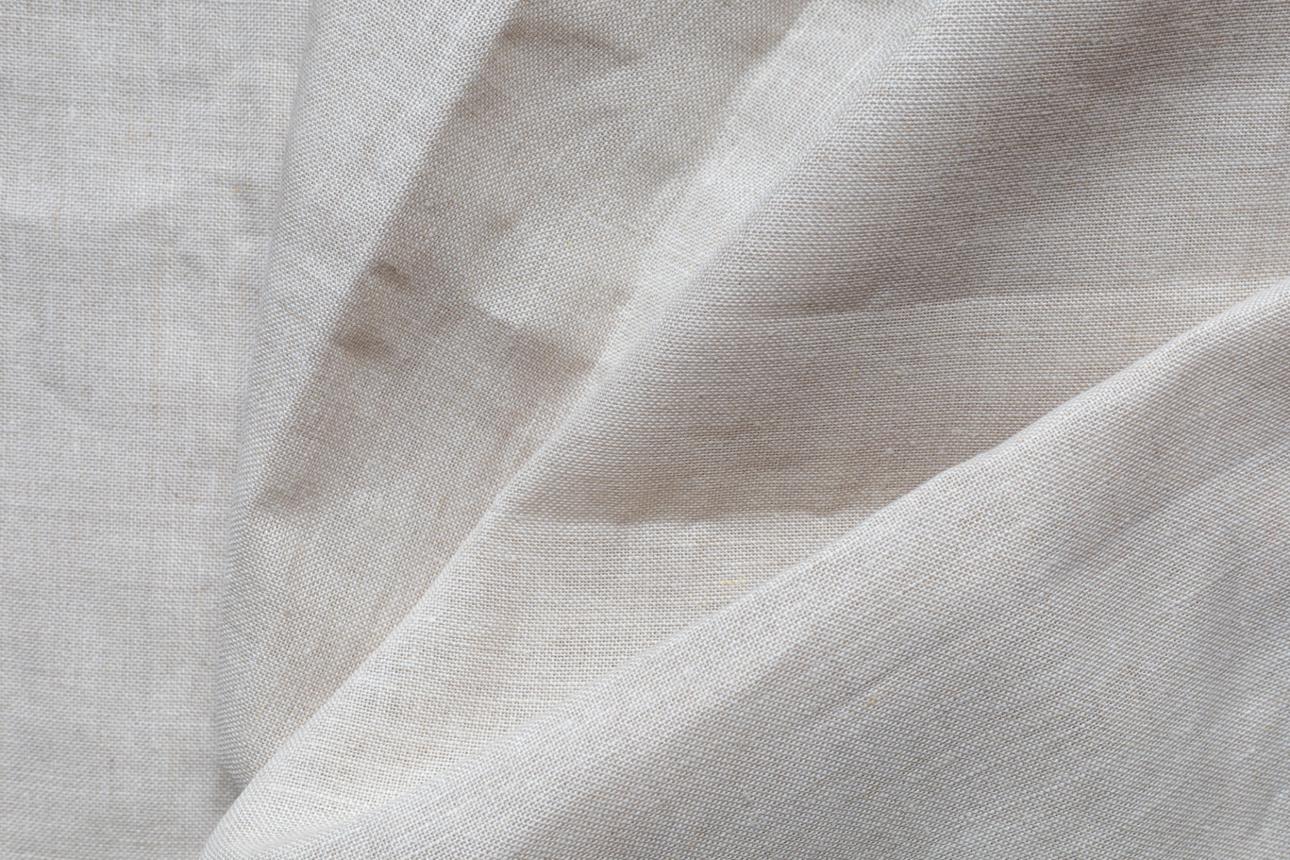
Linen is summer's fabric, without question. Its molecular structure is uniquely suited to heat: linen fibers conduct heat away from the body far more efficiently than cotton or synthetic materials, producing a cooling sensation on the skin in warm conditions. Additionally, linen's moisture absorption capacity is exceptional it can absorb up to 20% of its own weight in moisture before feeling damp making it ideal for humid climates where perspiration is inevitable.
A linen shirt on a warm day is an act of intelligence. The fabric draws heat away, releases moisture quickly, and unlike synthetics does not create that suffocating, plastic warmth that synthetic blends are so unfortunately capable of. Linen breathes. It is, in every measurable sense, a living fabric.
For the man who understands linen, the slight creasing that develops throughout the day is not a flaw it is a signature. It is evidence that the garment is real, that it is made from a genuine natural fiber that responds to the body and the environment. In the right cut, in a well-chosen weight, a linen suit or jacket worn on a warm summer day is among the most elegant things a man can put on his body. It is antiquity made wearable.
WOOL
The Foundation of Tailoring
ORIGIN
If cotton is the fabric of warm civilization, wool is the fabric of survival and then, over centuries, of extraordinary refinement. Humans have been shearing sheep and working their fleece into clothing for at least ten thousand years. The first domesticated sheep appeared in Mesopotamia around 8000 BCE, and within a few thousand years, the practice of spinning and weaving their wool had spread across the Near East, into Europe, and across Central Asia. Wool was not a luxury in those early years it was life itself in cold climates.
The ancient Romans were among the first to develop sophisticated wool commerce, establishing estates dedicated to sheep breeding and textile production. By the medieval period, the wool trade had become the engine of European prosperity. England's famous wealth in the 12th and 13th centuries was built almost entirely on wool the English Parliament sat on a woolsack, a literal bale of wool, as a reminder of the source of the kingdom's fortune. The great cathedrals of England were funded by wool merchants.
It was in England and Scotland that the art of tailoring wool into men's formal dress was perfected. The English cloth mills of Yorkshire and the tweed mills of the Scottish Highlands and the Outer Hebrides developed wools of extraordinary quality dense, tightly woven cloths that held their shape through London winters and highland shooting weekends alike. Savile Row, the greatest address in menswear history, was built upon English wool. Every suit that emerged from those legendary tailoring houses was a testament to what centuries of sheep breeding, weaving knowledge, and human craft can achieve.
POPULARITY
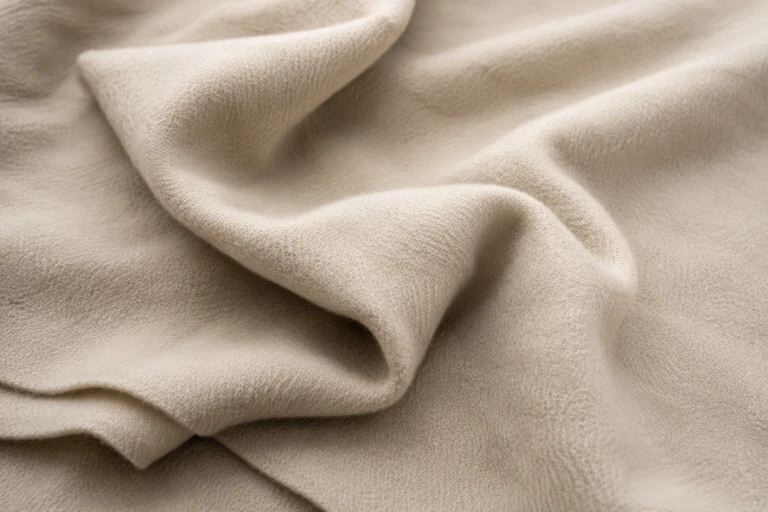
Wool's global dominance in formal menswear is a direct product of the British Empire. As Britain extended its commercial and political influence across the globe through the 18th and 19th centuries, it carried with it the conventions of English tailored dress and with those conventions, English woollen cloth. The lounge suit, the three-piece suit, the formal morning suit and the evening dress coat: all were shaped in wool, and all spread from London to every capital city in the world.
By the early 20th century, wool in its many forms had become the default fabric for men's professional and formal dress worldwide. A man's social standing could be read, to some degree, in the quality of his wool: fine Super 100s or Super 120s worsted wool in a bespoke Savile Row suit signalled the highest order of dress, while a rougher tweed jacket spoke of landed gentry and country pursuits. Flannel was democratic a good flannel suit served bankers and school teachers alike. Wool wore many faces, and all of them were credible.
In modern menswear, wool remains entirely irreplaceable for tailoring. No synthetic fabric has replicated its unique combination of properties: the way it holds a crease without stiffening, the way it breathes without being thin, the way it drapes without losing structure. Italian mills Loro Piana, Vitale Barberis Canonico, Ermenegildo Zegna have refined wool to extraordinary degrees, producing fabrics of such fineness and luminosity that they challenge silk in their beauty while retaining all of wool's functional excellence.
MANUFACTURING
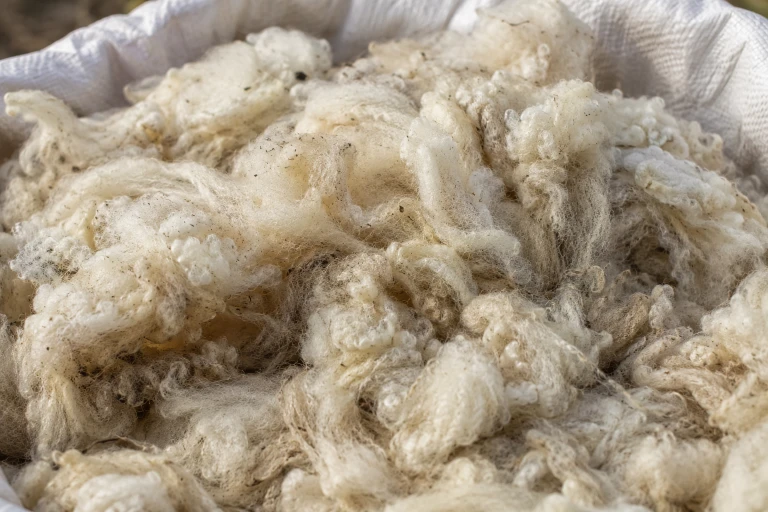
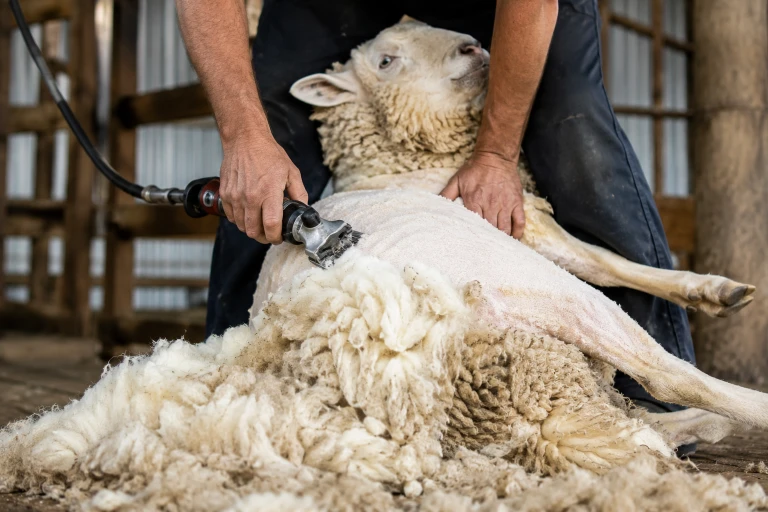
The production of fine wool begins with the sheep specifically with the annual shearing of the fleece, which is carried out in spring when the wool has grown to its optimal length and density. The quality of the resulting fiber depends enormously on the breed of sheep: the Merino, originating in Spain and now bred extensively in Australia and New Zealand, produces the finest and softest wool in the world, with fibers measuring as little as 14–15 microns in diameter. By comparison, human hair is approximately 70 microns fine Merino wool is nearly five times softer.
After shearing, the raw fleece is skirted the heavily soiled or coarse outer portions are removed before being sorted by grade and quality. The fiber is then washed in a process called scouring, which removes natural lanolin, dirt, and vegetable matter. Following scouring, the wool is carded to align the fibers, and the finest wools are additionally combed, producing what is known as worsted yarn a smooth, dense, lustrous yarn that is the foundation of fine suiting cloth.
The spun yarn is then woven on power looms, though the finest cloth is still woven with extraordinary human oversight, with weavers monitoring tension and construction at every stage. The woven cloth is finished through a series of processes milling, raising, pressing, and cropping that give each wool its particular character: the smooth, cool surface of a fine worsted for summer suiting; the soft, napped finish of flannel; the tight, water-resistant weave of a gabardine.
BEST WEATHER
Wool is nature's most sophisticated temperature-regulation system. Its fibers have a uniquely complex structure each individual wool fiber is covered in tiny overlapping scales and contains a hollow core that allows it to trap warm air close to the body in cold conditions while also releasing excess moisture and heat when the body temperature rises. In practical terms, this means a wool garment keeps you warmer in cold weather and cooler in warm weather than almost any alternative.
This versatility makes wool the all-season suiting choice of well-dressed men worldwide. Lightweight tropical wools woven in open, porous structures from fine Merino fiber are genuinely comfortable in warm climates and during summer months in temperate regions. Medium-weight worsteds are ideal for autumn and spring, providing warmth without bulk. Heavy flannels, tweeds, and Shetland wools are the armor of winter, providing genuine insulation against cold and wind.
Wool also has a remarkable relationship with moisture. Unlike cotton, which loses its insulating properties when wet, wool retains approximately 80% of its warmth even when thoroughly damp a property that made it invaluable to sailors, soldiers, and mountain climbers throughout history, and that continues to make it the sensible choice for rainy autumn days and cool evenings. A man who understands wool dresses for the day, not just the moment he steps outside.
DENIM
The Mythology of a Fabric
ORIGIN
The history of denim begins, perhaps surprisingly, not in the American West but in the workshops of Nimes, France and Genoa, Italy. The word "denim" is generally accepted as a corruption of the French phrase "serge de Nimes" a twill-woven serge fabric produced in the city of Nimes during the 17th century. Meanwhile, the city of Genoa was producing a similar heavy cotton twill that English merchants referred to as "jean" a corrupted transliteration of Genes, the old English name for Genoa. Two European cities, two heavy cotton twills: the raw ingredients of an American mythology.
These fabrics crossed the Atlantic in the hands of merchants and immigrants, and it was in California in 1873 that the defining moment of denim's history occurred. Jacob Davis, a Nevada tailor, and Levi Strauss, a San Francisco dry-goods merchant, received a patent for work trousers reinforced at the stress points with copper rivets. The garment was designed for the miners and labourers of the Gold Rush men who needed clothing that could withstand genuinely brutal physical demands. Those trousers blue, riveted, cut from that indigo-dyed cotton twill were the first blue jeans.
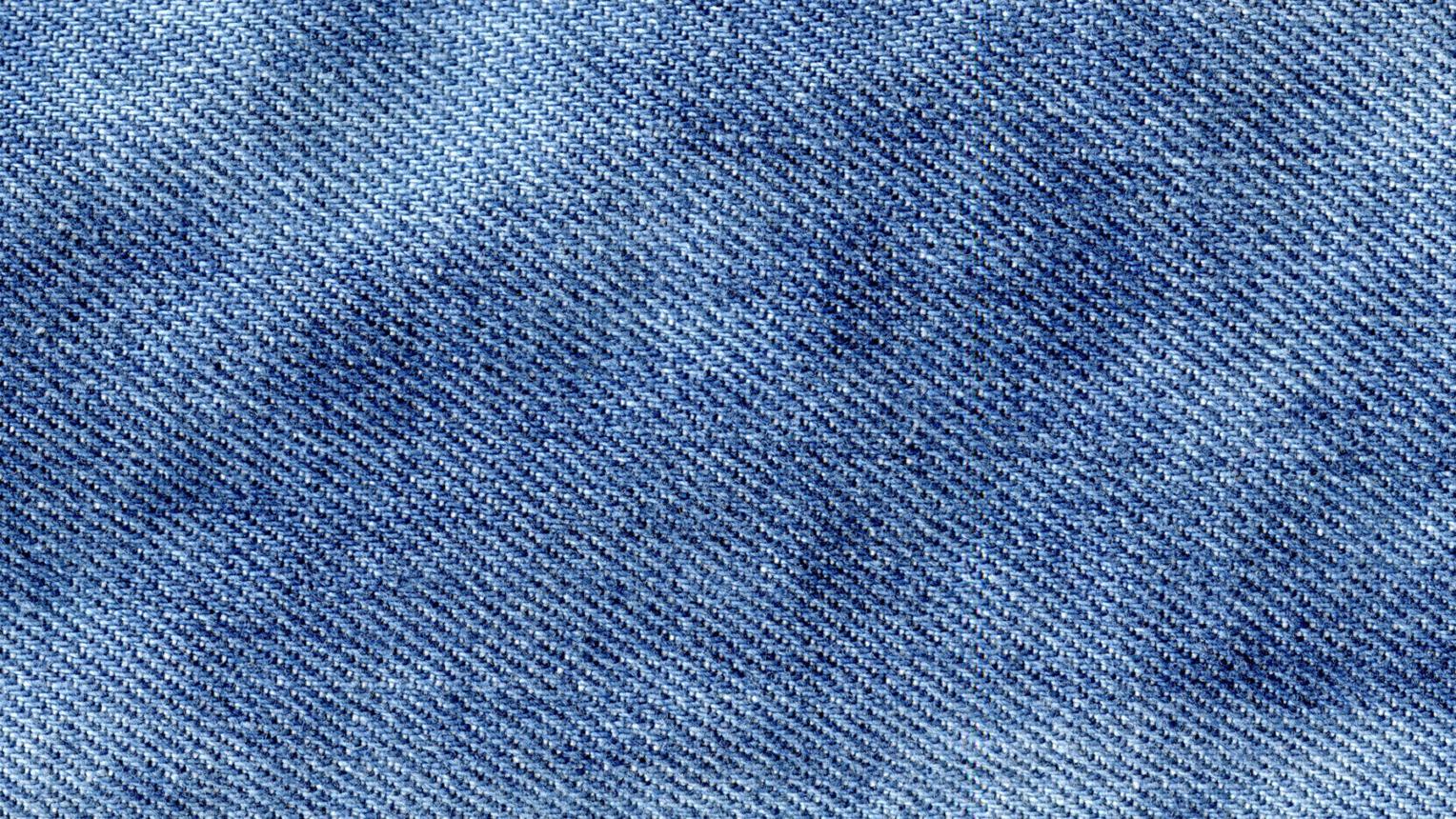
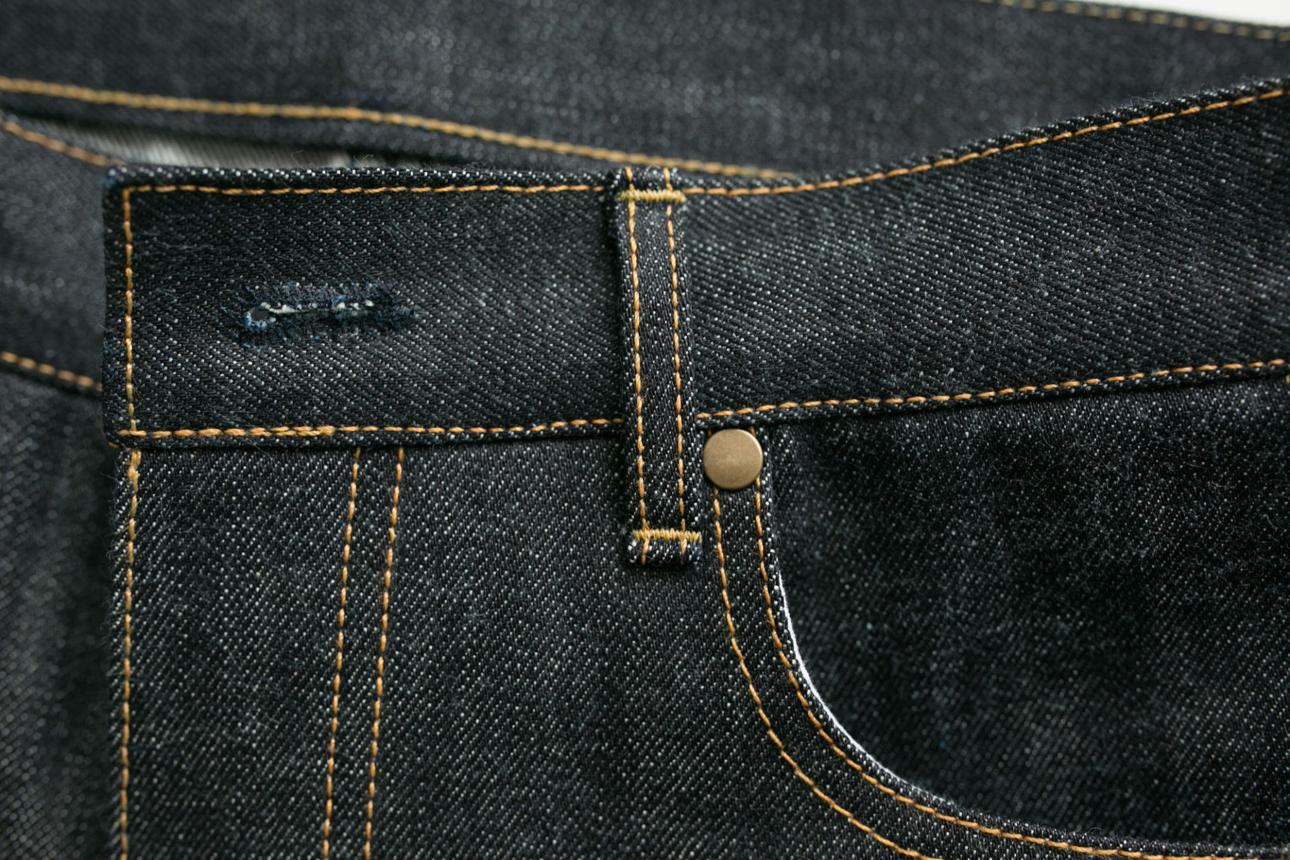
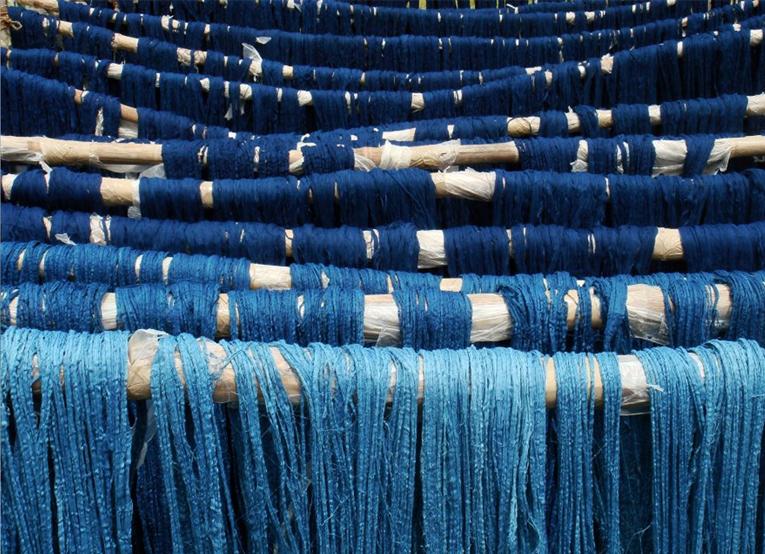
The indigo dyeing of denim is central to its character and mythology. Unlike most fabric dyes, which penetrate the entire fiber, indigo coats only the outer surface of each cotton yarn. This means that with washing and wear, the indigo gradually fades, revealing the white core of the cotton beneath. Every pair of denim jeans tells the story of its own wearing — the white lines forming at the knees, the faded creases at the thighs, the worn patches at the back pockets. Denim is, uniquely among fabrics, a garment that visibly records a man's life.
POPULARITY
For the first seventy years of its existence, denim was pure utility. It dressed the working man miners, cowboys, farmers, railroad workers and occupied no place in the fashionable wardrobe. That changed dramatically in the 1950s, when a generation of young Americans adopted denim as a symbol of rebellion against the formal, structured dress of their parents. Marlon Brando in The Wild One. James Dean in Rebel Without a Cause. The image of a young man in a white T-shirt and blue jeans became one of the most powerful icons of the 20th century.
Hollywood amplified denim's mythology, and the American youth culture exported it worldwide. By the 1960s and 1970s, blue jeans had crossed class lines entirely the garment that had been designed for labourers was now worn by artists, musicians, students, and eventually, the middle and upper classes. In the 1980s and 1990s, luxury fashion houses began to take notice, with Calvin Klein and later Versace, Armani, and others producing premium designer denim that brought the fabric into a new register of dress.
Today, denim is one of the most complex and sophisticated fabrics in the menswear landscape. Japanese selvedge denim woven on vintage shuttle looms to produce a denser, more nuanced fabric than modern industrial denim has developed a devoted global following among collectors and connoisseurs. A pair of Japanese selvedge jeans from a mill such as Kurabo or Collect Mills is treated not as a mass-market garment but as a craft object, worn carefully, never washed unnecessarily, and broken in over years of deliberate wear to produce a fade pattern that is entirely unique to its wearer. In this sense, premium denim has come full circle returning to the artisan origins that produced it.
MANUFACTURING
Traditional denim begins with cotton fibers, which are spun into yarn. The warp yarn the yarn that runs the length of the fabric is dyed with indigo in a process that may involve as many as 12 separate dips through indigo vats, with oxidation occurring between each dip to build up the colour. The number of dips, the concentration of the indigo bath, and the tension of the yarn during dyeing all influence the depth of colour and the character of the resulting fade.
The dyed warp yarn and the undyed weft yarn are then woven together on a loom in a twill pattern typically a 3x1 twill, meaning the warp thread crosses over three weft threads before passing under one, creating the characteristic diagonal rib visible on the surface of denim. Traditional selvedge denim is woven on narrow shuttle looms, producing a fabric approximately 30 inches wide with a clean, self-finished edge the selvedge that prevents fraying and is associated with higher-quality construction. Modern denim is typically woven on broader projectile looms, producing fabric up to 60 inches wide at greater speed but without the selvedge edge.
After weaving, denim undergoes a variety of finishing processes. Raw denim is untreated and will shrink significantly on first washing, after which it stabilizes this shrinkage is managed by the wearer in the traditional Japanese approach, where jeans are worn dry for months to allow personal fade patterns to develop before the first wash. Industrial finishing processes include sanforization (pre-shrinking), stonewashing, enzyme washing, and various distressing treatments that replicate the appearance of natural wear techniques that have the effect of rapidly producing the aesthetic that honest wear develops slowly over time.
BEST WEATHER
Denim's relationship with weather is defined by its weight. Traditional denim is a heavy fabric typically between 12 and 14 ounces per square yard, though selvedge denims can reach 21 ounces and this weight provides substantial warmth, making jeans a natural choice for autumn and winter. In cold conditions, heavy denim traps body heat effectively, and the wind-resistant nature of the tightly woven twill construction provides additional protection against chill.
Lightweight denim, typically between 6 and 9 ounces, behaves more like chambray and is genuinely comfortable in spring and early summer. Japanese manufacturers have been particularly innovative in developing lighter denim weights for warm-weather wear without sacrificing the character and texture of traditional construction.
Where denim genuinely struggles is in rain and extended wet conditions. Its weight means it absorbs moisture readily and dries slowly, and wet denim is heavy, uncomfortable, and prone to transferring indigo dye. For the man dressed in denim on a rainy day, a waterproof outer layer is not optional it is essential. Understand the limits of the fabric, and it will serve you well in every other condition.
SILK
The Emperor's Thread
ORIGIN
Silk is the only fabric with a creation myth, and it is a beautiful one. According to Chinese legend, the Empress Leizu was sitting beneath a mulberry tree in approximately 2700 BCE when a silkworm cocoon fell into her tea. As she reached to retrieve it, the heat of the liquid began to unravel the cocoon, releasing a single continuous thread of extraordinary fineness and luminosity. From this accident or divine gift, depending on one's disposition the art of sericulture was born.
Whether myth or history, silk's origins are genuinely ancient. Archaeological evidence places silk production in China as far back as 3500 BCE, and for over two thousand years, China maintained a near-absolute monopoly on its production. The penalty for revealing the secrets of silk-making how to raise Bombyx mori silkworms, how to feed them only mulberry leaves, how to unravel and spin the cocoons was death. The fabric was so valuable and so jealously guarded that it gave its name to an entire network of trade routes connecting East and West: the Silk Road.
When silk finally reached the Roman Empire, the reaction was one of astonishment and, among the moralists, alarm. Roman senators debated whether men who wore silk were sacrificing their dignity the fabric was so sheer, so light, so unlike the heavy wools and linens of Roman dress that it seemed almost improper for men to wear. The emperor Caligula was criticized for appearing in public in silk. These debates tell us something about silk's power: it has always been a fabric that pushes at the boundaries of what a man might allow himself to wear.
POPULARITY
Silk's spread from China westward through the Islamic world and into medieval Europe created one of history's most consequential commercial networks. By the 13th and 14th centuries, Italian city-states Venice, Genoa, Florence, Lucca had established their own silk weaving industries, producing elaborate brocades and damasks for the courts of Europe. The silk weavers of Lyons, France, established in the 16th century, became the most prestigious in Europe, supplying the royal courts of Versailles and beyond.
In menswear, silk has historically occupied the highest registers of dress. The silk waistcoats of the 18th century, embroidered with extraordinary delicacy, were among the most expensive garments a man could own. The silk cravat gave way to the silk tie still the standard of formal neckwear today. Silk pocket squares, silk dress shirt fabrics, silk linings in bespoke tailoring: these details mark the finest examples of men's formal dress, their understated luxury visible only to those who know what they are looking at.
The contemporary relevance of silk in menswear extends beyond neckwear and accessories. Silk-cotton blend shirts are among the most refined summer garments available, offering breathability combined with silk's incomparable drape and lustre. Italian and Japanese mills continue to produce silk fabrics of extraordinary quality — the silk shirting from Albini Group or the woven silks of Como remain benchmarks of luxury fabric production that no synthetic can challenge.
MANUFACTURING
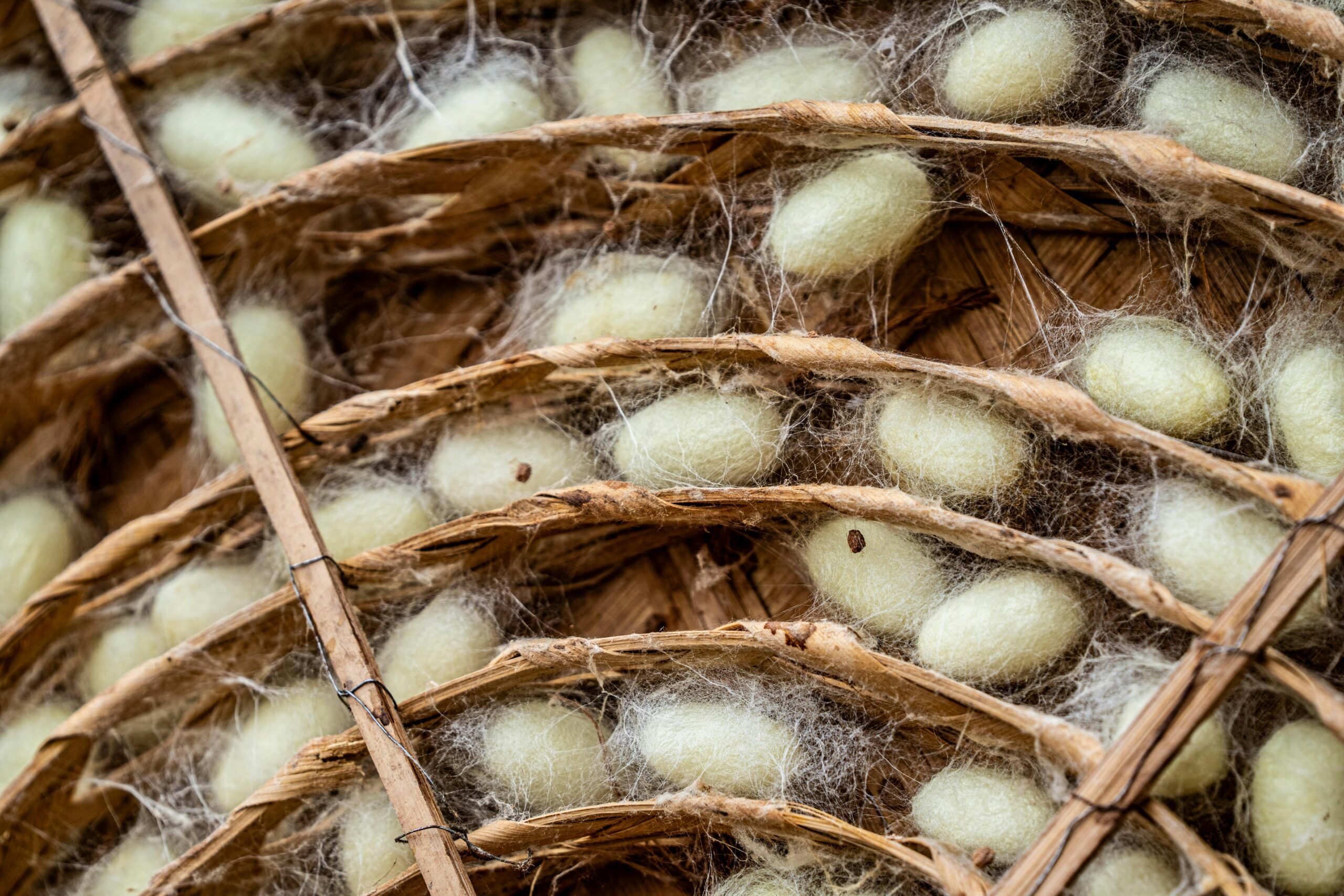
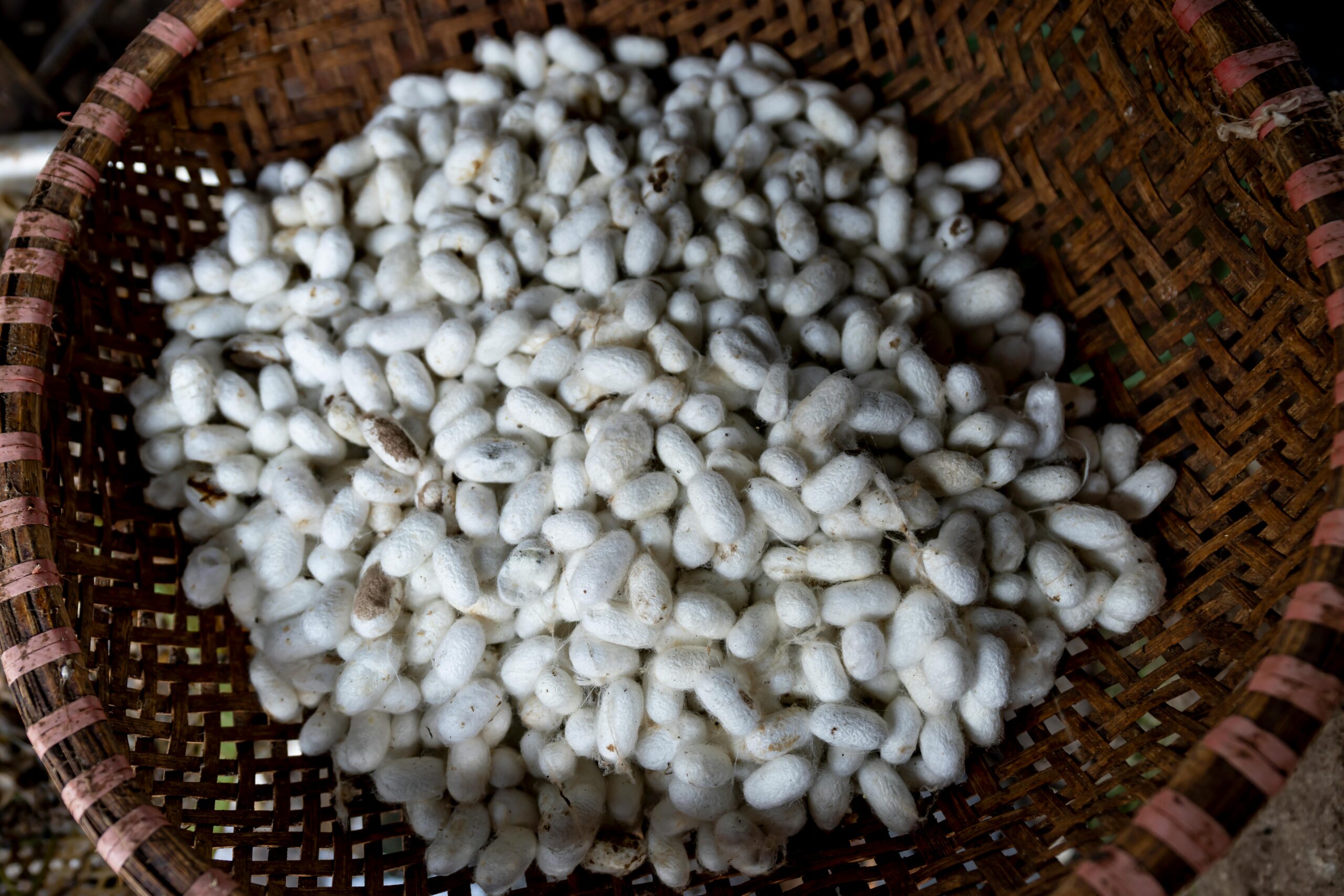
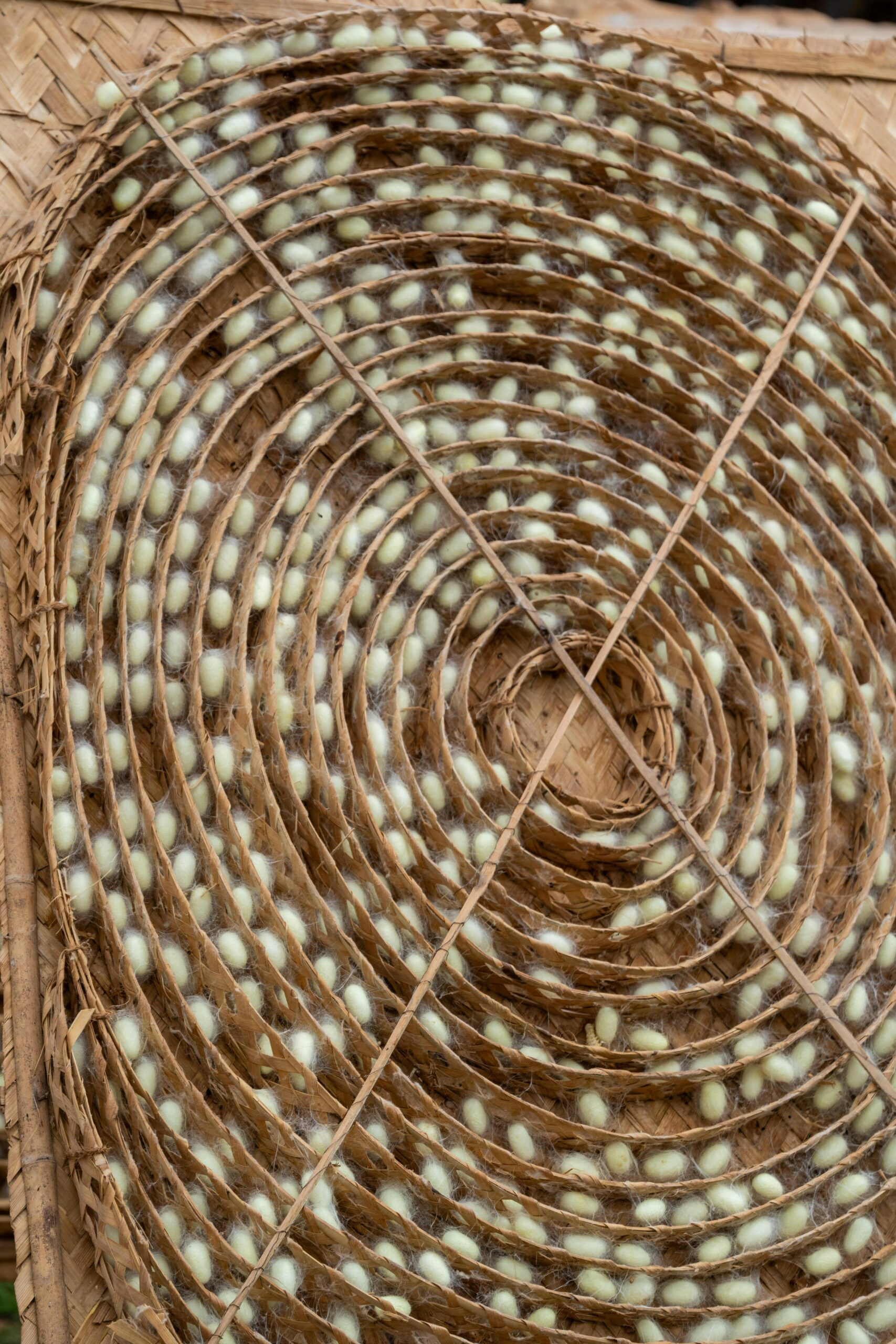
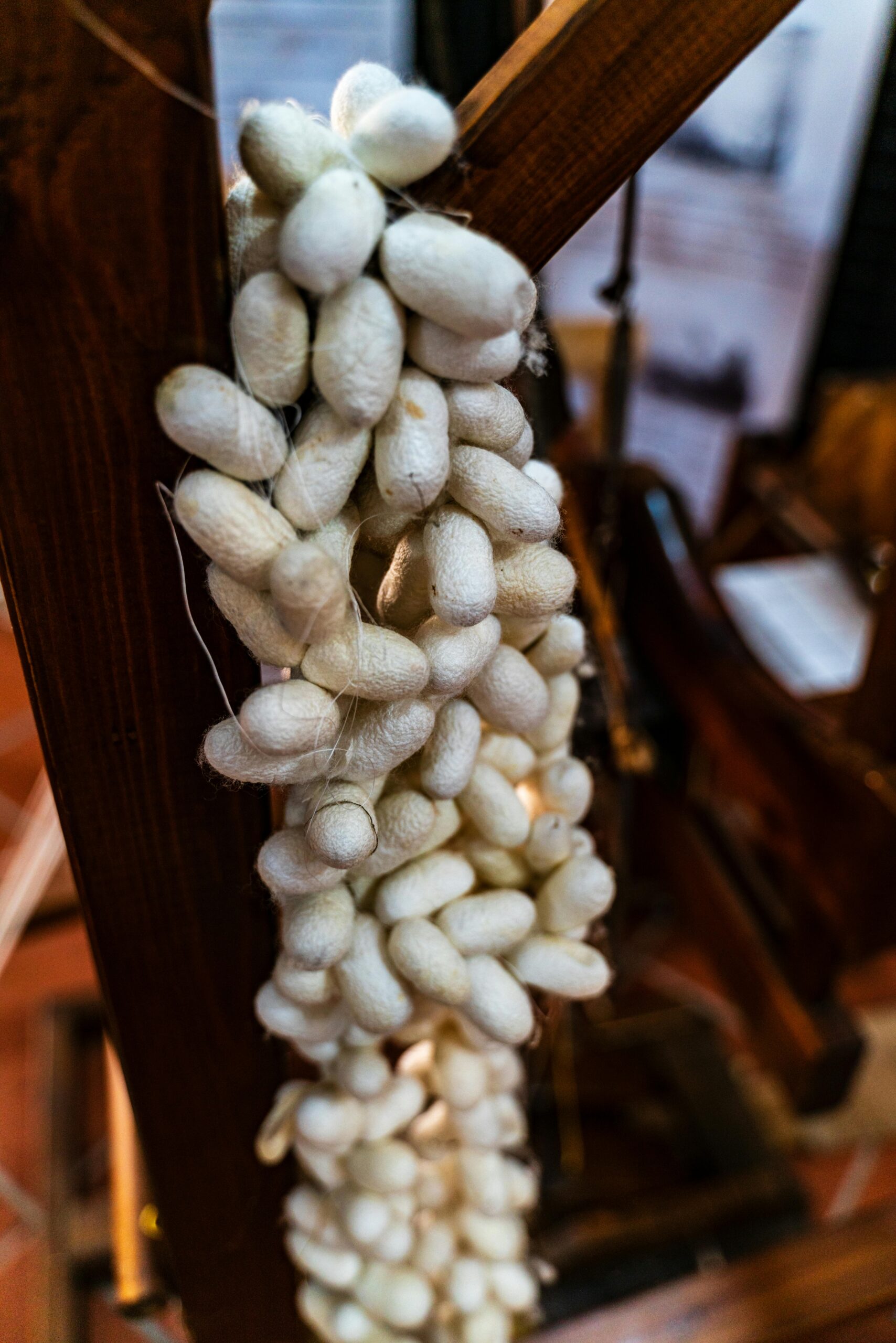
The production of silk remains, at its finest, a remarkably delicate and labour-intensive process. It begins with the cultivation of the mulberry silkworm, Bombyx mori, in a process called sericulture. The silkworms are raised from eggs in carefully controlled environments, fed exclusively on fresh mulberry leaves, and allowed to spin their cocoons over a period of approximately three days. Each cocoon consists of a single continuous filament of silk between 300 and 900 meters in length produced by the silkworm's silk glands and hardened on contact with air.
To harvest the silk, the cocoons are heated with steam to kill the pupae inside and to soften the binding agent that holds the filament together. The outer layer of each cocoon is brushed away to find the end of the continuous filament, and multiple filaments typically between 5 and 8 are drawn together and twisted into a single thread of raw silk, or reeled silk, in a process called filature. This reeling process requires considerable skill: the tension must be perfectly consistent to produce an even thread of the right thickness.
The reeled silk is then processed further degummed to remove the sericin protein that gives raw silk its slightly stiff, dull quality, revealing the extraordinary natural lustre and softness beneath. The silk fibers may be twisted into different types of yarn thrown silk for weaving, spun silk from shorter waste fibers and then woven, knitted, or processed into the finished fabric. The most prestigious silk fabrics heavy crepe de chine, charmeuse, twill silk, and woven brocade require weaving expertise of the highest order.
BEST WEATHER
Silk is a fabric of extraordinary thermal sensitivity. Pure silk is a natural protein fiber that, like wool, has inherent temperature-regulating properties it provides warmth in cool conditions and, due to its moisture-wicking ability, feels cool and fresh against the skin in warm conditions. This dual quality is one of silk's most remarkable attributes, and it explains why silk has been prized across climates and cultures for millennia.
In practical terms for the modern dressed man, silk performs beautifully across most of the year. Silk ties and pocket squares are appropriately worn in any season they add luxurious texture to woollen suits in winter and sophisticated lightness to linen or cotton combinations in summer. Silk dress shirts and blended silk-cotton shirts are ideal for warm-weather formal occasions, where the fabric's natural lustre elevates the formality of the look while its breathability maintains comfort.
Where silk requires care is in wet conditions and intense heat combined with perspiration. Unlike wool or cotton, silk does not respond well to extended moisture exposure it can water-stain easily and may lose body if repeatedly soaked. For the man who wears silk, this is not a significant concern; the garments in which silk features ties, pocket squares, dress shirts are typically worn in conditions where such exposure is unlikely. Treat silk with the respect its origins demand, and it will reward you with a luxury that no other fabric can provide.
CASHMERE
The Rarest Warmth
ORIGIN
There is no fabric in the world quite like cashmere. The word itself has a quality of luxury about it soft on the tongue, evoking images of mountain valleys, fine craftsmanship, and the quiet confidence of a man who has chosen the best. Its origins are no less romantic. Cashmere comes from the Changthangi goat, a breed that has lived for millennia in the high-altitude plateaus of the Himalayas and Central Asia in the regions of Kashmir, Mongolia, Afghanistan, and Inner Mongolia at elevations where winter temperatures regularly fall below -40 degrees Celsius.
In these extreme conditions, the Changthangi goat develops a uniquely fine undercoat beneath its coarser outer hair. This undercoat, called pashmina in Kashmir from the Persian word for wool serves as the goat's insulation against the brutal cold of the high plateau. Each goat produces only 150–200 grams of this fine fiber per year, combed or shed naturally in spring. From this extraordinarily limited supply comes the most prestigious natural fiber in menswear.
The Kashmir Valley, nestled between the Himalayas and the Karakoram range, became the epicentre of cashmere textile production, and its weavers developed techniques of breathtaking refinement. The Kashmir shawl intricate, patterned, sometimes taking years to weave became one of the most coveted luxury objects in both Eastern and Western cultures during the 17th and 18th centuries. Napoleon reportedly gave Josephine over 300 Kashmir shawls. The demand of European aristocracy was so intense that imitation cashmere shawls began to be produced in Paisley, Scotland giving the world the paisley pattern as a cultural artefact of cashmere's influence.
POPULARITY
Cashmere's transition from aristocratic luxury to aspirational menswear staple is a story of gradual democratization combined with sustained quality prestige. For much of its history in the West, cashmere was accessible only to the highest levels of society. A cashmere shawl or cashmere suiting fabric was a marker of extraordinary wealth as significant and visible as a carriage or a townhouse. Victorian and Edwardian gentlemen who could afford cashmere wore it with the quiet assurance of those who understand quality without needing to explain it.
The development of the cashmere sweater in the early 20th century particularly the Scottish knitwear industry in the Borders region, centred on towns like Hawick and Galashiels created a new category of cashmere product: the luxury knitwear garment accessible to a somewhat broader market. Pringle of Scotland, established in 1815, and later Ballantyne and others produced cashmere knitwear of extraordinary quality that found its way into the wardrobes of aristocrats, film stars, and eventually the professional classes.
Today, cashmere occupies a unique position in menswear: it is both familiar and genuinely special. A well-made cashmere sweater from Loro Piana or Brunello Cucinelli represents the pinnacle of knitwear luxury so soft it seems almost impossible that this is a natural fiber, so warm that a single layer suffices where wool might require two, and so enduring when properly cared for that it genuinely improves with age. Mongolian cashmere, Italian-processed Mongolian cashmere, and Scottish-knitted cashmere each represent different interpretations of the same extraordinary fiber all of them worth the investment they require.
MANUFACTURING
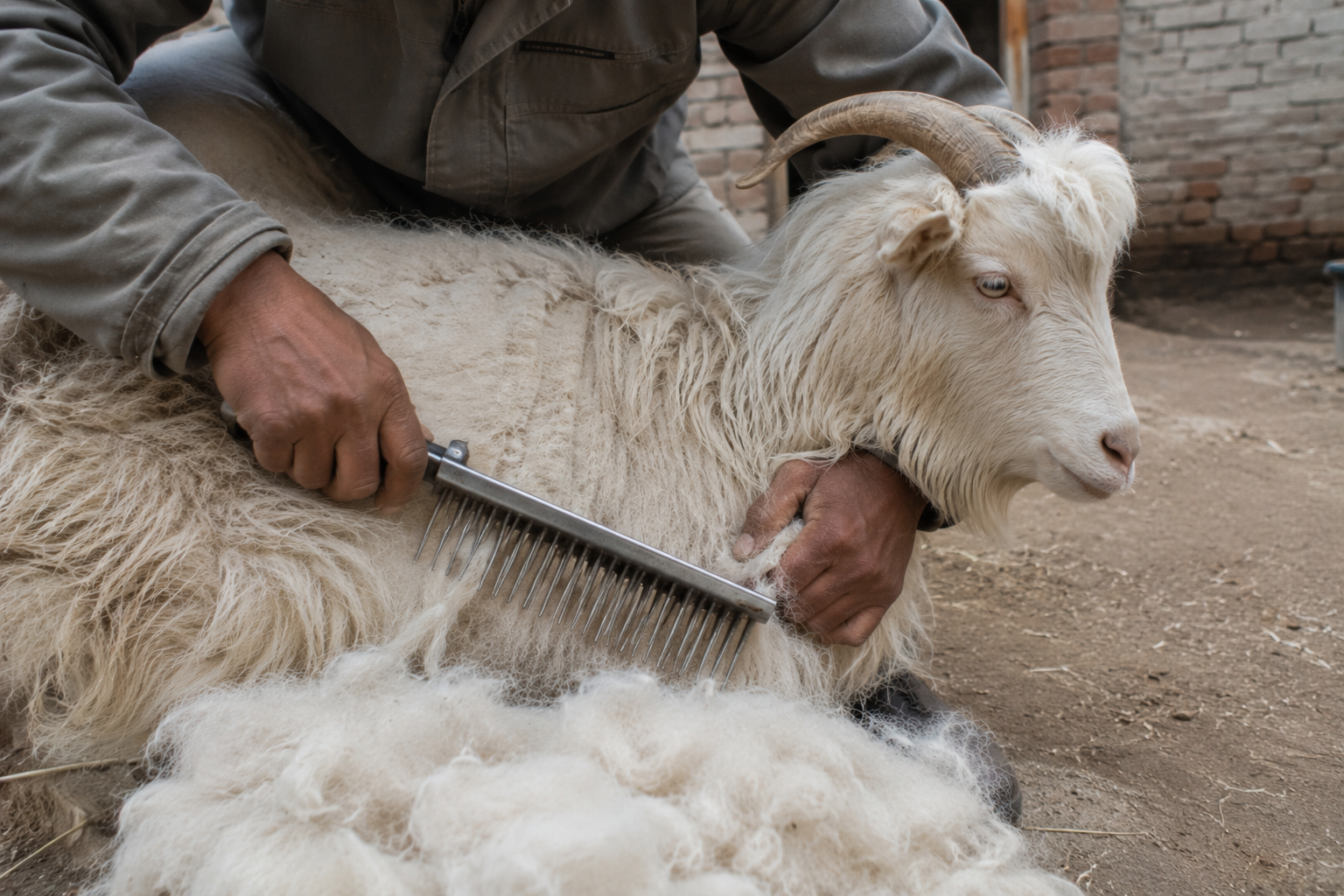
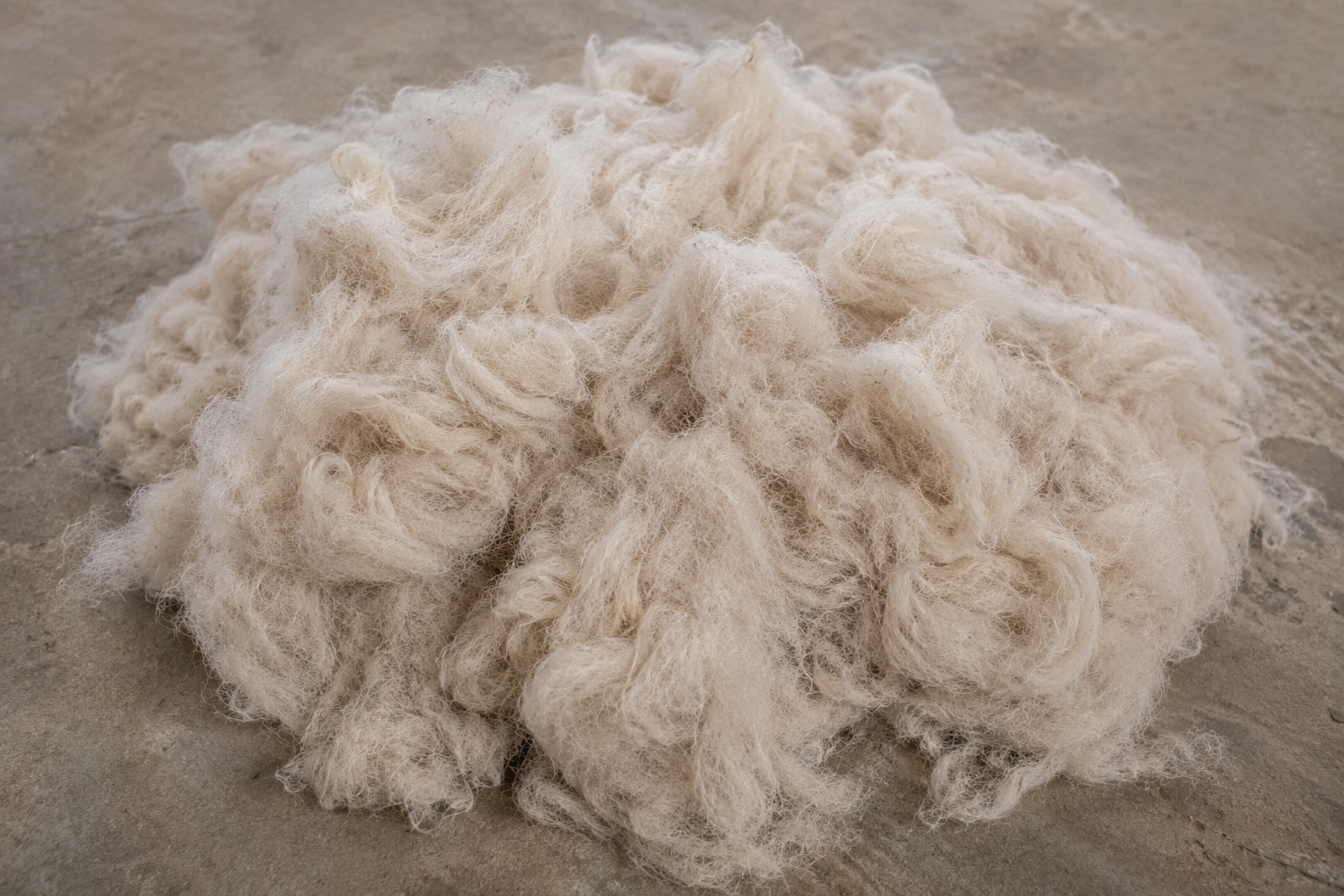
The production of genuine cashmere is among the most labour-intensive in the textile world, which is the fundamental explanation for its price. Each spring, as the temperature rises in the high plateau regions, the Changthangi goats naturally begin to shed their winter undercoat. Herders in Mongolia, Kashmir, and China gather the animals and comb out the fine undercoat by hand using traditional wooden combs, a process that takes considerable time and skill to accomplish without damaging the fiber or disturbing the animal.
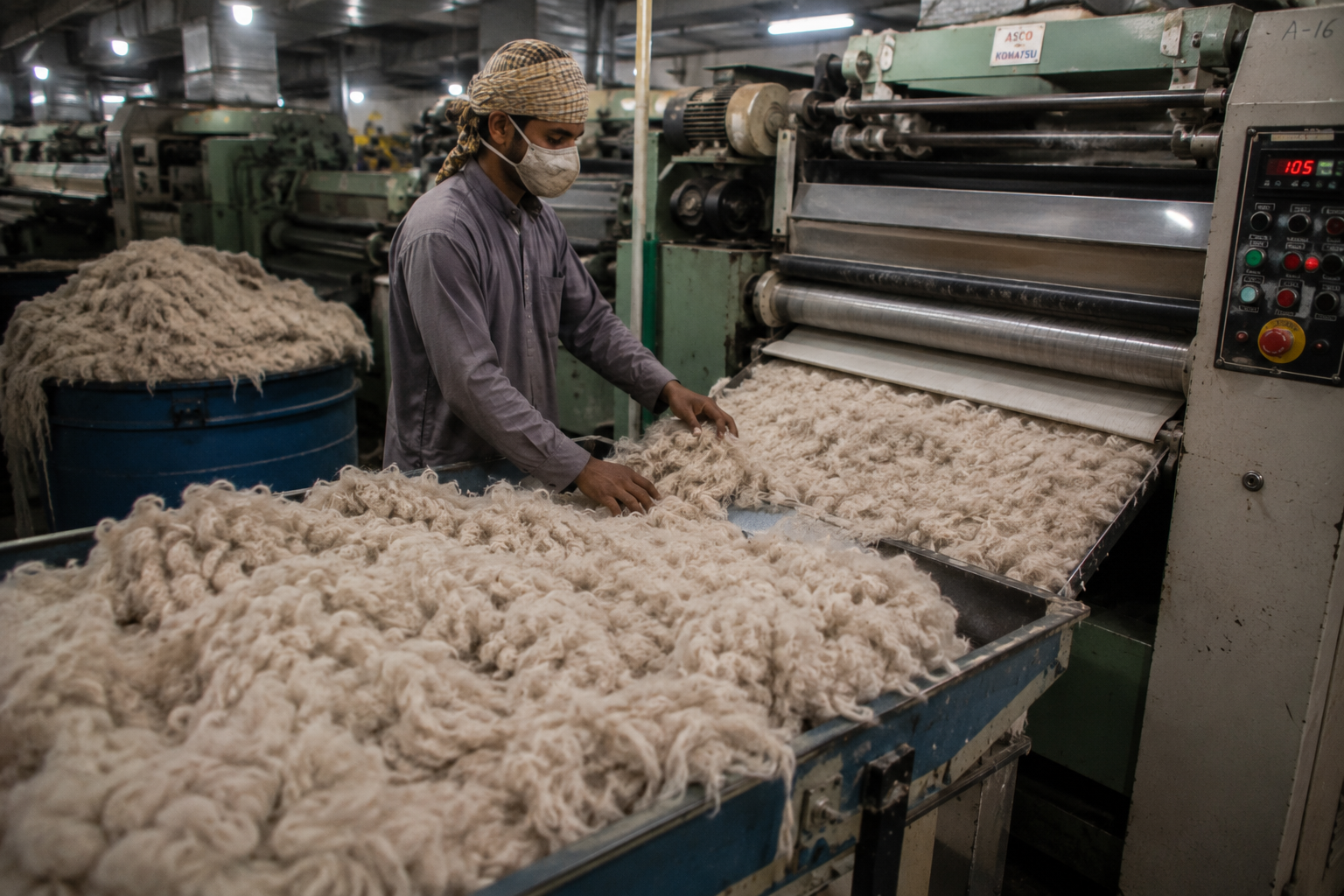
The combed raw cashmere is a mixture of fine undercoat fiber and coarser guard hair. The first stage of processing dehairing separates these two components, removing the coarser guard hair and leaving behind only the fine cashmere fiber. This dehairing process, whether mechanical or hand-performed, is critical: cashmere from which the guard hair has not been fully removed will pill more readily and feel less consistently soft. The diameter of the remaining fiber measured in microns determines its grade: the finest cashmere, used in luxury knitwear and suiting, typically measures between 14 and 16 microns.
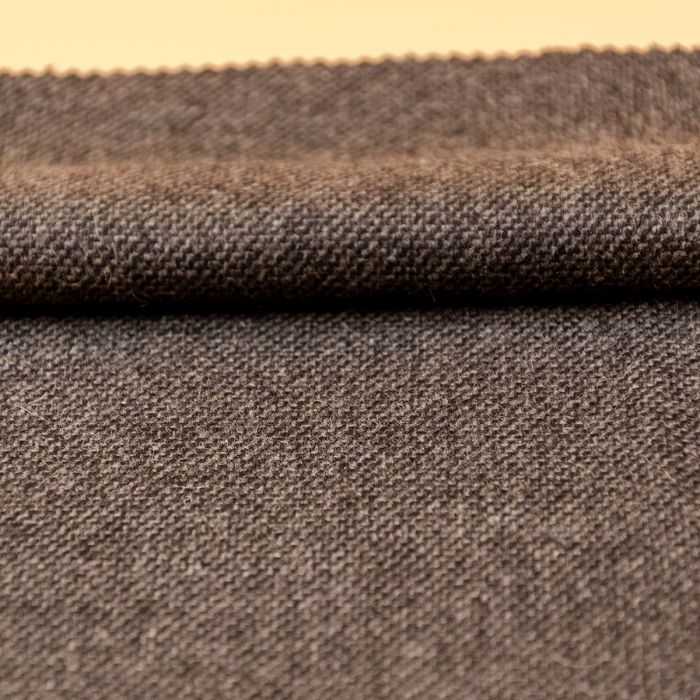
The dehaired fiber is then cleaned, dyed, and spun into yarn. The spinning of cashmere requires careful control too tight a spin and the yarn loses its characteristic softness; too loose and it lacks durability. The spun yarn is then either woven into cloth for suiting and tailoring or knitted into the sweaters and accessories that represent cashmere's most beloved contemporary form. Scottish knitwear mills use flat-bed knitting machines, often guided by the hands of craftspeople with decades of experience, to produce garments whose stitch consistency and dimensional accuracy cannot be replicated by pure automation.
BEST WEATHER
Cashmere is, by the physics of its origin, a cold-weather fiber. The Changthangi goat developed this undercoat to survive temperatures that would kill most domesticated animals. Translated into menswear, this means cashmere provides extraordinary insulation relative to its weight a fine-knit cashmere sweater is warmer than a much heavier wool knit while weighing almost nothing and compressing to a fraction of the size. For autumn and winter dressing, there is nothing more sensible or more luxurious.
The finest cashmere garments two-ply sweaters, lightweight cashmere jackets, fine-knit cashmere turtlenecks are capable of layering beneath tailoring without adding significant bulk, creating an elegant, warm combination that is the foundation of winter dressing at its finest. A cashmere crew neck beneath a navy blazer is one of the most reliably handsome combinations in menswear, across every era and every culture that has been fortunate enough to have access to the fiber.
In transitional weather cool spring evenings, unpredictable autumn days a lightweight single-ply cashmere piece is ideal: warm enough to provide genuine comfort but not so substantial as to become uncomfortable if the temperature rises unexpectedly. Where cashmere is unsuited is in genuinely wet conditions, for the same reasons as wool: it requires careful drying to maintain its shape, and repeated soaking without proper care will eventually compromise the fiber. But the man who dresses in cashmere has typically already learned to carry an umbrella.
THE SUPPORTING ROSTER
The Fabrics That Complete a Wardrobe
Beyond the six principal fabrics that form the backbone of a refined wardrobe, the world of menswear is populated by a rich supporting cast of materials each with its own character, history, and particular application. The well-dressed man does not need to know all of them intimately, but he benefits from understanding their nature. What follows is a guide to the fabrics you will encounter and what they represent.
POLYESTER
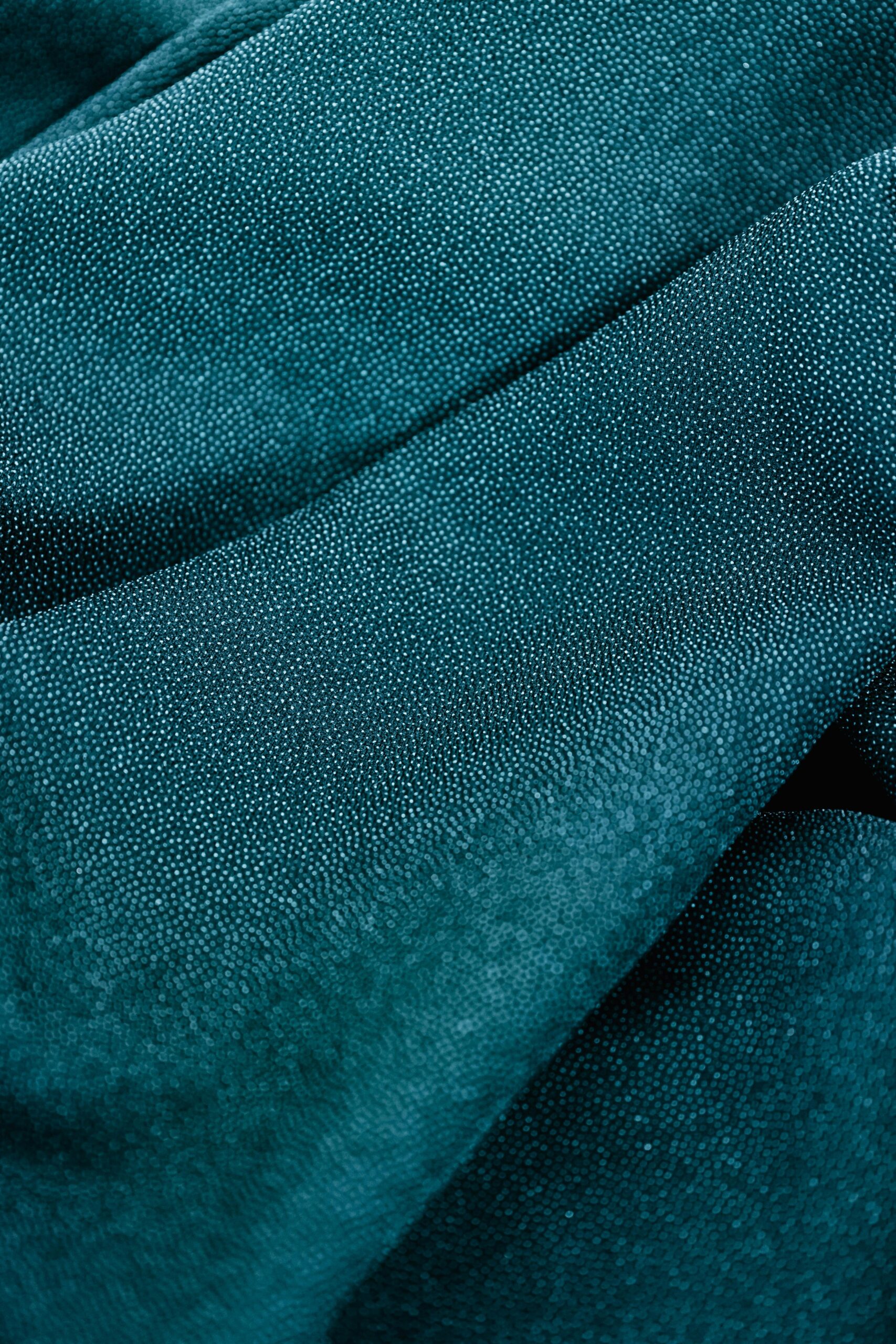
Polyester is a synthetic fiber derived from petroleum, developed by British chemists in the early 1940s and commercialized in the 1950s. It is the world's most widely produced textile fiber by volume, found in everything from budget dress shirts to high-performance athletic wear. Its appeal is practical: polyester is durable, wrinkle-resistant, holds its shape reliably, and dries rapidly. It is also significantly less expensive than natural fibers.
In menswear, polyester earns its place in performance and technical garments where moisture management and durability are paramount. Blended judiciously with natural fibers a small percentage of polyester added to cotton or wool it can improve wrinkle resistance without significantly compromising the feel of the natural fiber. Where polyester fails is as a sole fabric in formal or professional dress: it does not breathe, does not develop character with wear, and has a quality of surface reflection that experienced eyes can identify from across a room. The discerning dresser uses polyester as a tool, not a foundation.
SUEDE
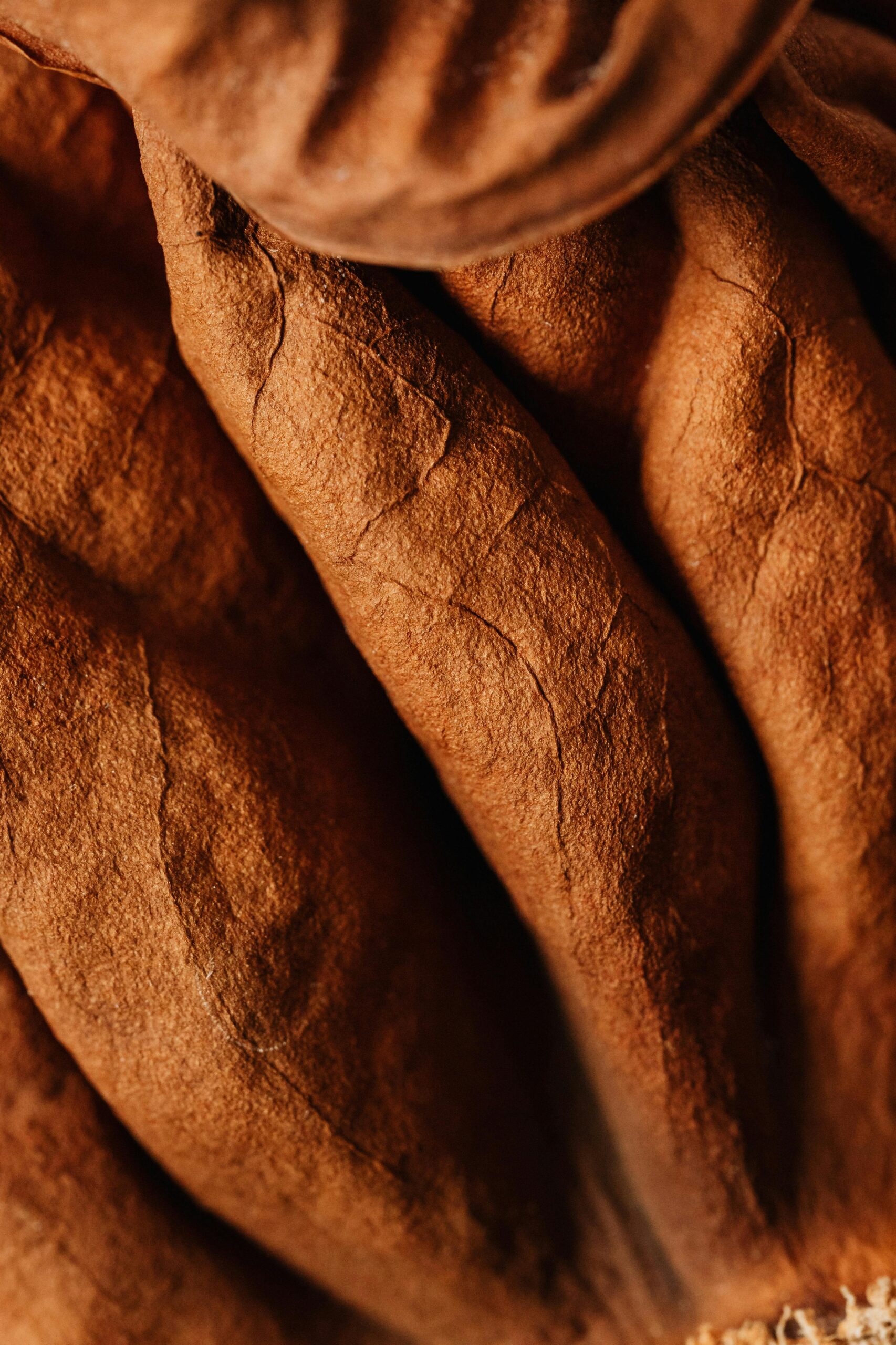
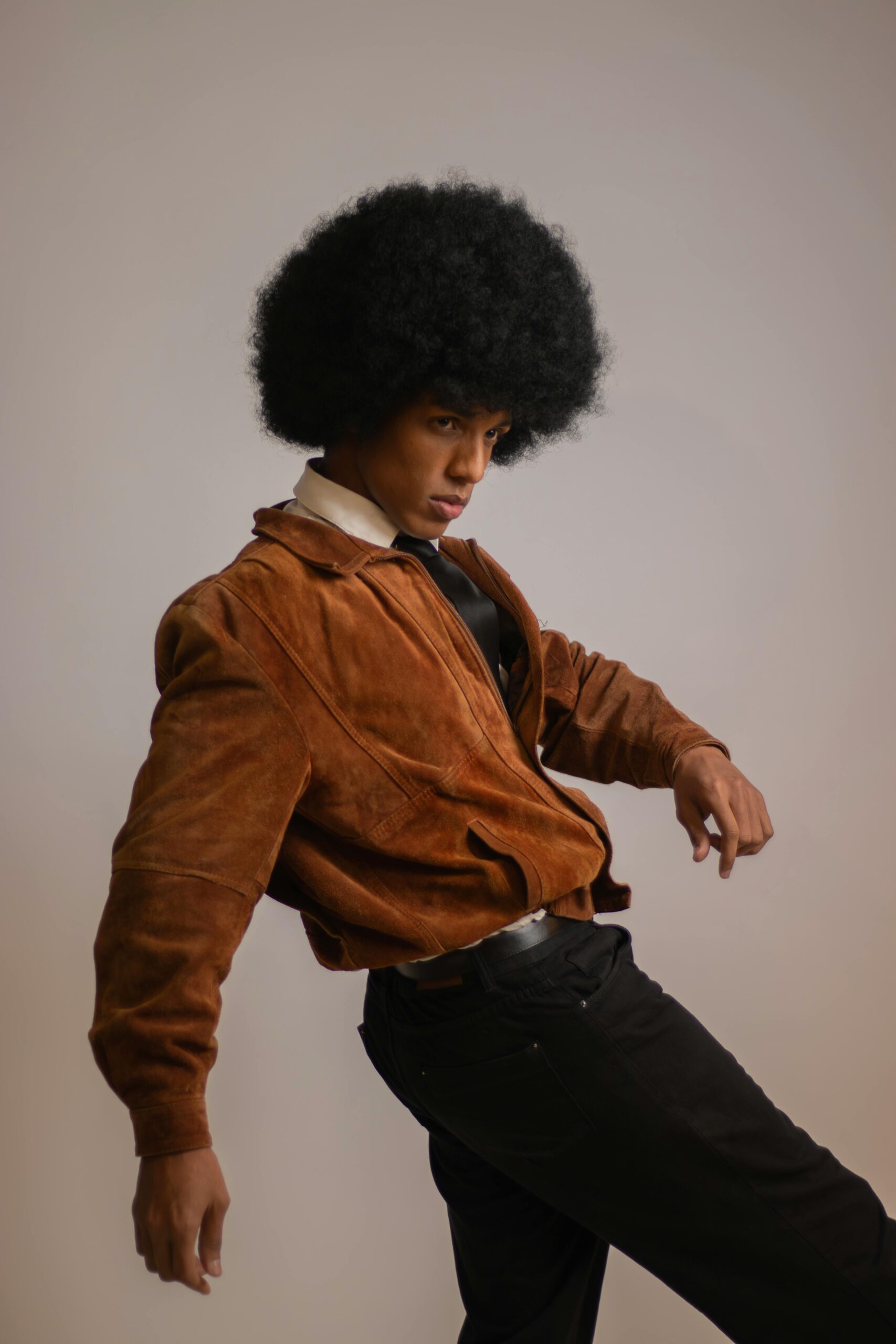
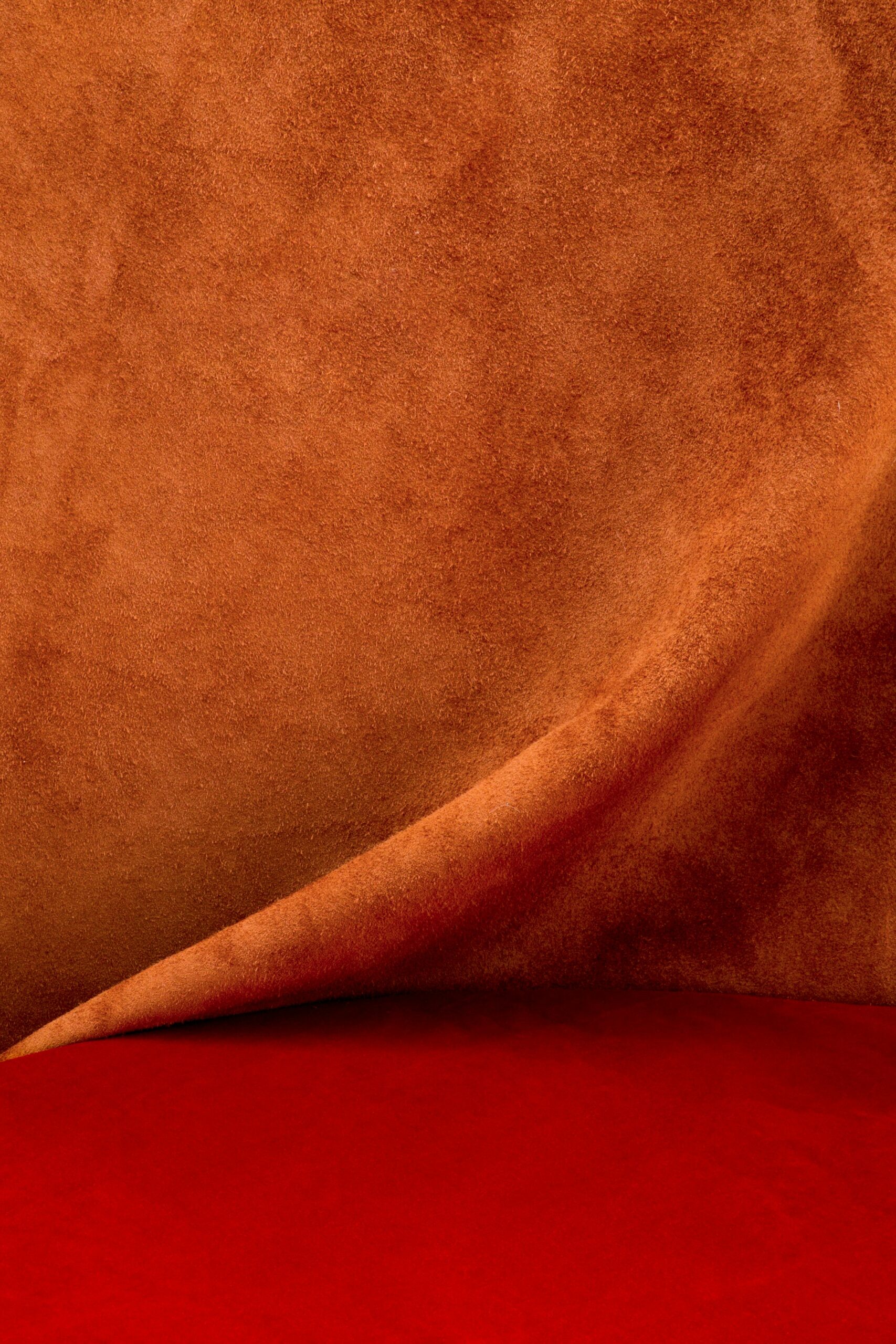
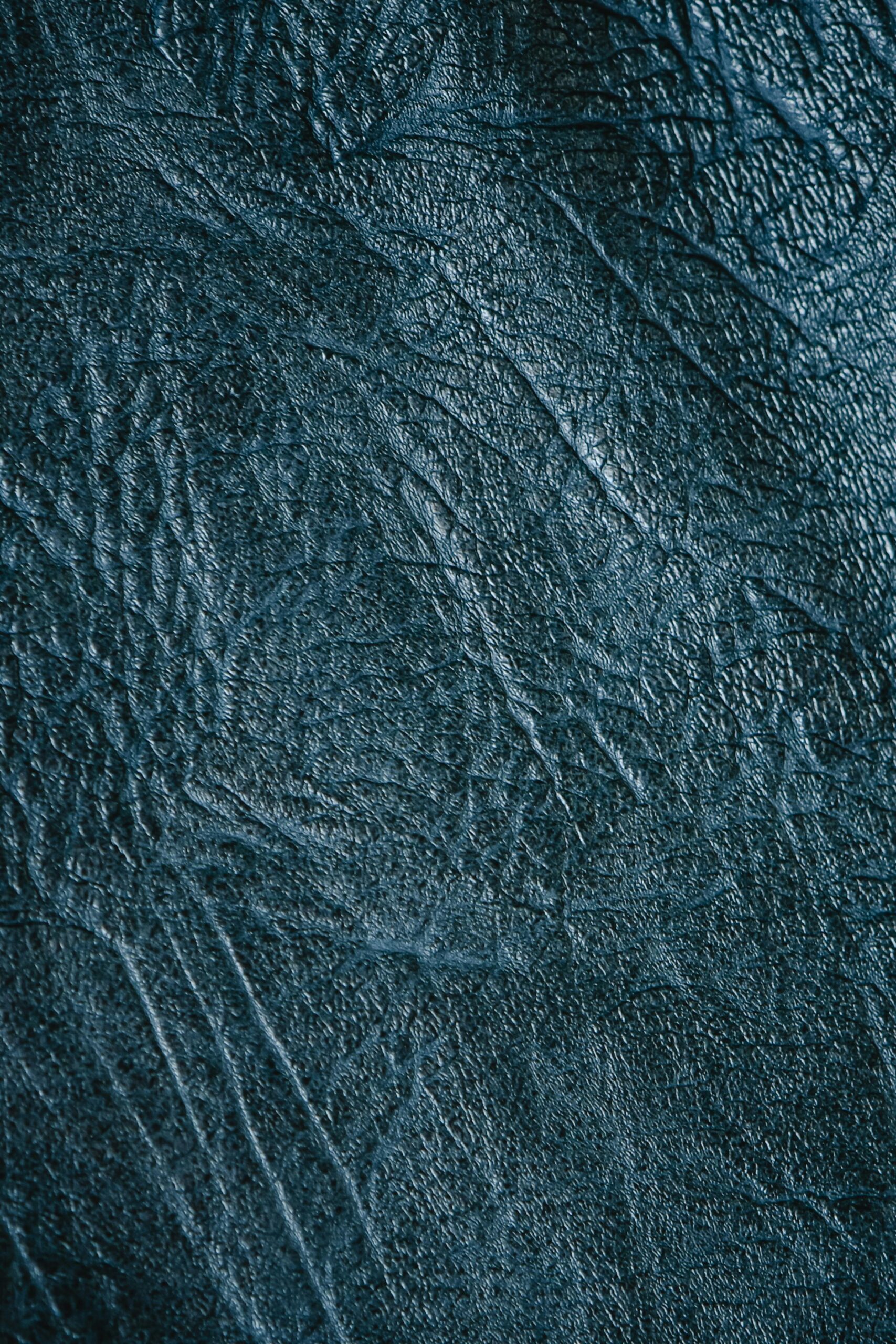
Suede is the inner split of animal hide typically from lamb, calf, pig, or deer buffed to produce a soft, napped surface of extraordinary tactile quality. Unlike full-grain leather, which uses the outer surface of the hide, suede reveals the interior fibrous structure, resulting in a material with a unique velvet-like texture. It has been used in gloves, shoes, and accessories since the medieval period, and takes its name from Sweden from the French "gants de Suede," meaning Swedish gloves, which were famous for their softness in the 19th century.
In contemporary menswear, suede is most at home in footwear the suede chukka boot, the suede loafer, the suede derby and in casual jackets, where its softness and texture create a relaxed elegance that full leather cannot quite achieve. It represents a more approachable, less formal register of luxury. Its limitation is its sensitivity to water; suede requires protective treatment and careful maintenance to remain beautiful, but the man who invests in quality suede pieces and cares for them properly possesses garments of lasting refinement.
LEATHER
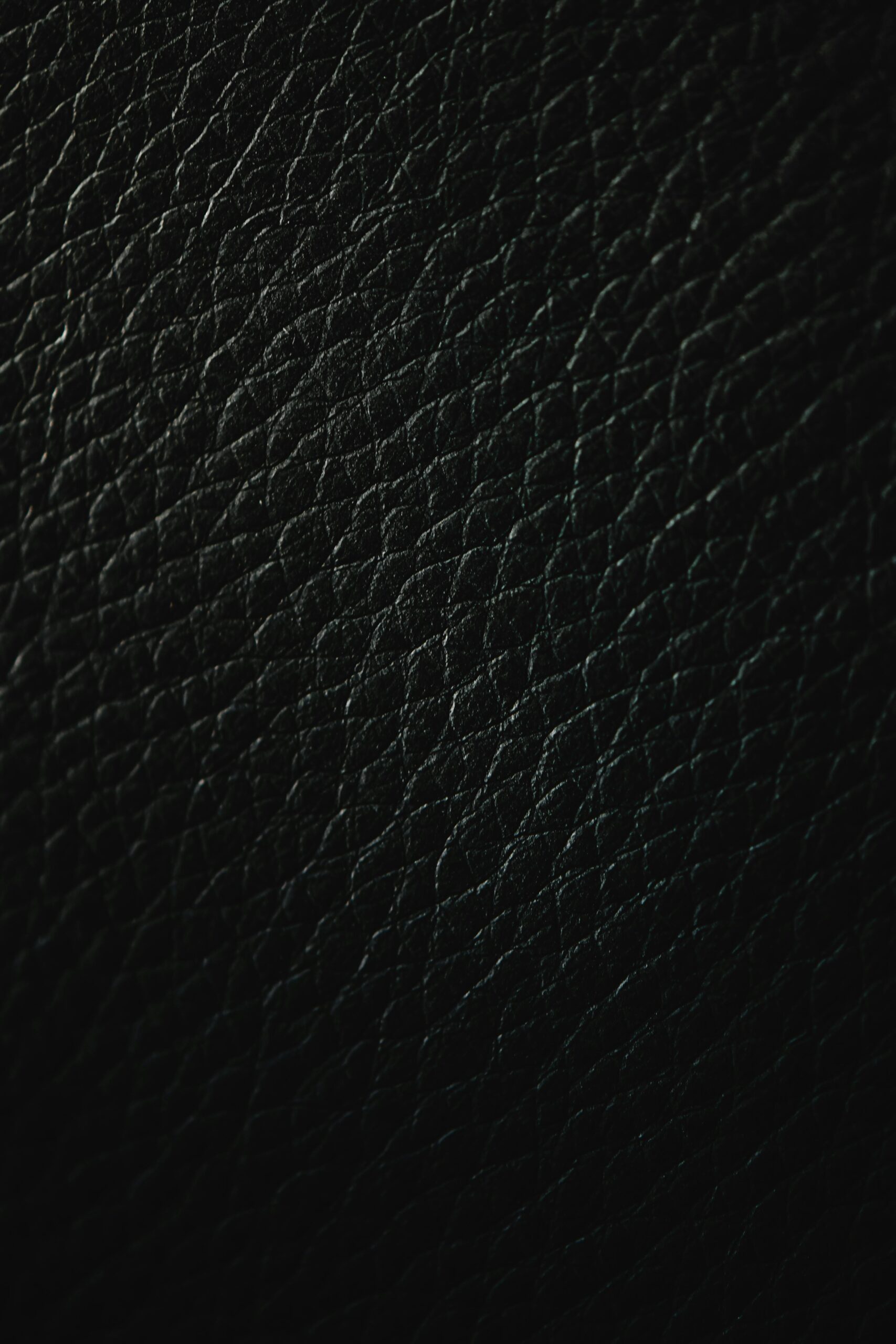
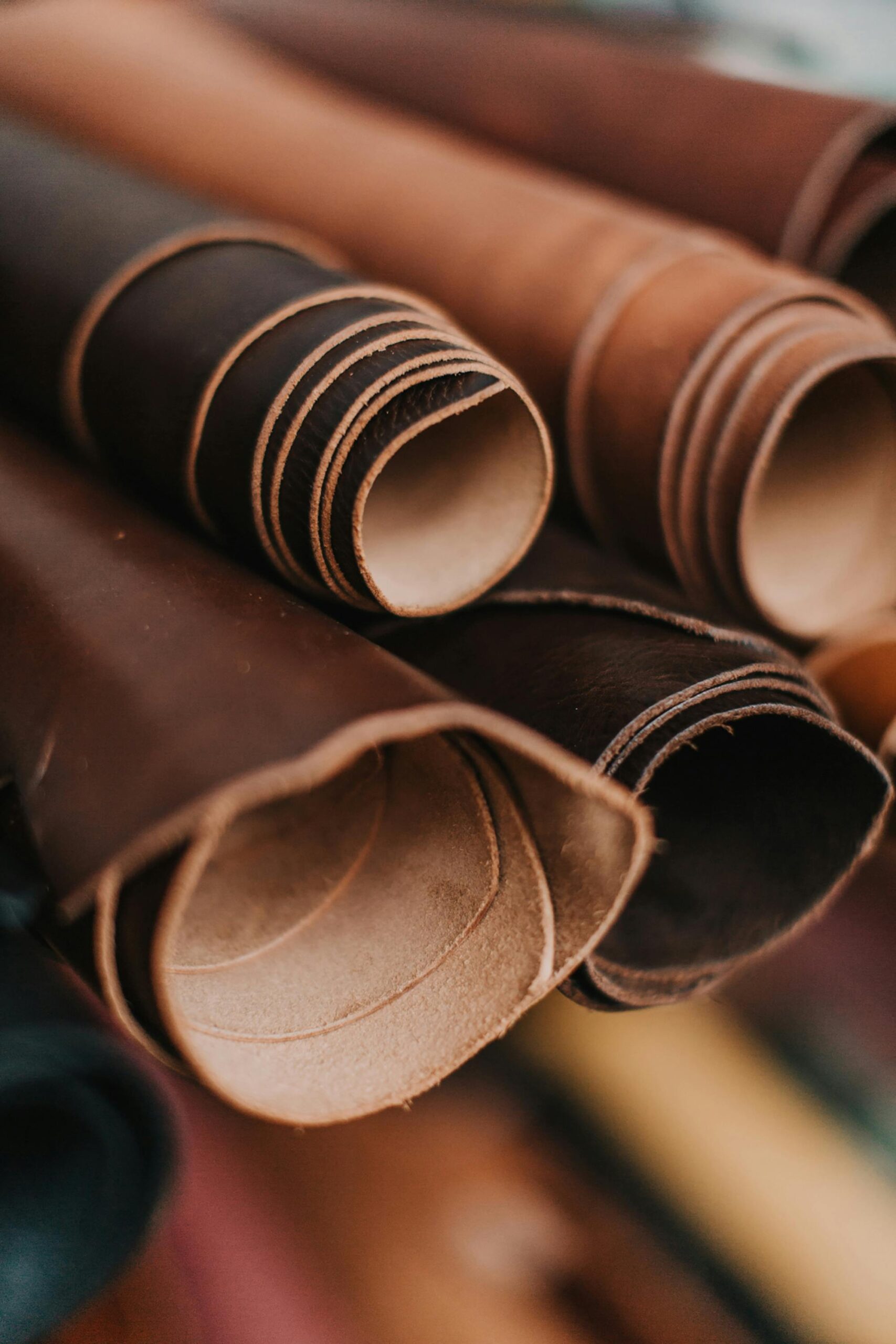
Leather is among the oldest materials used by humanity, predating woven fabric by tens of thousands of years. Produced from the tanned hide of animals predominantly cattle, though also calf, lamb, goat, horse, and exotic animals leather undergoes a complex transformation from raw hide to finished material through processes of cleaning, tanning (which stabilizes the protein structure of the hide), and finishing that can take weeks to complete.
In menswear, leather occupies a position of enduring authority. The leather dress shoe Oxford, Derby, monk strap is the foundation of formal footwear. The leather belt is the standard of waist finishing. The leather jacket, from its origins in military and motorcycle culture to its adoption by fashion houses from Schott to Saint Laurent, carries a masculine authority that no other material in the wardrobe quite matches. Quality leather develops a patina with age and use a deepening, personalizing process that makes a well-worn leather belt or a broken-in leather shoe more beautiful after ten years than it was when new.
RAYON
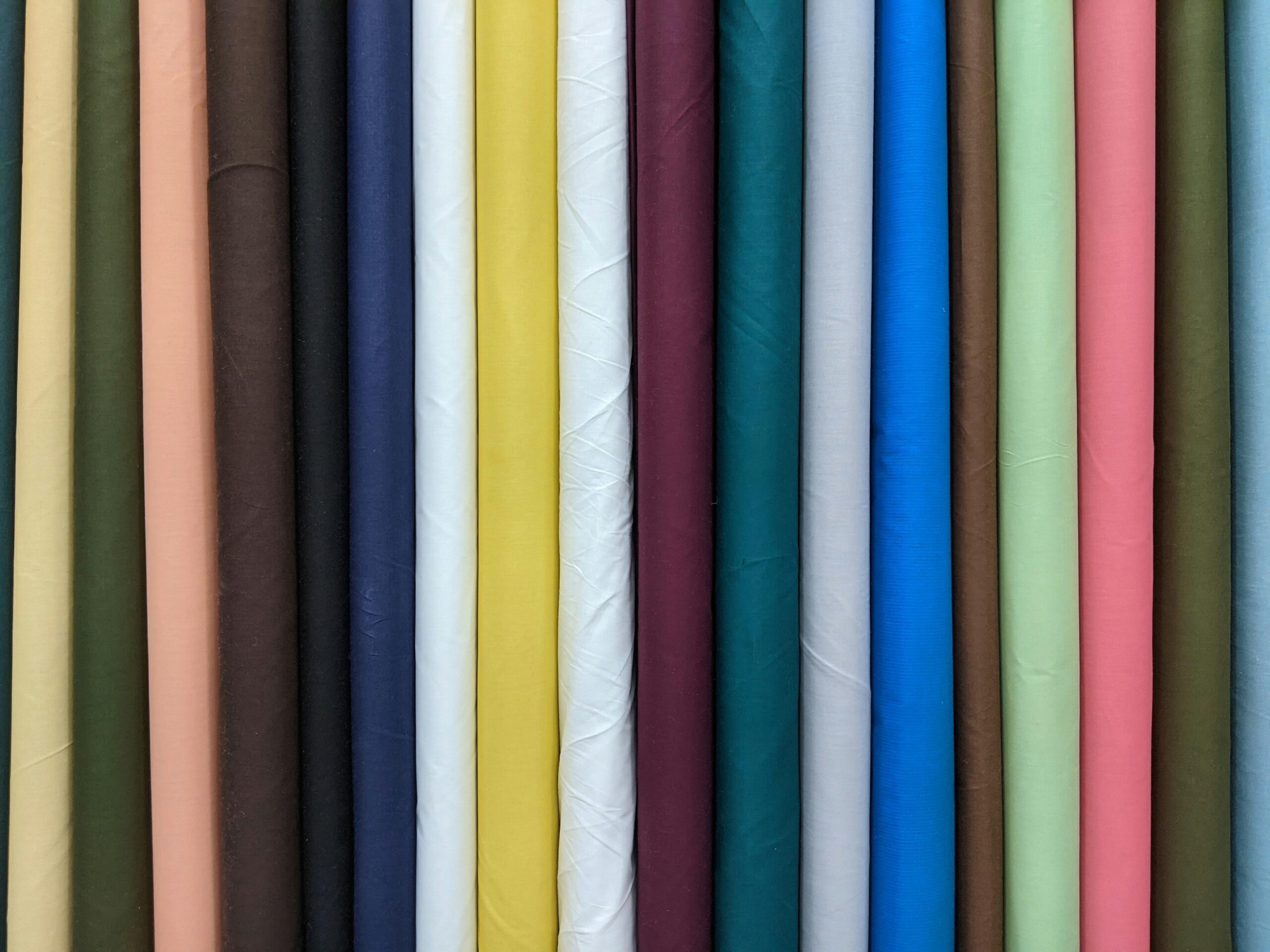
Rayon was the world's first manufactured fiber, developed in the late 19th century as an attempt to create an affordable alternative to silk. It is produced from regenerated cellulose typically wood pulp processed into a liquid state and extruded through fine nozzles to create fibers that mimic the drape and lustre of natural silk. The name itself was chosen deliberately to evoke light and shine: from the French "rayon," meaning ray of light.
Rayon drapes beautifully and takes colour with exceptional vibrancy, making it a popular choice for dress shirts, linings, and casual summer garments. It breathes well in warm conditions and has a pleasant, smooth hand against the skin. Its limitations are its weakness when wet and its tendency to wrinkle significantly. In the context of menswear, rayon functions best in relaxed or casual garments a camp-collar summer shirt, an unlined jacket lining where its drape and colour qualities can be appreciated without the structural demands that would expose its weaker properties.
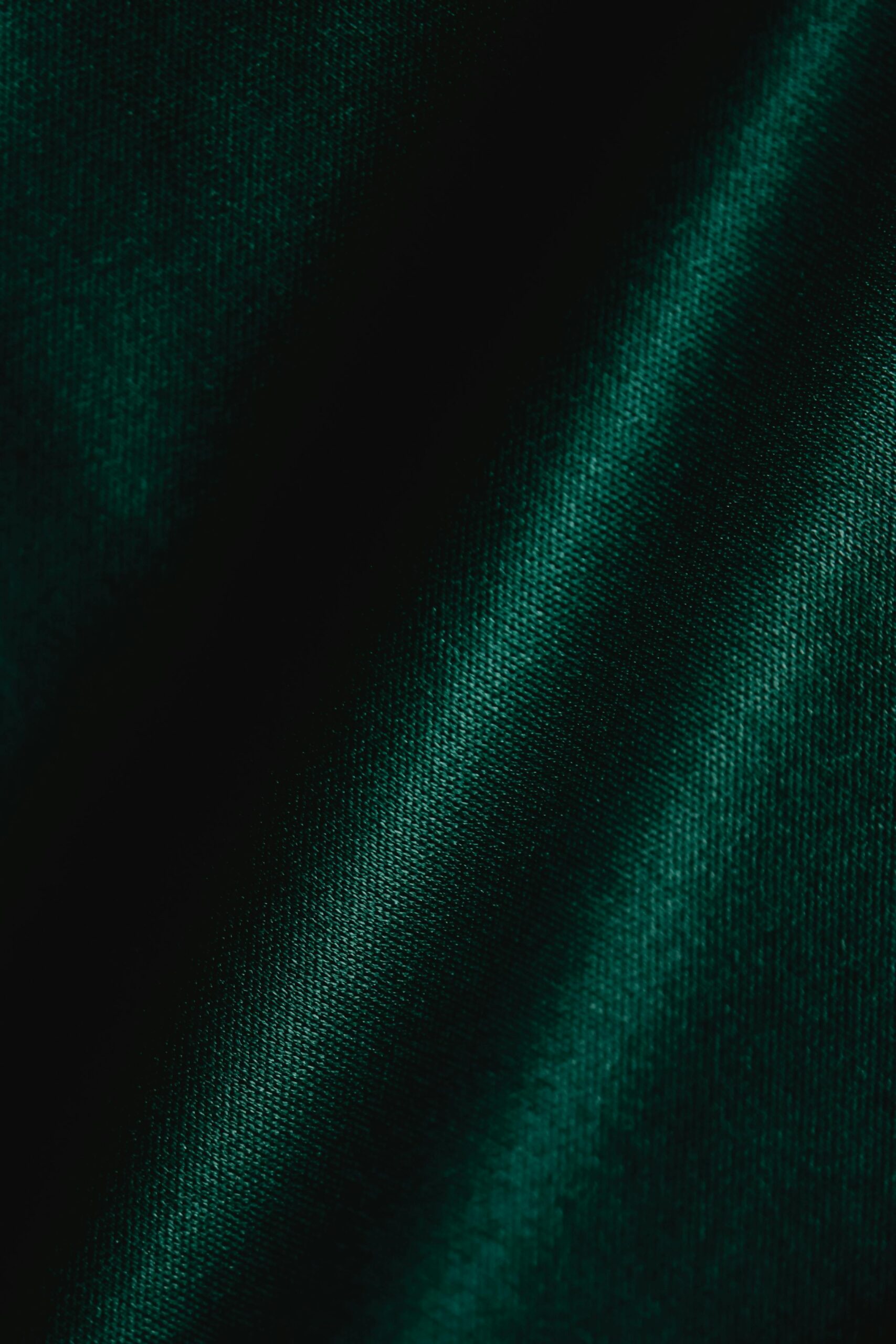
VELVET
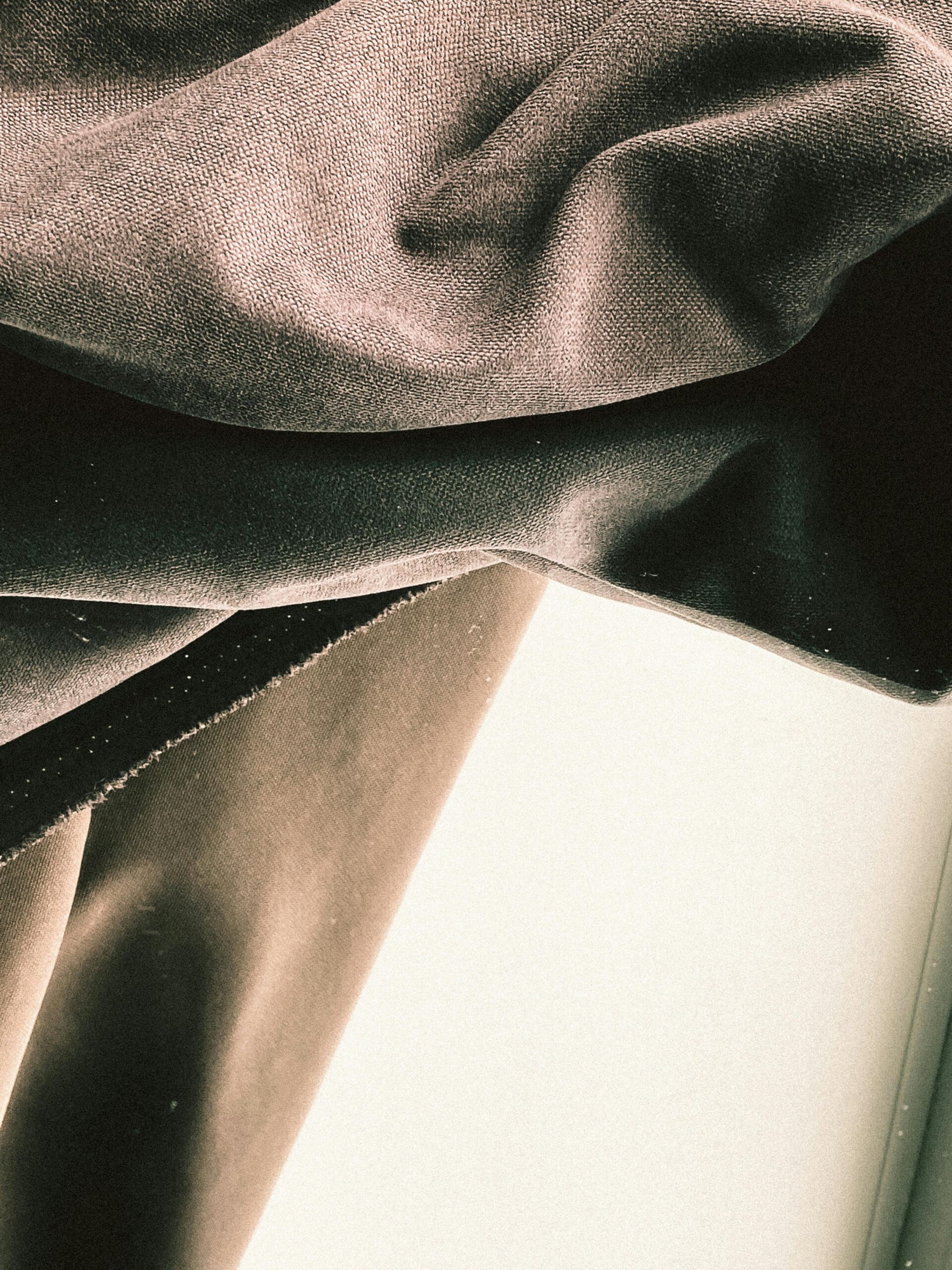
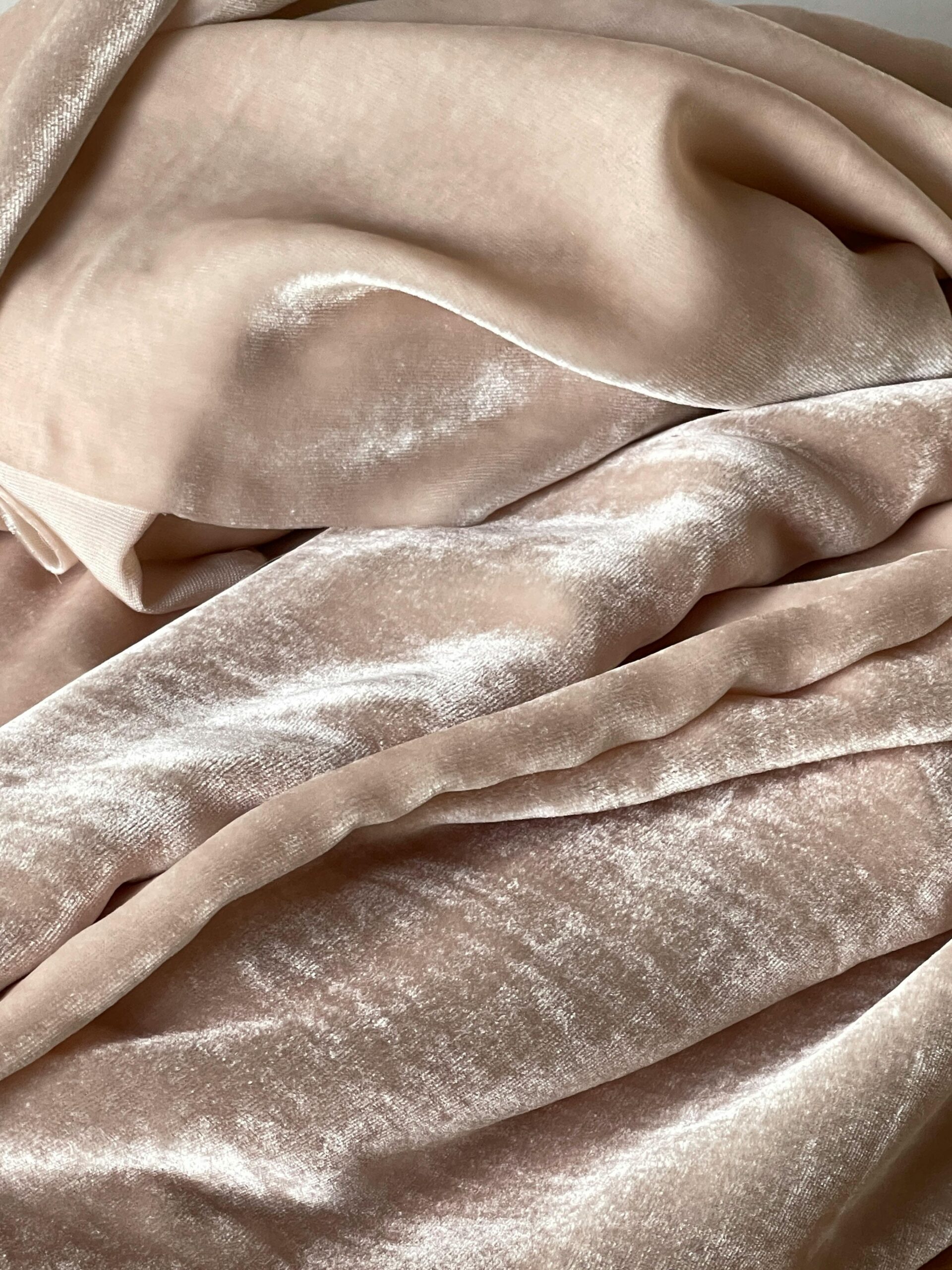
Velvet is a woven fabric with a distinctive cut pile a dense layer of short, upright fiber loops that have been cut to produce a surface of extraordinary softness and depth of colour. Originally woven from silk in the Far East and later in the weaving centres of medieval Italy and Flanders, velvet was for centuries one of the most expensive fabrics in the world. The cut pile construction requires special looms and considerable additional thread, making it inherently labour-intensive to produce.
In menswear, velvet appears most powerfully in evening dress the velvet dinner jacket, typically in midnight navy or deep burgundy, is one of the most refined alternatives to the standard black tuxedo jacket, carrying a historical weight from the courts of the Renaissance and the Victorian gentleman's smoking jacket. Velvet trousers and velvet slippers are staples of the dressed-down evening look associated with old-world aristocratic ease. The fabric's rich, light-absorbing depth of tone makes it naturally at home in candlelit rooms and formal evening settings.

OXFORD
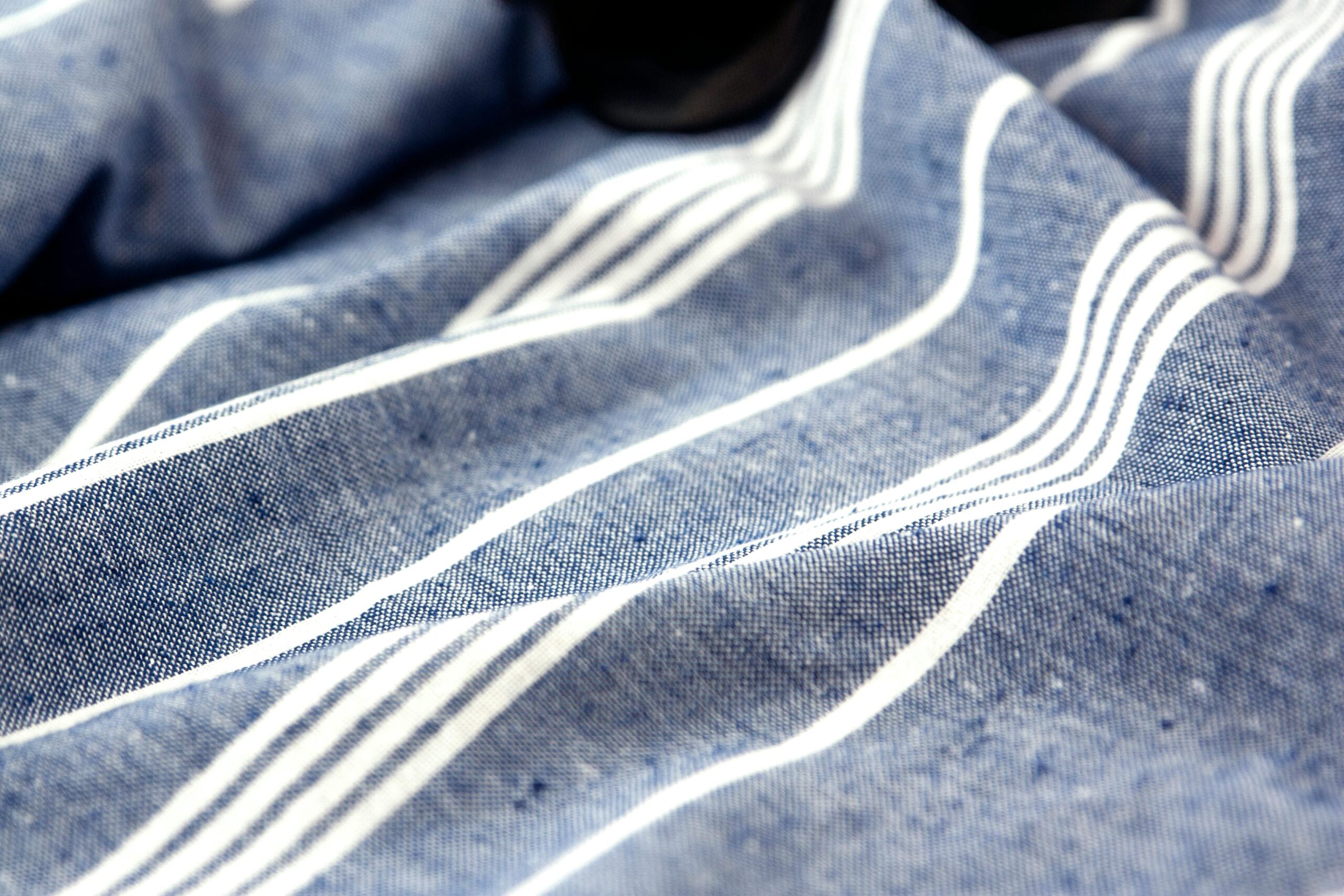
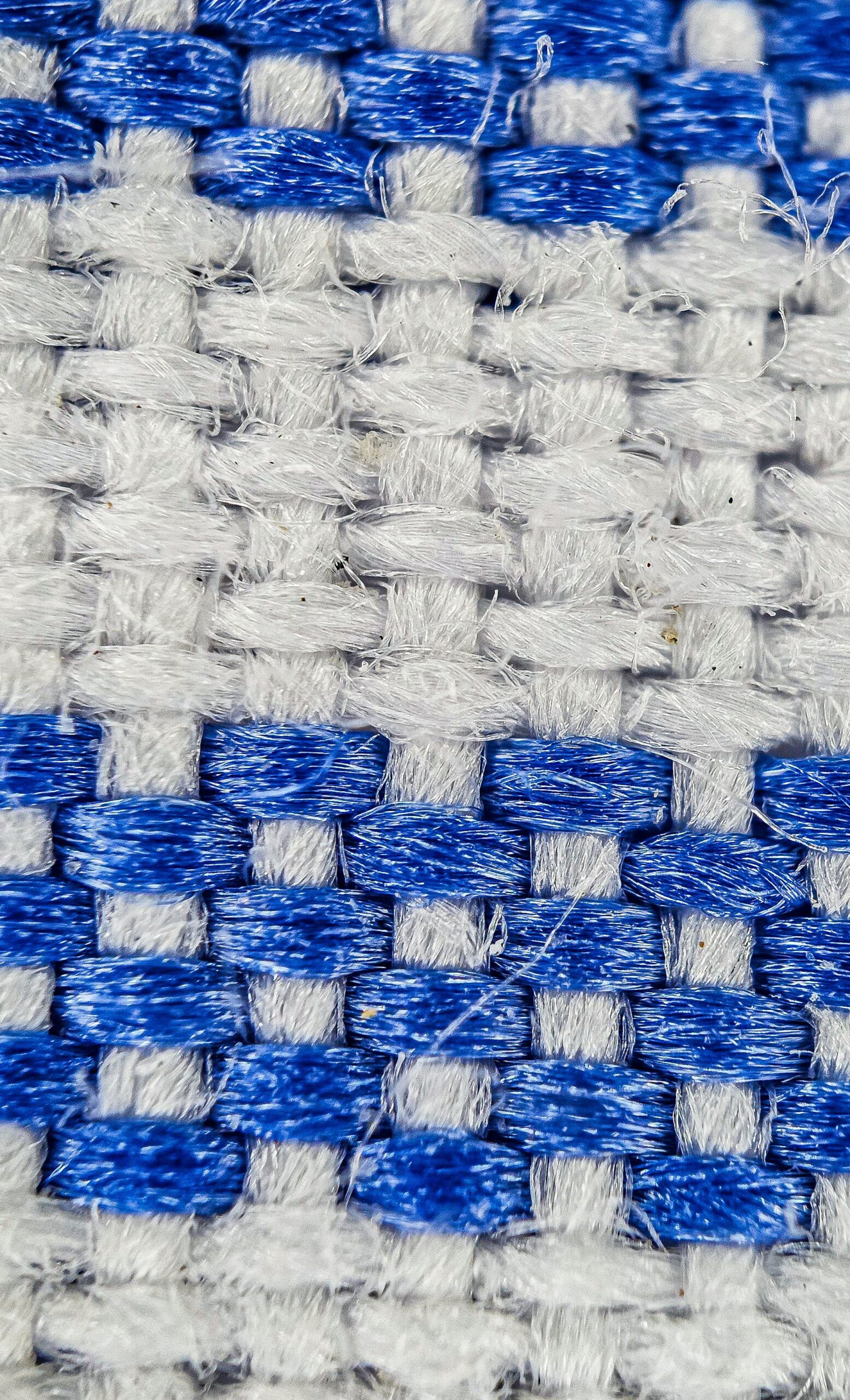
Oxford cloth is a basket-weave cotton fabric originally developed in the 19th century in Scotland and named along with three other weaves, Cambridge, Yale, and Harvard in a marketing gesture designed to appeal to aspirational customers. Of the four, Oxford was the only one to endure, and it became one of the foundational fabrics of men's casual dress. The basket weave construction, where two or more threads run alongside each other as one, produces a fabric with a distinctive, slightly textured surface that is more casual than poplin but more structured than jersey.
The Oxford button-down collar shirt, introduced to the American market by Brooks Brothers in 1896, became the defining garment of the Ivy League aesthetic and, in turn, of American casual elegance. It is the fabric of prep school weekends and campus afternoons, of relaxed professional Fridays and country house gatherings. Oxford cloth softens beautifully with repeated washing, developing an increasingly appealing hand over years of wear. It is one of the most enduring and reliable fabrics in menswear.
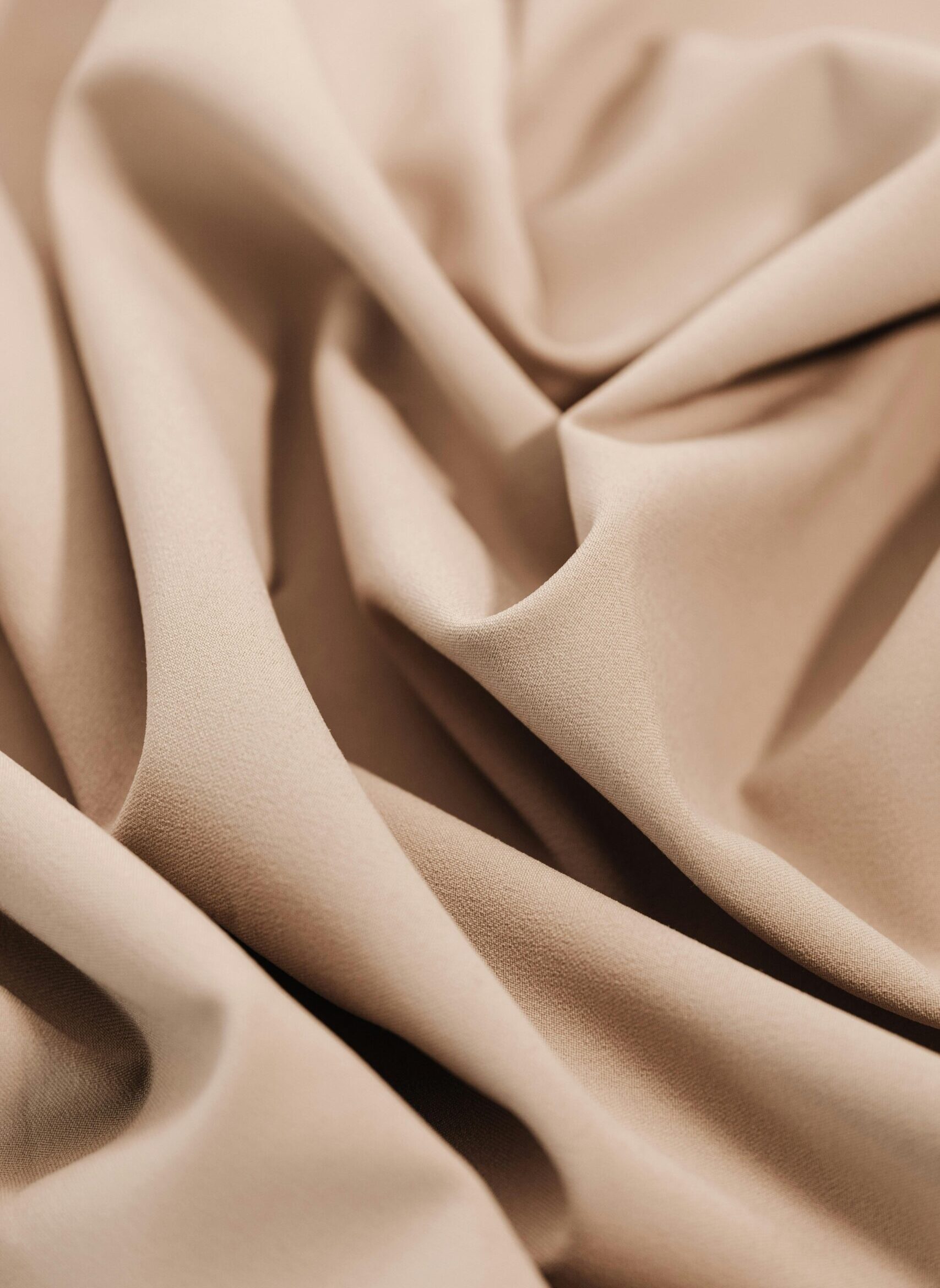
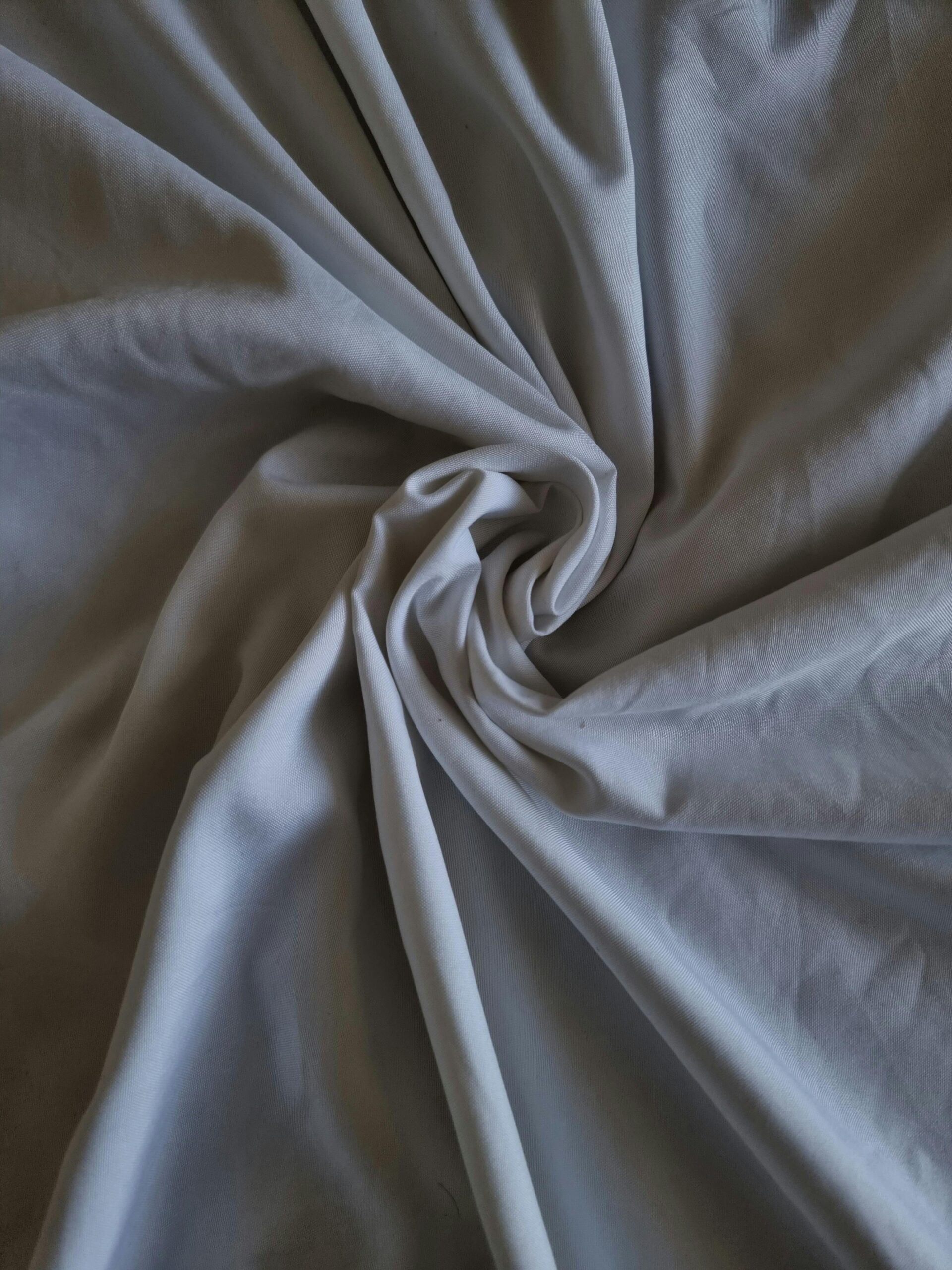
POPLIN
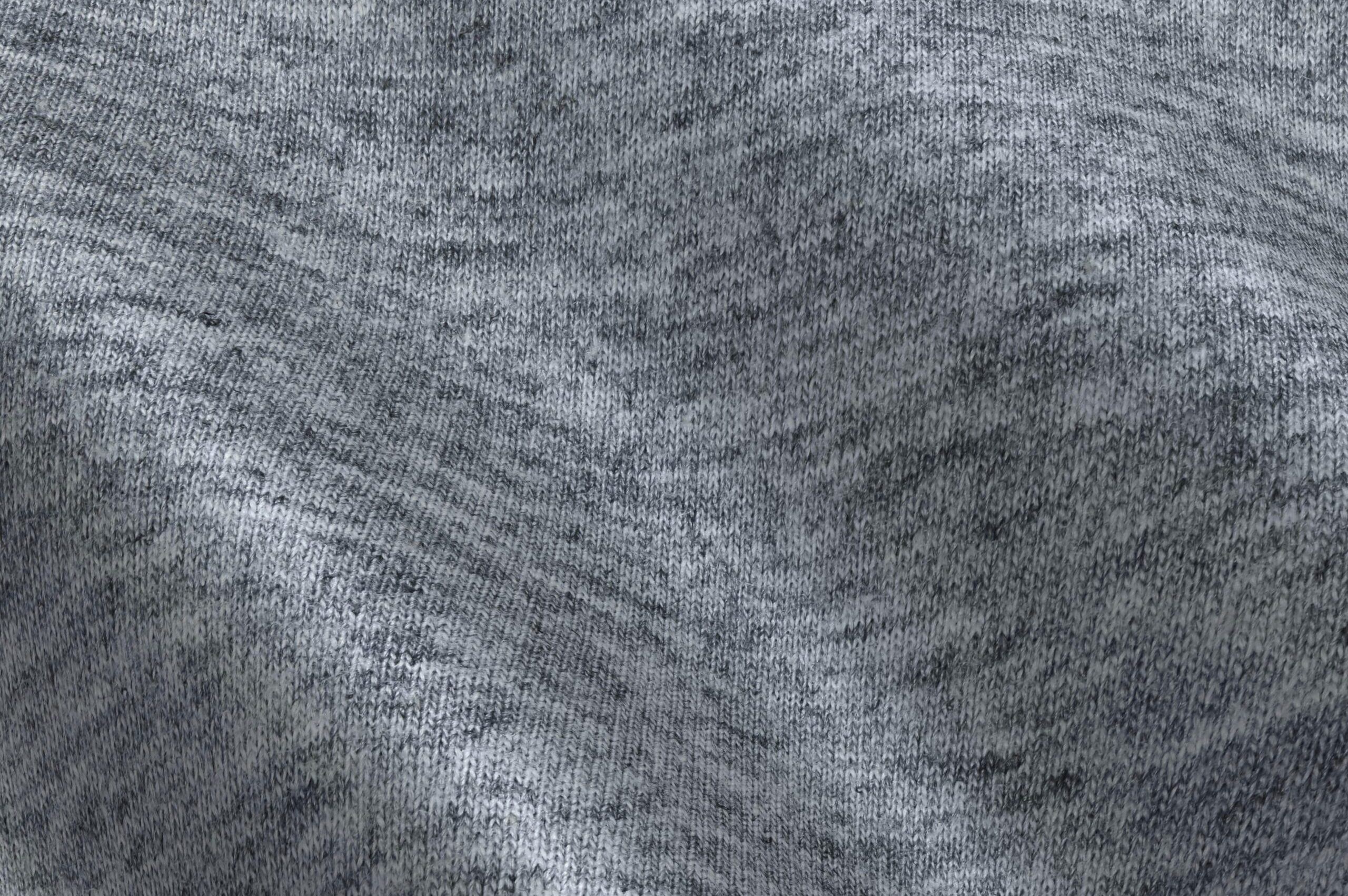
Poplin is a plain-weave fabric with a fine, horizontal rib produced by using a warp thread of a different weight or count from the weft. The result is a smooth, tightly woven fabric with a slight texture that is significantly more formal in appearance than Oxford cloth while remaining lighter and crisper. The name derives from Poperinge, a town in medieval Flanders that was a major textile production centre though poplin has been produced in Ireland, France, and Italy with particular distinction.
In menswear, poplin is the gold standard for formal dress shirts. Its smooth surface, crisp hand, and slight sheen create the clean, precise appearance required under a well-tailored suit. A fine white poplin dress shirt with a spread collar, French cuffs, and mother-of-pearl buttons represents one of the most classic and irreproachable choices in formal men's dressing. Poplin takes ironing beautifully, emerging from the iron with a near-metallic crispness that is the visual language of sartorial precision.
FLANNEL
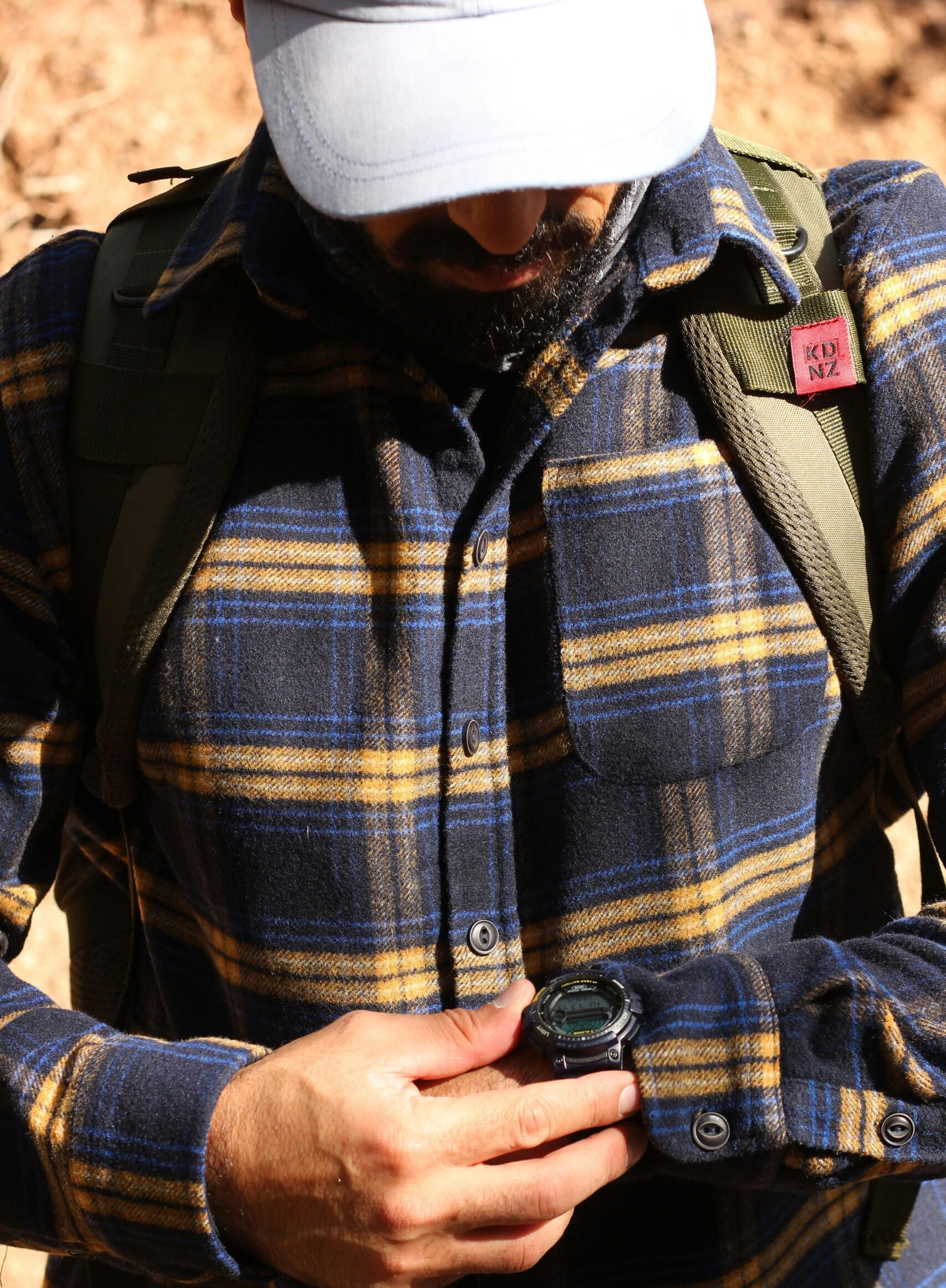
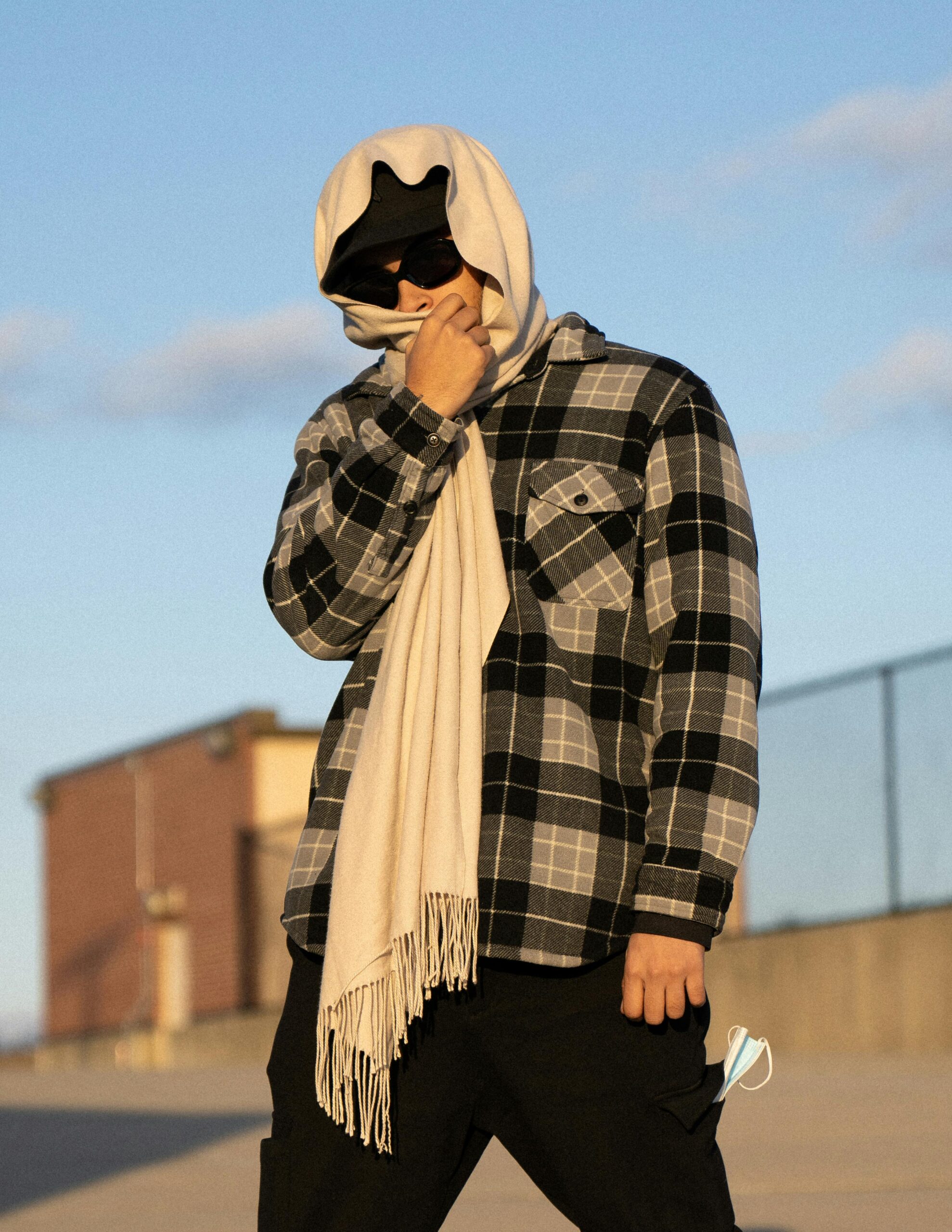
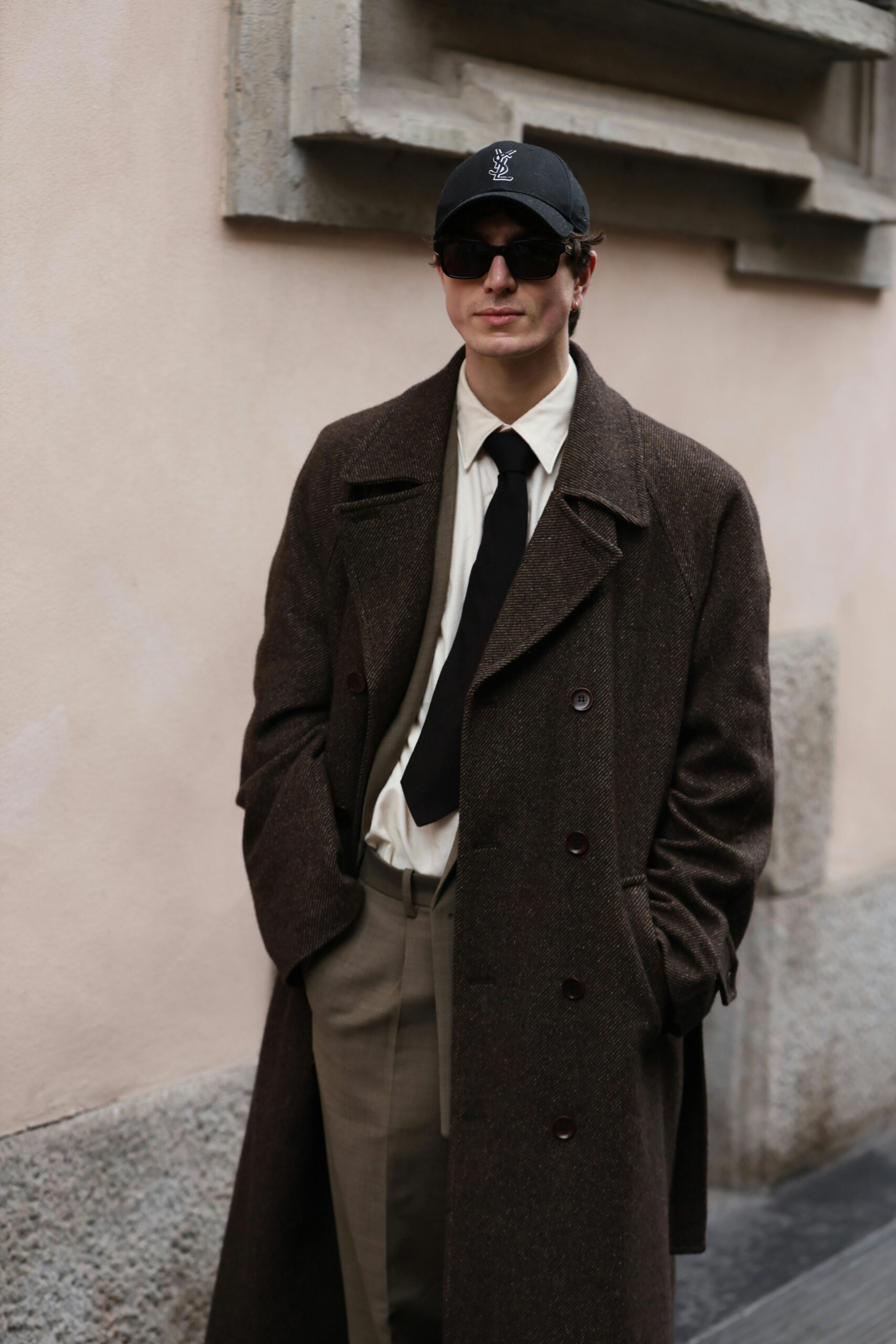
Flannel is a loosely woven wool or wool-blend fabric that has been lightly milled and then brushed a process called napping to raise the surface fibers, creating a soft, slightly fuzzy texture and a warm, matte appearance. The fabric has its roots in Wales, where it was used as early as the 16th century to make working garments, but its elevation into gentleman's tailoring occurred in 19th-century England, where grey flannel became the standard fabric for tailored trousers and business suiting.
Grey flannel trousers are among the most enduring garments in men's tailoring paired with a navy blazer, they represent perhaps the most reliable and timeless combination in the English menswear tradition. Flannel suits, in medium and dark grey, charcoal, and occasionally chalk stripe, are the armour of the professional gentleman in autumn and winter. The softness of flannel's surface gives tailored garments a slightly less rigid appearance than smooth worsted, creating a refined but approachable formality that is particularly well-suited to modern professional life.
GABARDINE
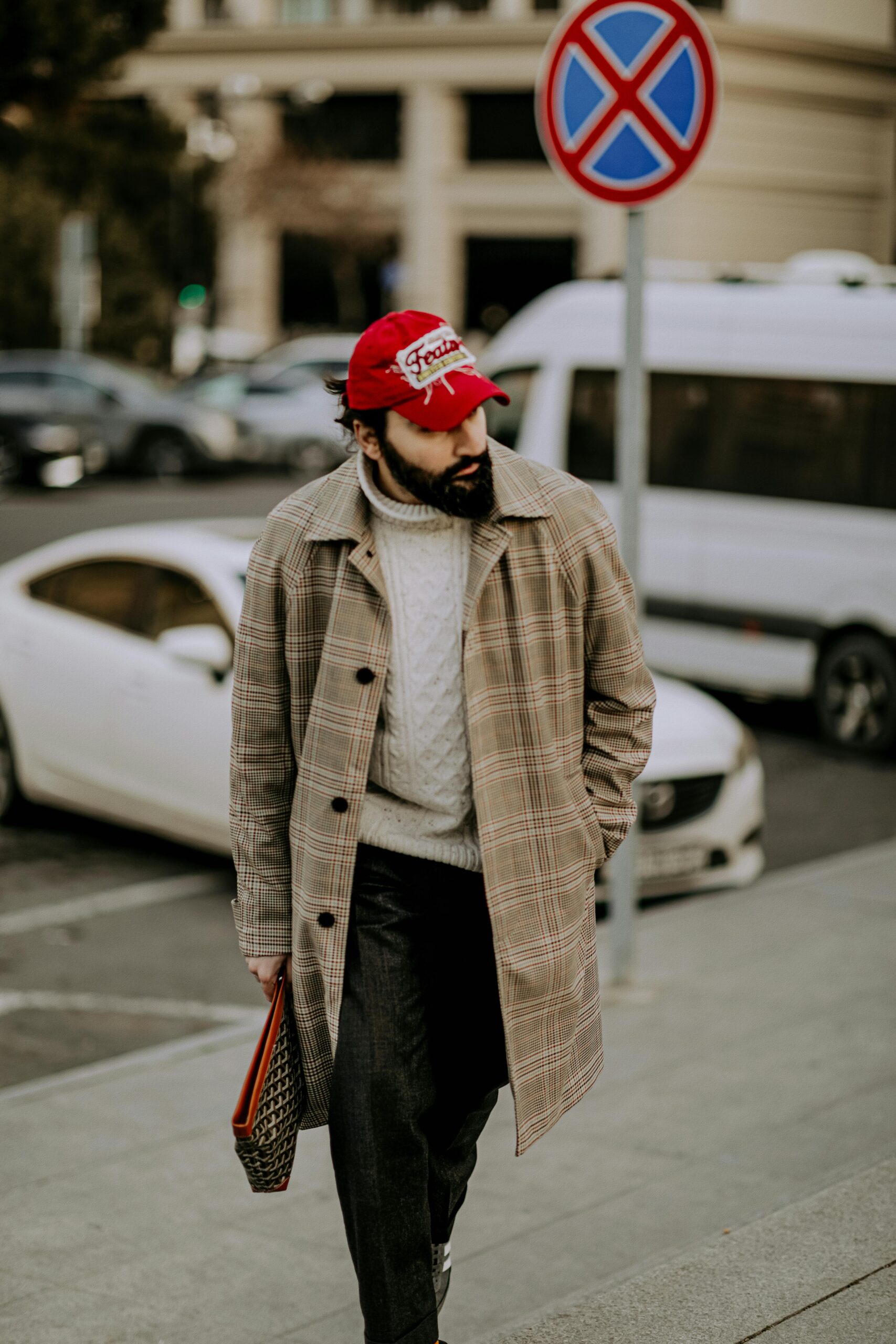
Gabardine is a tightly woven twill fabric, originally produced in wool and later in cotton, polyester, and blends. It was patented in 1879 by Thomas Burberry the founder of Burberry who developed it as a weatherproof alternative to the heavy rubberized mackintosh coats then in use. Gabardine's tight diagonal twill construction creates a fabric that is wind-resistant and water-repellent while remaining significantly lighter and more breathable than rubberized alternatives.
Burberry's trench coat, produced in gabardine from the First World War onward, became one of the most famous garments in the history of dress a piece of military utility that transformed into enduring civilian elegance. Beyond the trench coat, gabardine is used extensively in trousers, suits, and outerwear, where its smooth surface, clean drape, and durability make it an excellent all-weather fabric. Wool gabardine trousers smooth, structured, with a clean fall are among the most refined trouser fabrics available.
TWILL
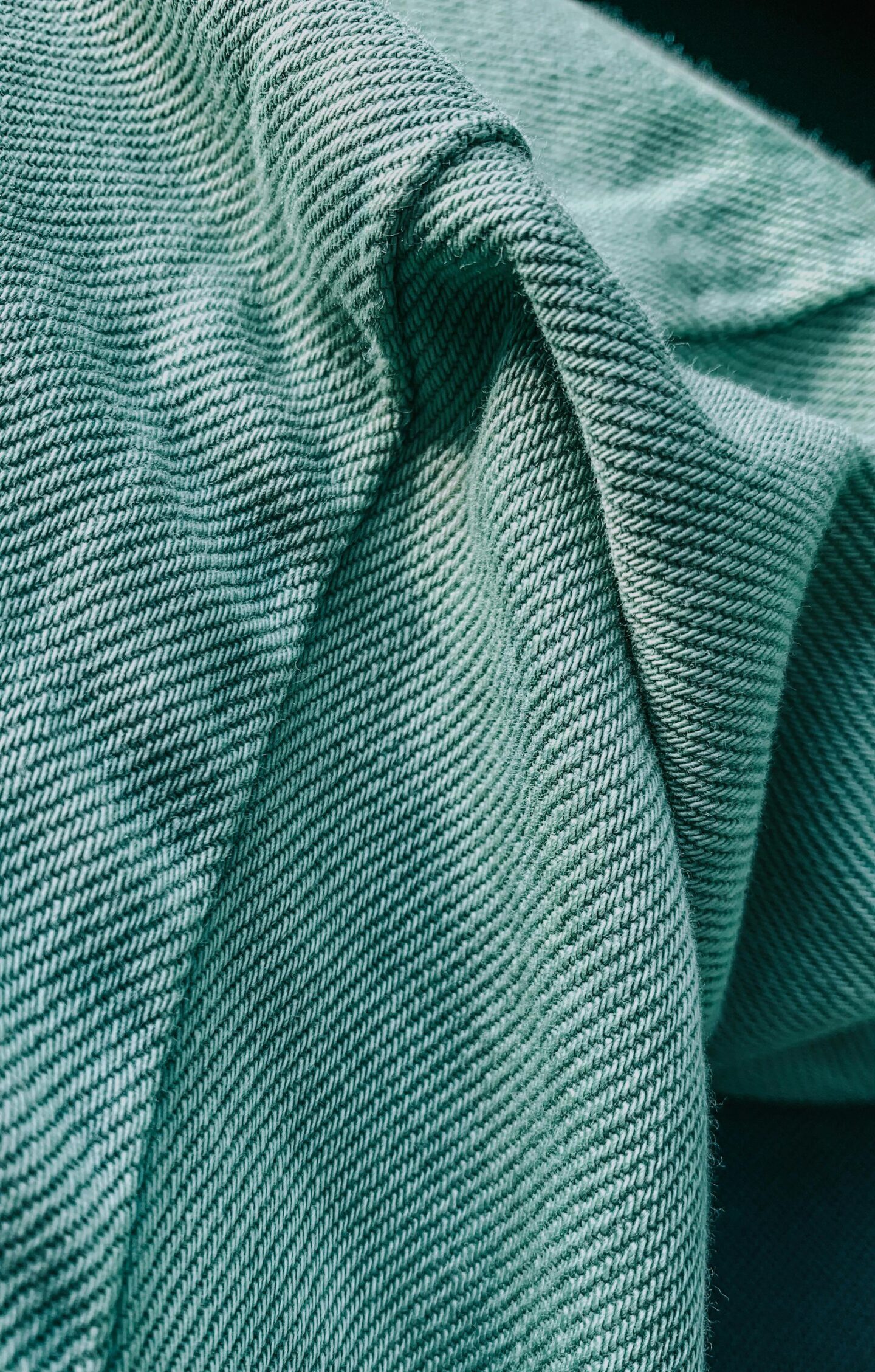
Twill is not a single fabric but a weaving technique one of the three fundamental weave structures, alongside plain weave and satin. In a twill weave, the weft thread passes over and under multiple warp threads in a consistent offset pattern, creating the characteristic diagonal rib that can be seen on the surface of the fabric. This diagonal structure is the defining visual characteristic of twill and is responsible for its superior drape compared to plain-weave fabrics of equivalent weight.
Twill construction is used across a wide range of fabrics in menswear denim is a twill, as is gabardine, serge, and many dress shirt fabrics. The diagonal rib structure provides additional durability and drape, and in shirting, a fine twill weave creates a fabric that feels softer and holds a sharper press than plain weave at equivalent weights. A cotton twill dress shirt has a quiet elegance not the stark formality of poplin, but a softer, more luxurious precision that works particularly well in pale blue, white, and pale pink.
SEERSUCKER
Seersucker is a cotton fabric with a distinctive puckered surface, created by a weaving technique that alternates tight and loose warp threads to produce alternating smooth and crinkled stripes. The name derives from the Persian "shir o shekar," meaning milk and sugar a reference to the alternating smooth and rough textures of the fabric. It originated in India and was adopted by British colonial administrators, eventually making its way to the American South, where it became a symbol of summer formality.
The puckered surface of seersucker means that most of the fabric stands slightly away from the skin, allowing air to circulate and significantly reducing the cooling effect of perspiration. This makes it an extraordinarily practical fabric for hot, humid weather particularly in the context of formal dress, where the alternative might be a woollen suit in temperatures that render such a choice genuinely uncomfortable. A seersucker suit in pale blue and white or grey and white, worn with a white shirt and a simple tie, is one of the most elegant summer formal garments available.
HERRINGBONE
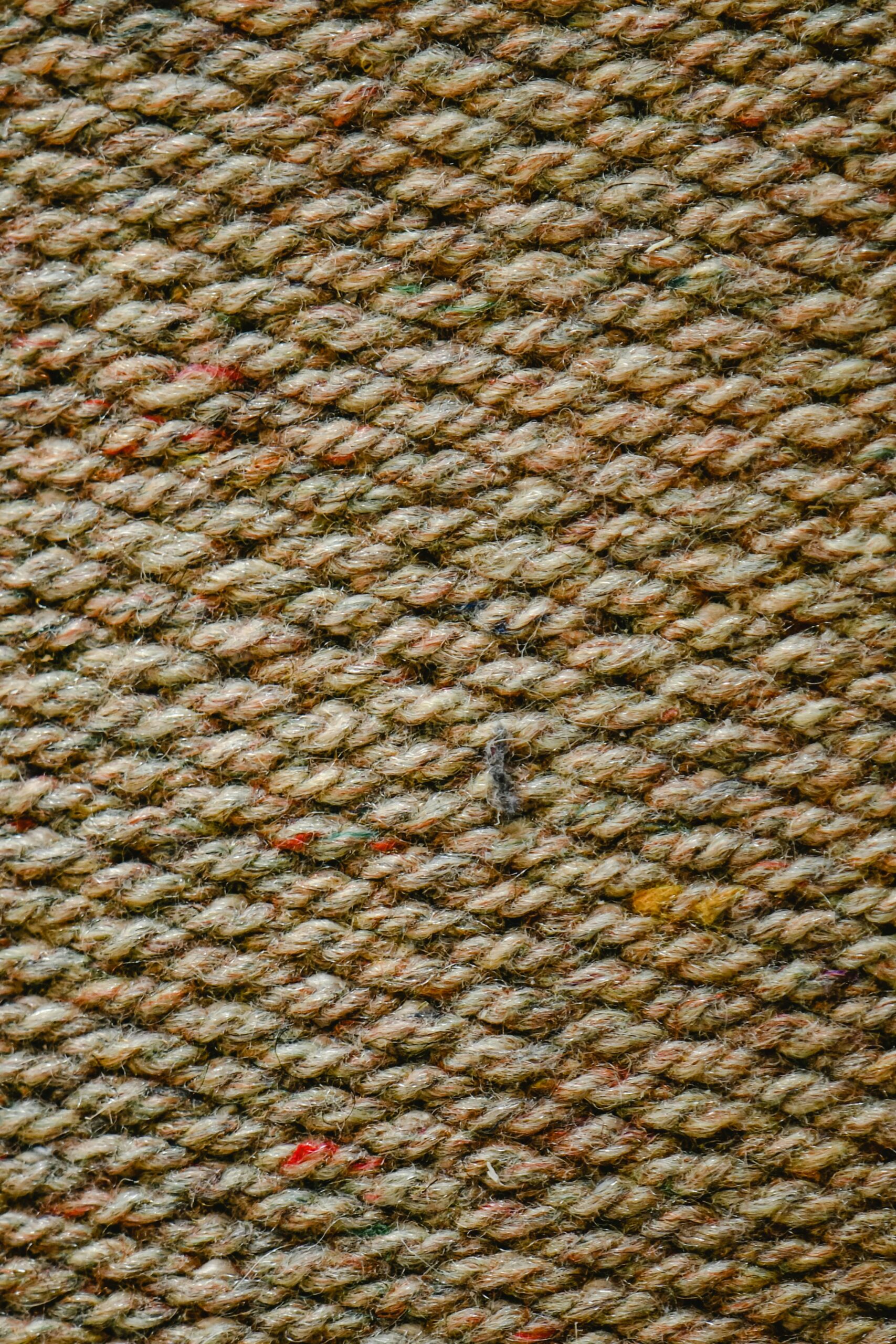
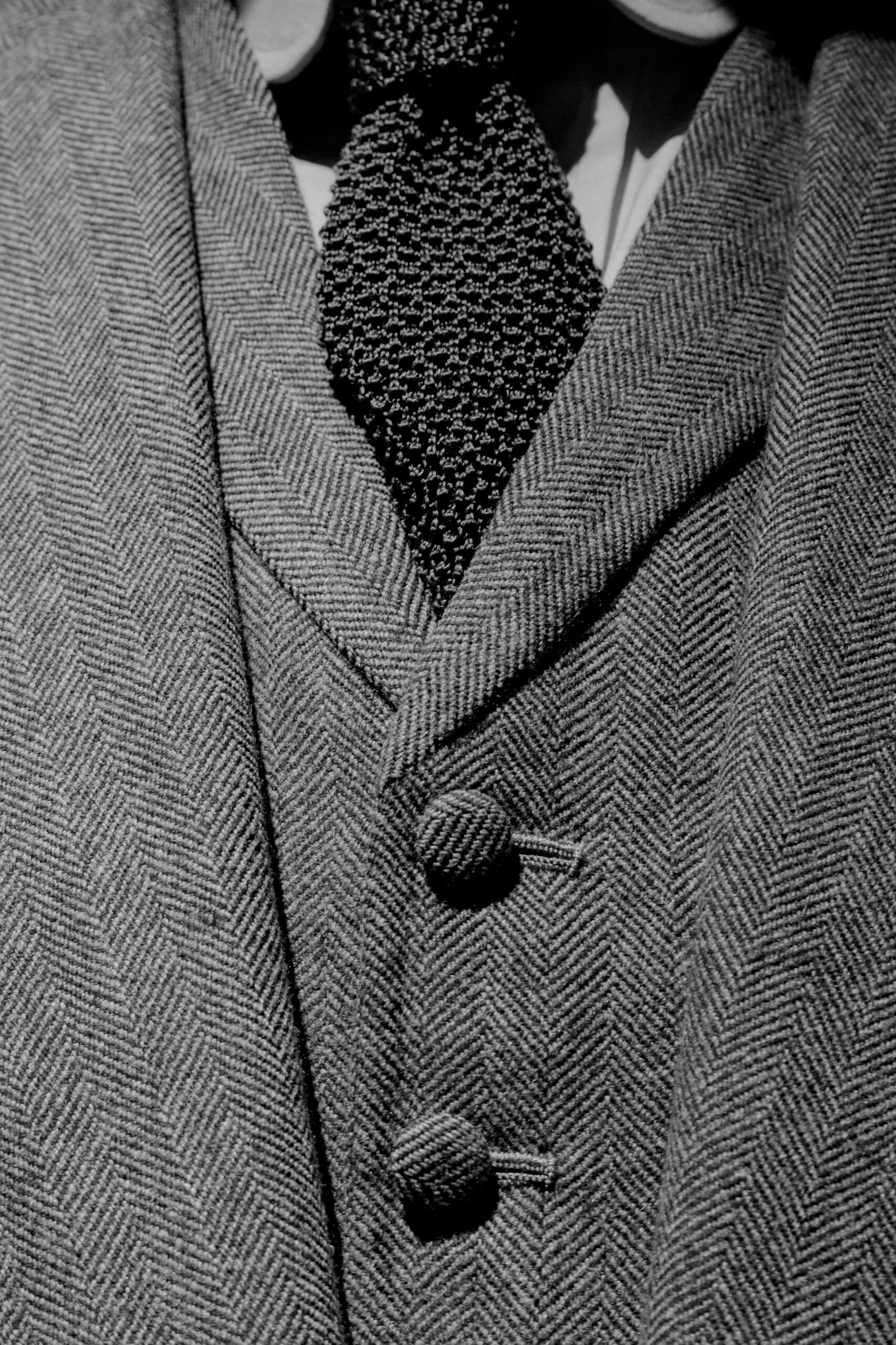
Herringbone, like twill, is a weave pattern rather than a fiber type. It is a variation of twill weave in which the direction of the diagonal reverses at regular intervals, creating a V-shaped pattern that resembles the skeleton of a herring hence the name. The visual effect is one of the most distinguished and recognizable patterns in menswear, with a depth and movement that plain-weave or standard twill fabrics do not possess.
Herringbone appears most prominently in wool suiting and jacketing, where it adds visual interest to the cloth without moving into the more conspicuous territory of windowpane or plaid. A charcoal or dark grey herringbone suit is among the most sophisticated choices in men's professional dress formal enough for any business context, interesting enough to suggest that the wearer cares about what he is wearing. Herringbone tweed jackets, in earthier tones of brown, green, and russet, are among the most quintessentially English garments in existence.
LYOCELL
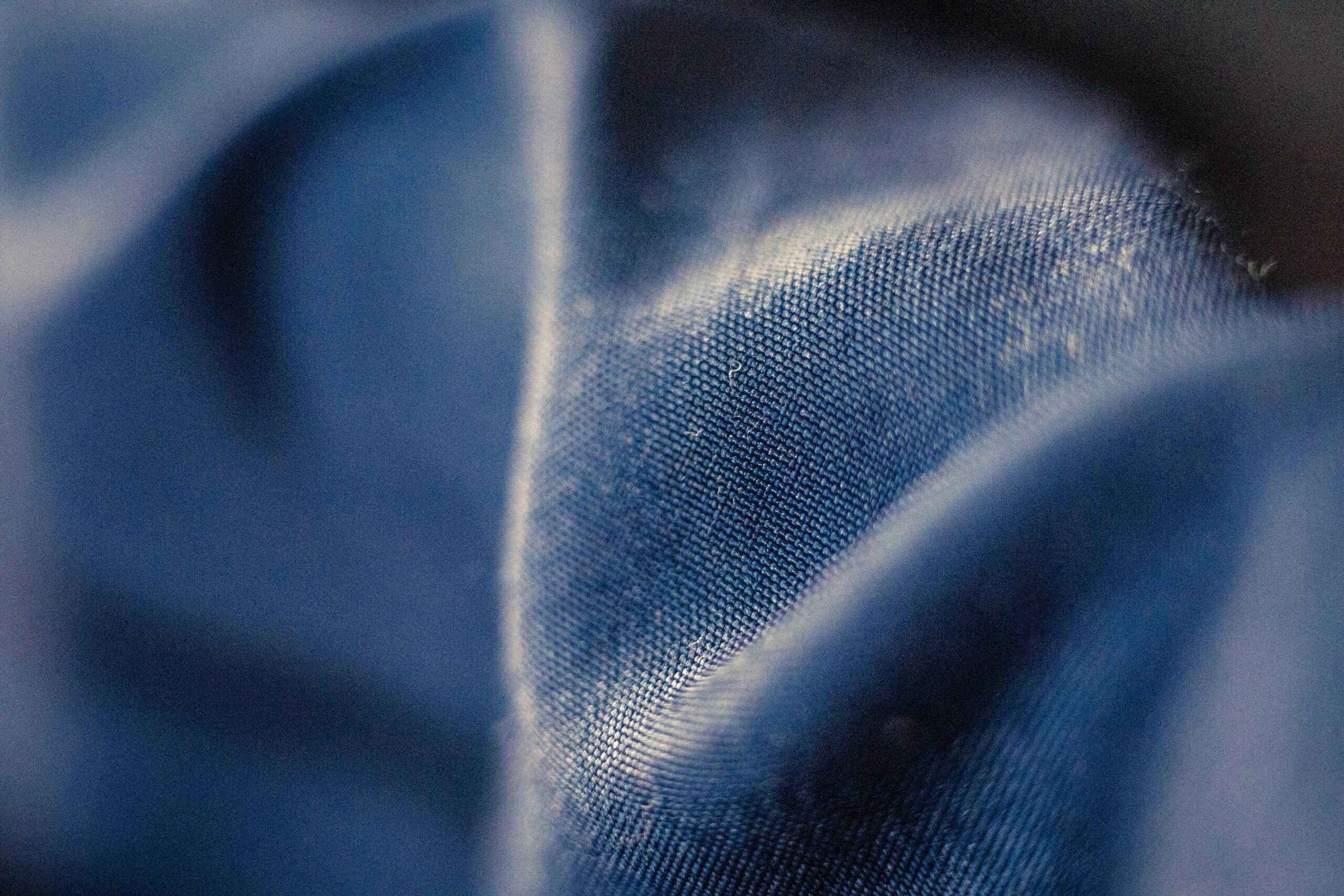
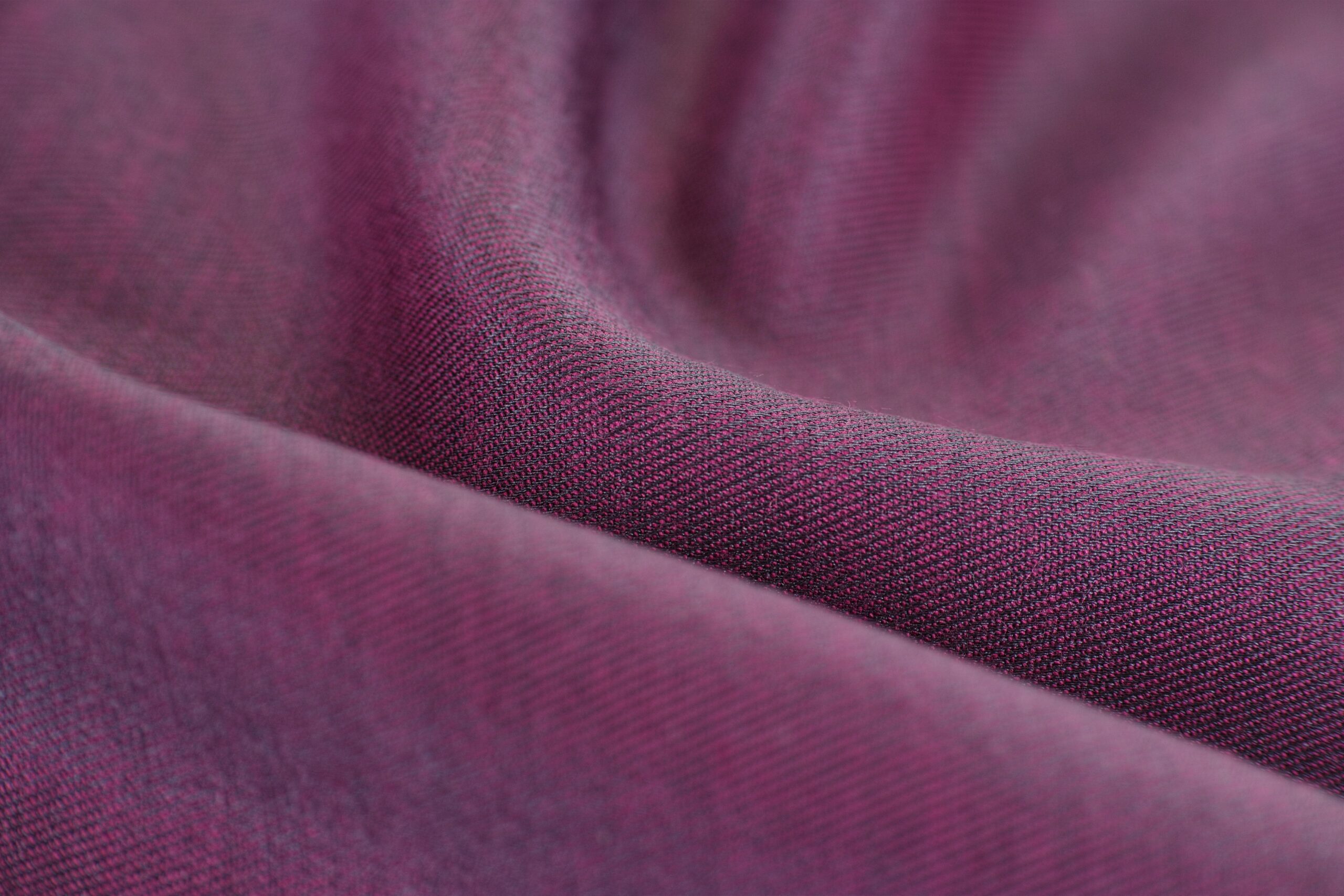
Lyocell marketed most famously under the trade name Tencel is a relatively recent addition to the textile world, developed in the 1970s and commercialized in the 1990s. Like rayon, it is a regenerated cellulose fiber produced from wood pulp, but unlike rayon, it is produced through a closed-loop manufacturing process that recovers and recycles the solvent used in processing, making it significantly more environmentally responsible than conventional rayon production.
In menswear, lyocell has found a place in casual shirting, soft tailoring, and knitwear, where its exceptional softness softer than cotton and comparable to fine rayon combined with its moisture management properties and relative durability make it an appealing natural-feeling option. It breathes well, drapes beautifully, and has a subtle natural lustre. For the man who pays attention to the environmental impact of his wardrobe, lyocell offers genuine performance with a cleaner conscience.
SPANDEX
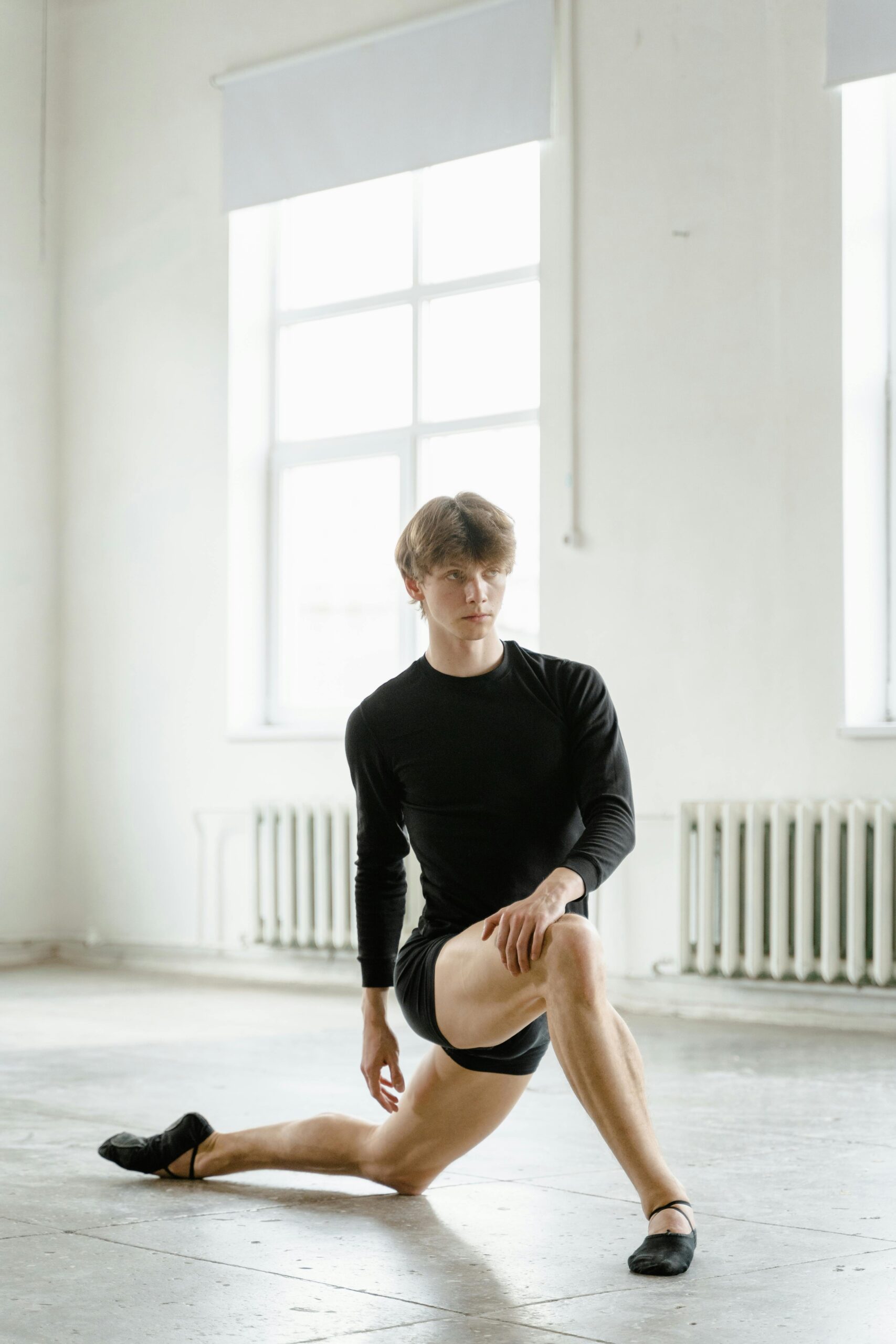
Spandex known internationally by the DuPont trade name Lycra is a synthetic elastomeric fiber capable of stretching to over five times its original length and returning fully to its original form. Developed by DuPont chemist Joseph Shivers in 1958, it was initially used in women's foundational garments before its applications expanded dramatically across sportswear, swimwear, and, eventually, formal garments.
In contemporary menswear, small percentages of spandex typically 2–5% are blended into suit trousers, dress shirts, and casualwear to provide a degree of stretch and ease of movement that pure woven fabrics cannot offer. A suit trouser with 2% elastane will allow a fuller range of movement without pulling or distorting during sitting or physical activity a meaningful practical improvement for the active professional. The presence of spandex in menswear is not a concession to informality; handled with intelligence, it is a concession to the reality of modern life.

ORGANZA
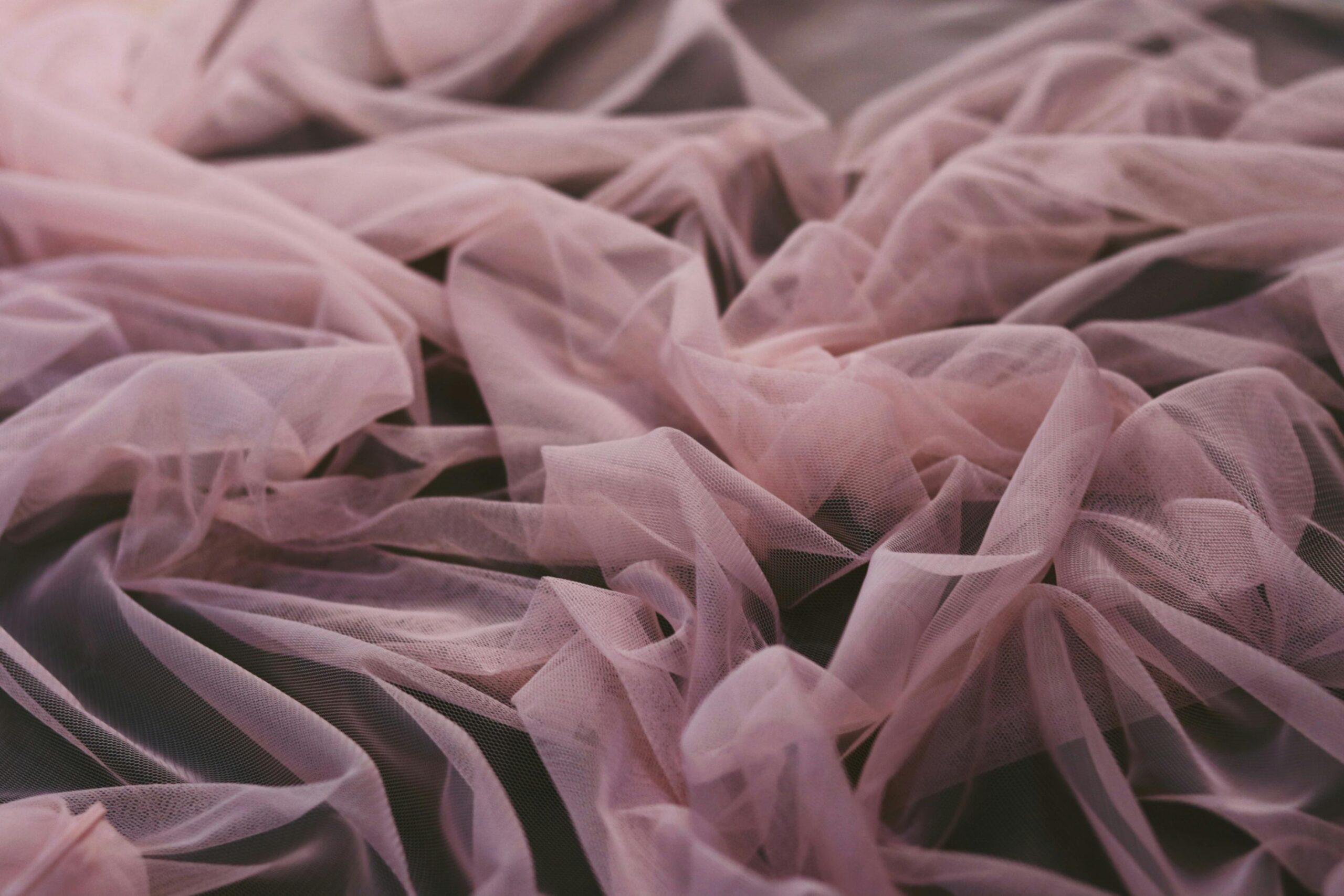
Organza is a lightweight, sheer plain-weave fabric traditionally made from silk, though contemporary versions are frequently produced in polyester or nylon. Its defining quality is its stiff, crisp hand achieved through a tight twist in the yarn and sometimes through chemical finishing which allows it to hold structure and volume while remaining almost transparent. It originated in the silk weaving traditions of China and later became associated with the high-fashion houses of Paris and Milan.
In menswear, organza appears primarily as a decorative and formal accessory fabric in pocket squares, bow ties, and as structural elements in couture-level tailoring. Its sheer, almost luminous quality makes it a fabric of ceremony and occasion. A silk organza pocket square, carefully folded, catches the light in a way that no other fabric quite matches. It is a fabric for those moments when a man wishes to be unmistakably dressed.
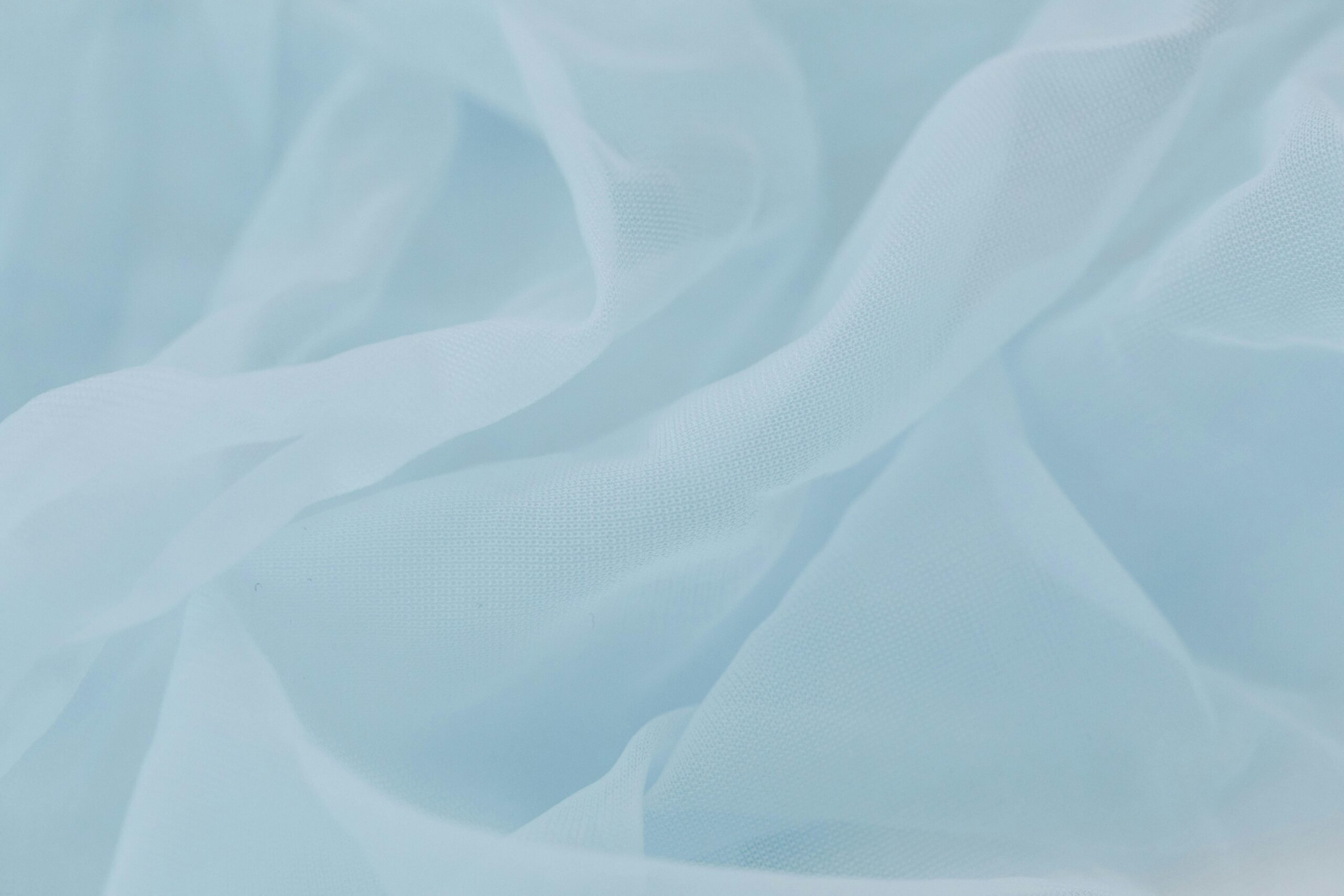
CHENILLE
Chenille takes its name from the French word for caterpillar an apt description for a fabric whose surface consists of short fiber tufts protruding from a central yarn, creating a soft, dense, almost furry texture that is unmistakable to the touch. It is produced by first creating a special pile yarn and then weaving or knitting this yarn into fabric, producing a surface with extraordinary depth and warmth.
In menswear, chenille appears most commonly in knitwear sweaters and cardigans where its distinctive texture adds visual weight and tactile richness to casual and smart-casual garments. It has a deliberate, artisan quality that suits the current mood of considered casual dressing: substantial enough to wear as a single layer on cool days, interesting enough to make a clean outfit considerably more visually complex. Chenille knitwear pairs naturally with denim and tailored trousers alike.
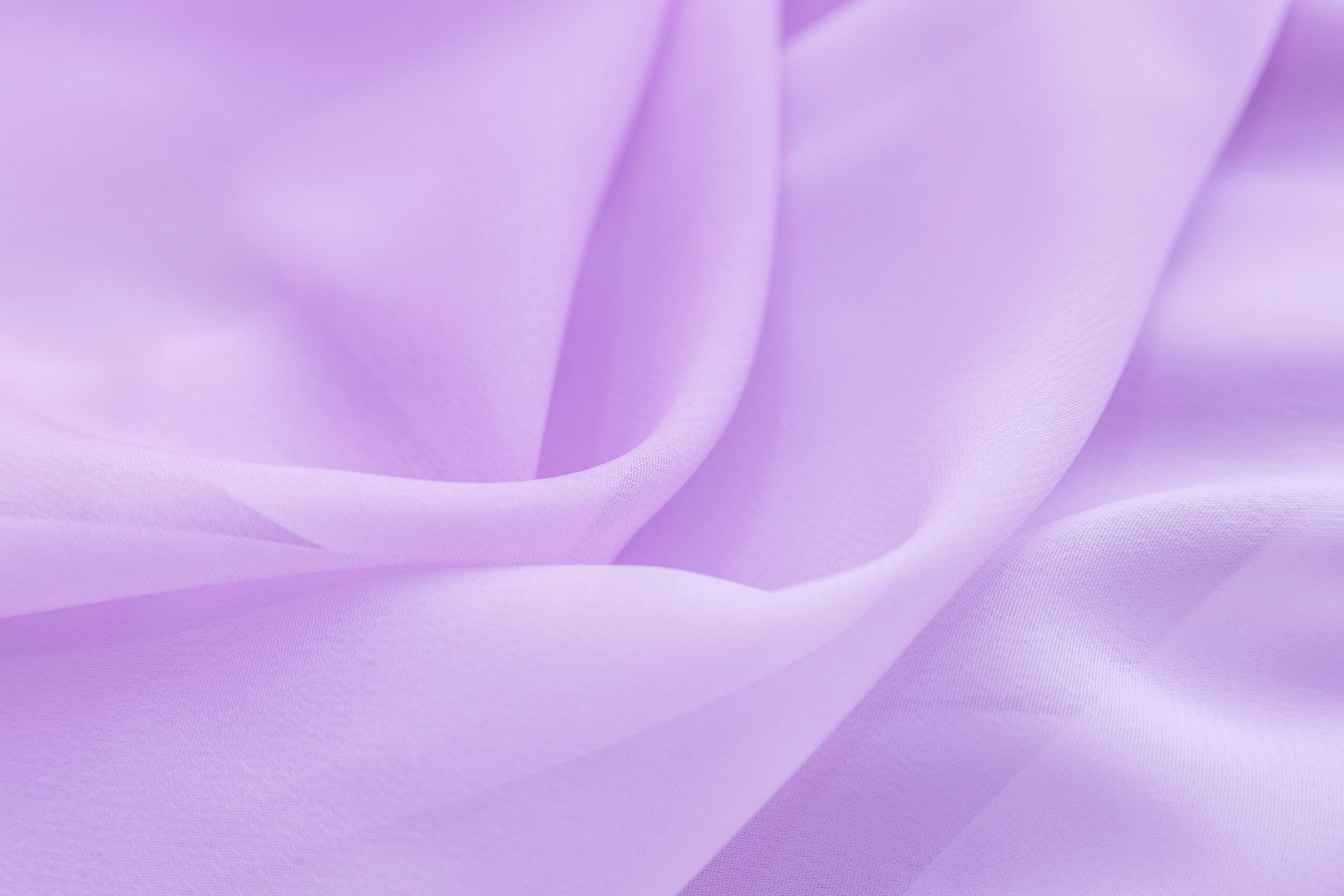
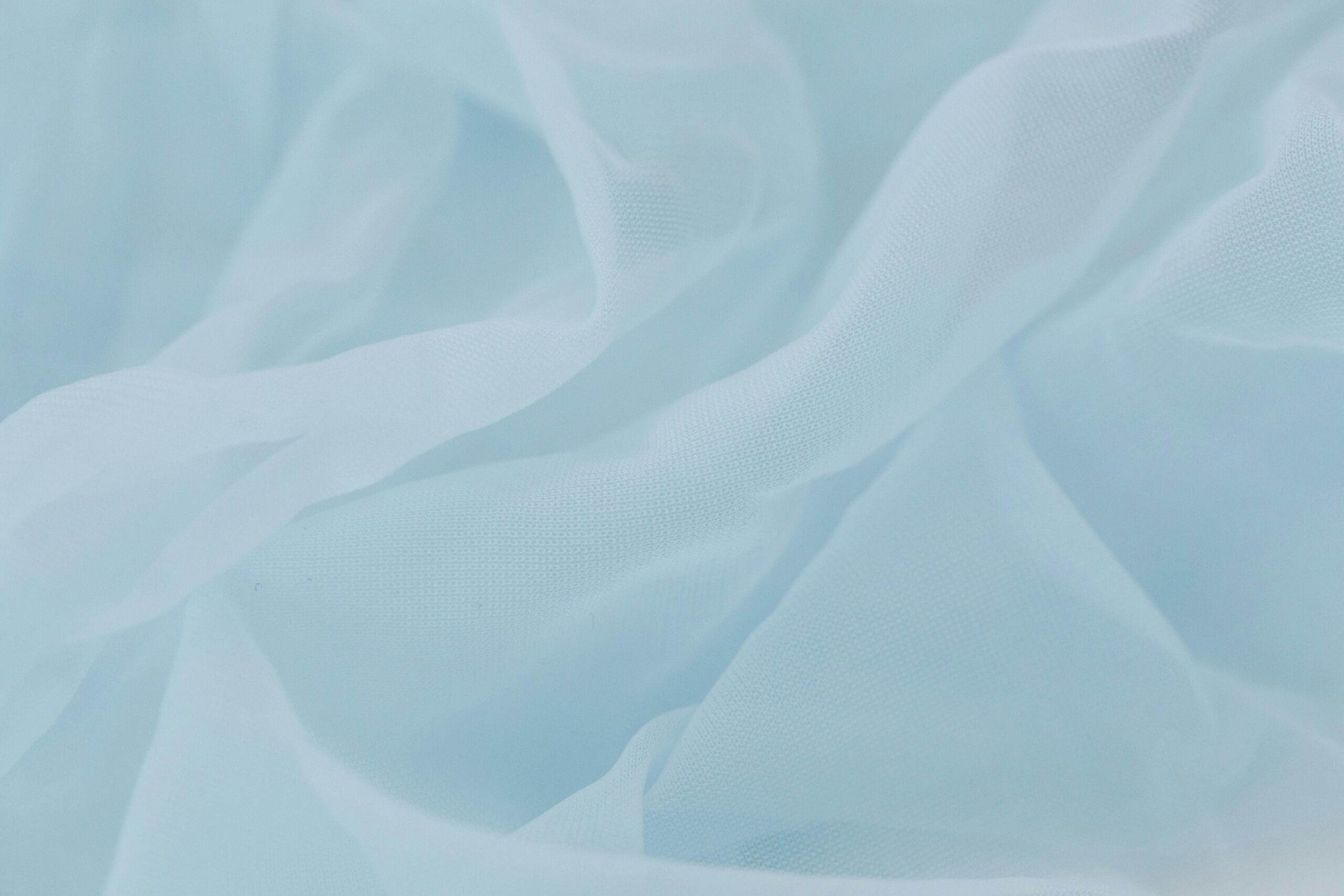
CHIFFON
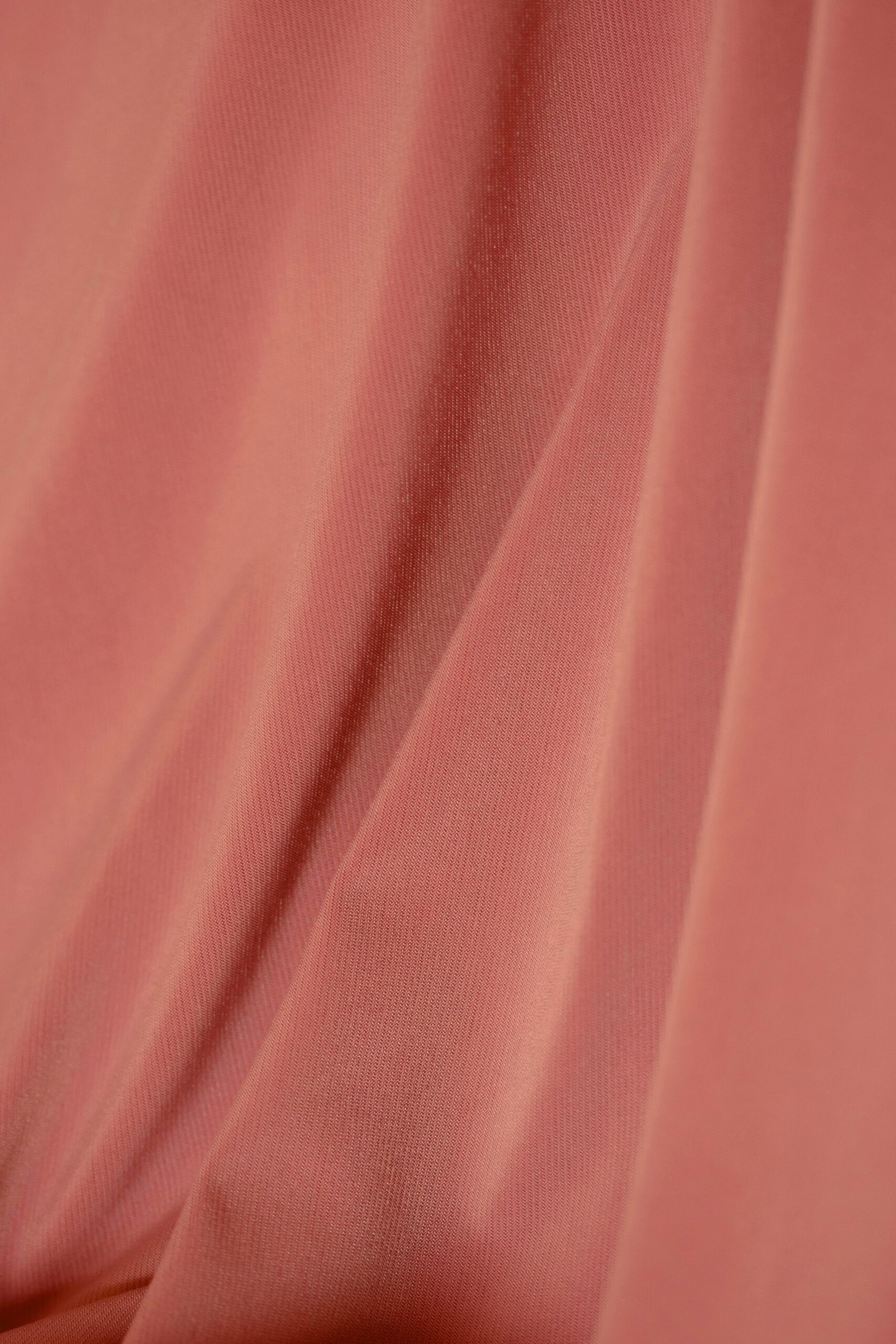
Chiffon is a sheer, flowing woven fabric of extreme lightness, historically produced in silk and now also in polyester and other synthetics. The name derives from the French word for cloth or rag, though chiffon in its finest forms is anything but coarse it is among the most delicate and ethereal fabrics in the textile world, with a slightly grainy texture produced by the alternating S- and Z-twist of its yarns and a fluidity of drape that gives it an almost liquid quality in motion.
While chiffon is primarily associated with womenswear evening gowns, blouses, scarves it appears in the menswear world in the most refined contexts: luxury pocket squares, evening neckwear, and as a lining material in haute couture tailoring. A silk chiffon pocket square has a weightless, airy quality that sits unlike any other material, folding into the breast pocket in natural, unforced ways that produce the artless elegance that distinguishes genuine refinement from mere precision. It is a fabric for the most considered details.
THE FINAL WORD
What the Cloth Teaches
We began this journey seven thousand years ago, in the cotton fields of the Indus Valley. We walked through the flax fields of ancient Egypt, the wool markets of medieval England, the denim mills of California, the silk gardens of imperial China, and the cold plateaus of the Himalayas where cashmere goats shed fibers of impossible softness. Each fabric has a story. Each one carries the weight of its origins.
What this history teaches, above all else, is that the way a man dresses is never trivial. Every choice he makes the weight of a wool, the weave of a cotton, the drape of a linen connects him to a lineage of craft, trade, and human ingenuity that stretches back further than most of us can imagine. The Egyptian priest in his white linen and the London banker in his fine worsted are separated by five thousand years, yet both are making the same fundamental statement: I have chosen with care. I understand what I am wearing. I am dressed with intention.
That is the philosophy at the heart of Arnell Colls. Not fashion for its own sake not the pursuit of trends that will be obsolete before the season is out but the cultivation of a wardrobe built on quality, historical knowledge, and a clear sense of who the wearer is and who he is becoming. The garments we choose are not costumes. They are expressions of character, articulated in cloth.
A man who understands fabric dresses differently. He runs his fingers across the surface of a cloth before purchasing it. He knows whether the shine on a suit is the natural lustre of fine Super 120s worsted or the artificial sheen of a synthetic blend. He understands why his Irish linen shirt wrinkles, and why that wrinkling is a mark of authenticity rather than negligence. He buys less and keeps more, choosing garments with the confidence that quality endures where cheapness merely accumulates.
Dress for the man you are becoming. Not for who you think others wish you to be, and not for the lowest-cost approximation of a well-dressed man. For yourself. For the standard you have set. For the knowledge you have earned. A good garment, made from a genuine material by skilled hands, is not an expense it is an investment in the person you are choosing to present to the world.
The cloth speaks before you do. Make certain it says something worth hearing.
“Dress For The Man You Are Becoming”
A R N E L L C O L L S
Premium Menswear · Rooted in Craft · Built for the Modern Man