The Architect of Elegance
How Beau Brummell rewrote the rules of men's dress — and invented the modern gentleman
Beau Brummell (1778–1840) · Fashion History
Introduction
There is a certain irony in the fact that one of the most influential figures in the history of men's fashion championed the idea that a truly well-dressed man should never be noticed at all. George Bryan Brummell known universally as Beau Brummell did not deal in peacock plumage or gilded excess. He dealt in precision, restraint, and the radical proposition that a perfectly fitted suit of dark cloth, worn with an immaculately tied cravat, was the highest achievement of masculine style. In doing so, he quietly dismantled centuries of aristocratic showmanship and laid the foundations for virtually every element of the modern man's wardrobe.
Brummell was not a duke, a general, or a titan of industry. He was, in the strictest sense, a nobody the grandson of a lodging-house keeper who ascended, entirely on the strength of his wit, his self-possession, and his extraordinary sense of dress, to become the most talked-about man in Regency London. His influence was so total that the Prince of Wales himself was known to weep if Brummell disapproved of his coat. That is the measure of the man.
Early Life and Background
George Bryan Brummell was born on 7 June 1778 in London, the second son of William Brummell, who had made a respectable fortune as private secretary to Lord North, the Prime Minister. The family was comfortably upper-middle-class prosperous enough to provide a good education, but not, by the standards of the era, genuinely aristocratic. Brummell was sent to Eton, where he distinguished himself less by academic effort than by an innate authority of manner that his contemporaries found magnetic. He was charming without being ingratiating, confident without being aggressive, and impeccably turned out at an age when most boys paid little attention to their appearance.
From Eton he proceeded briefly to Oriel College, Oxford, though he left before taking a degree. In 1794, at sixteen, he received a commission in the 10th Royal Hussars a regiment of cavalry whose commanding officer happened to be the Prince of Wales. It was a posting that would change the course of fashion history.
Rise to Fame
The friendship between Brummell and the Prince Regent the future King George IV was one of the defining social relationships of the age. The Prince was already celebrated for his extravagance; Brummell became his counterpoint, a voice of taste and restraint in a court that often tended toward the overripe. The two men shared a fascination with dress, but their approaches were mirror images. Where the Prince favoured embellishment, Brummell preached simplicity. Remarkably, it was Brummell who won the argument.
When he sold his commission in 1798 following the regiment's orders to march north to Manchester a destination he found incompatible with his lifestyle Brummell settled in London with a modest inheritance of around thirty thousand pounds. He took rooms in Chesterfield Street, Mayfair, and quickly established himself as the reigning arbiter of taste at White's and Watier's clubs, at the assemblies of Almack's, and wherever else fashionable society gathered. He did not seek celebrity; celebrity sought him. His opinions on matters of dress, deportment, and social conduct were sought, repeated, and, above all, obeyed.
“To be truly elegant, one should not be remarked.”
— attributed to Beau Brummell
Fashion Philosophy and Style
To understand what Brummell accomplished, it is necessary to appreciate just how extraordinary men's fashion had become in the decades before him. The eighteenth-century gentleman's wardrobe was a riot of colour, embroidery, and ornament: powdered wigs, silk stockings, brocade coats, lace ruffles at the cuffs, red heels on the shoes. Dressing was a performance of wealth and aristocratic status, a language spoken in gold thread and imported silk.
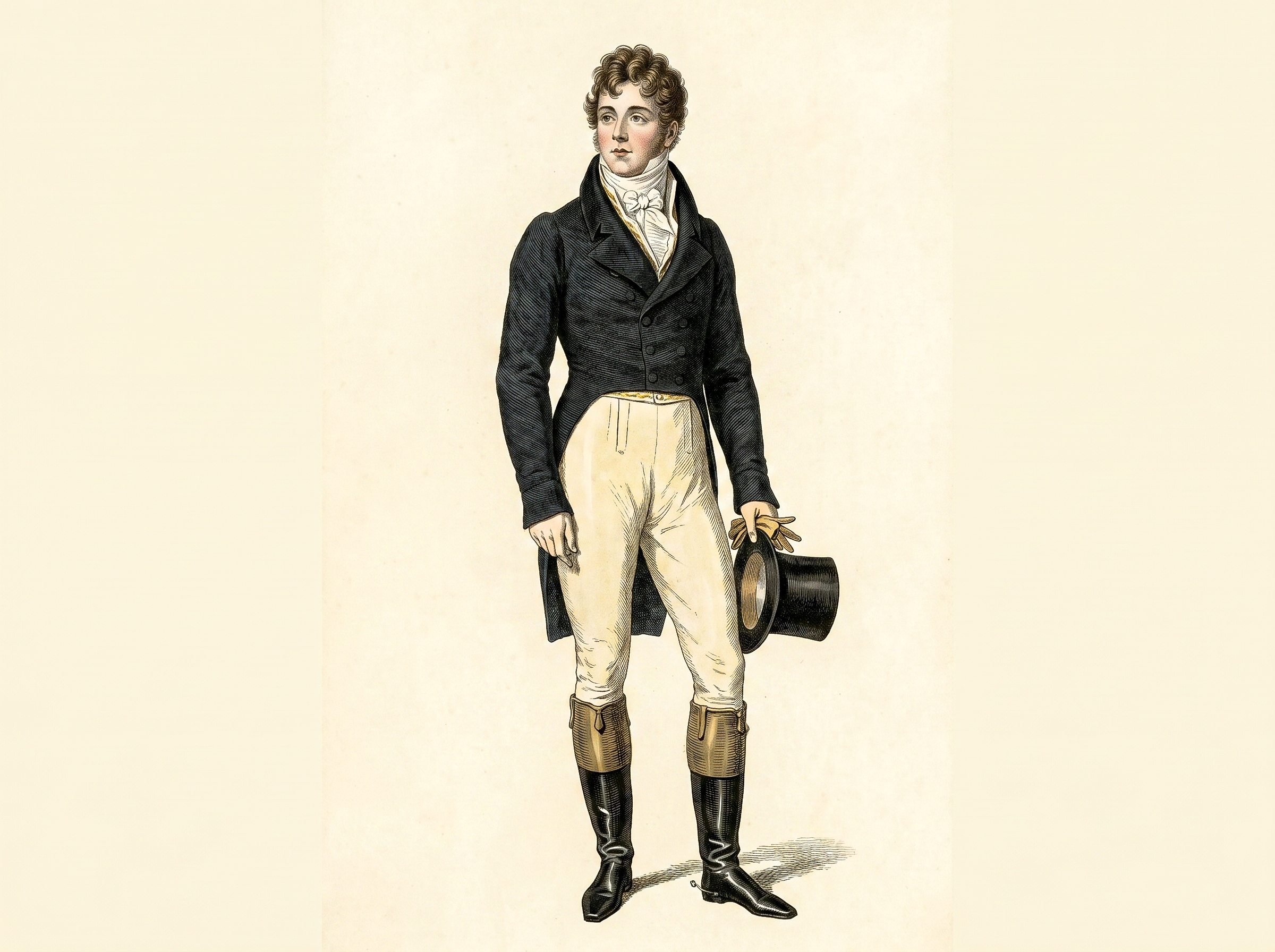
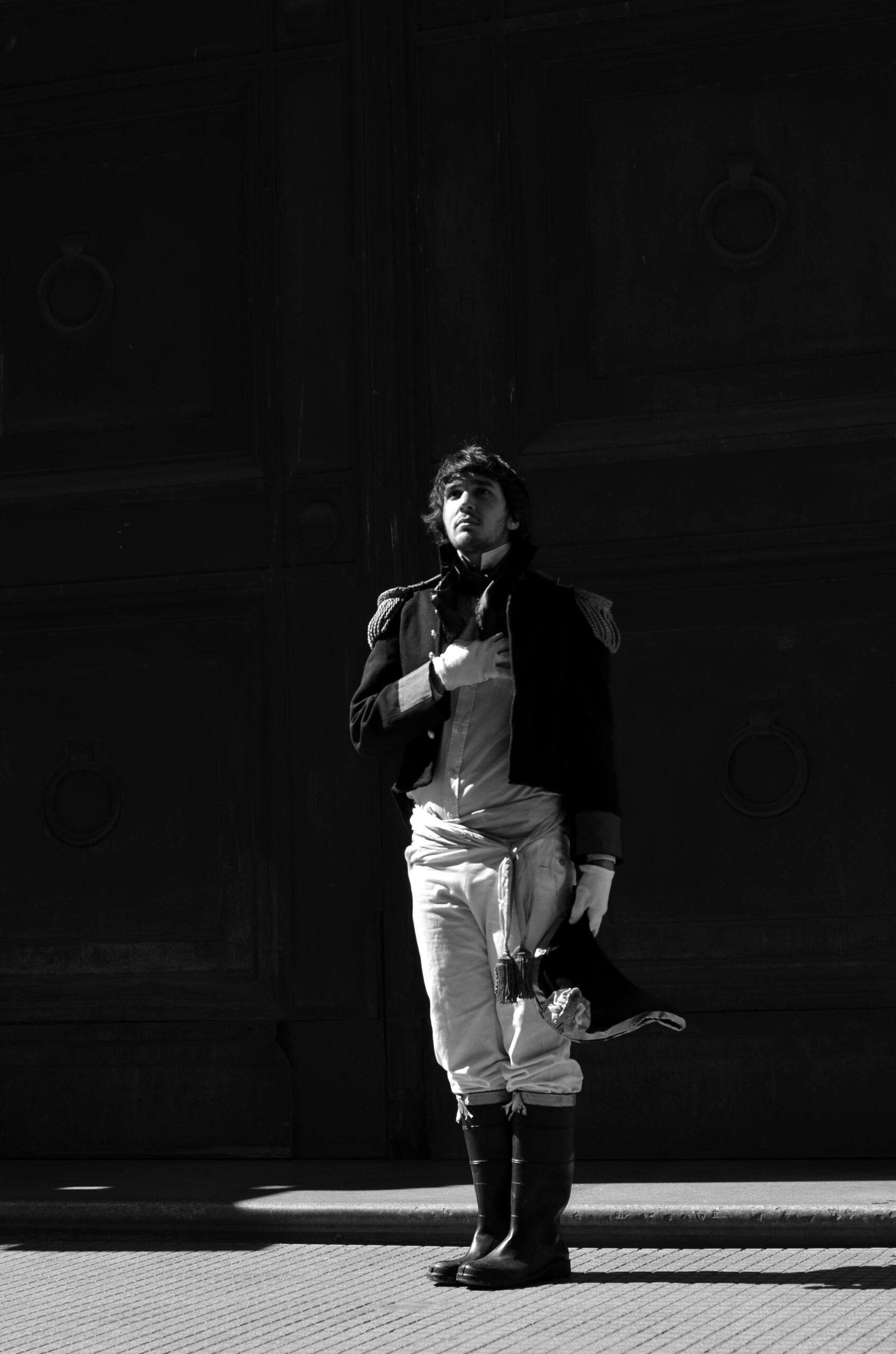
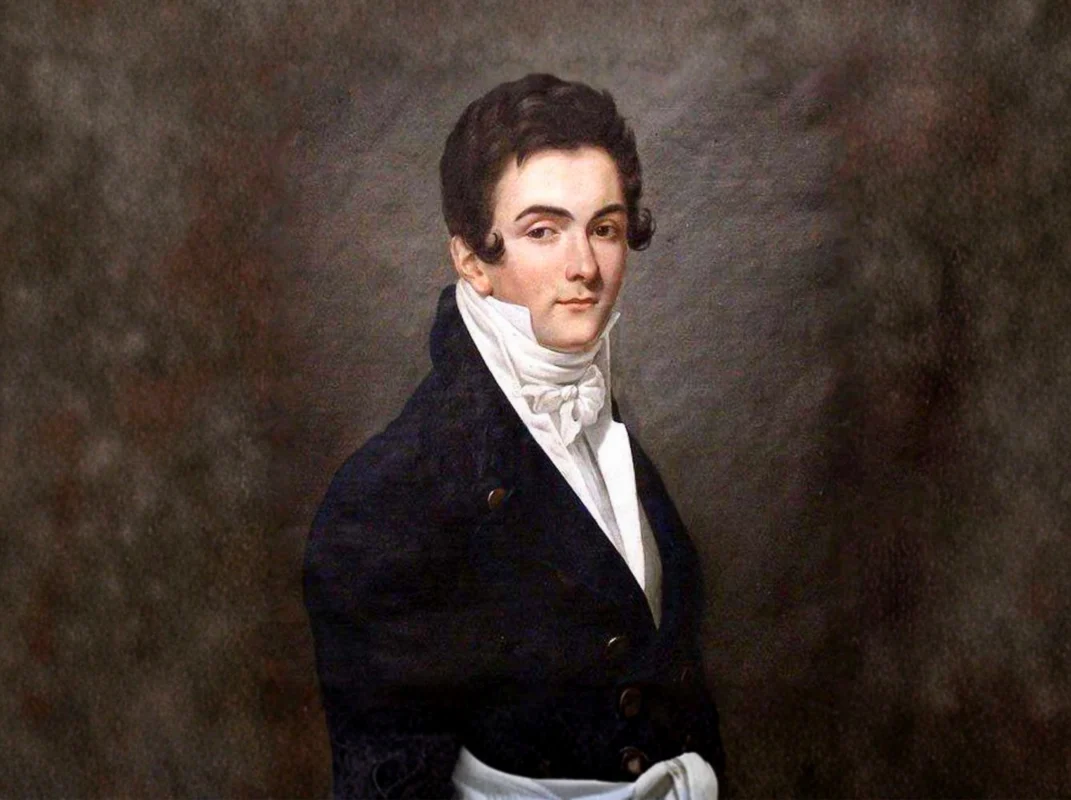
Brummell dispensed with almost all of it. His signature look which he refined with the obsessive attention of an artist consisted of a dark blue or black coat, cut close to the body and tailored with architectural exactitude; buff or pale yellow pantaloons that clung to the leg; highly polished Hessian boots; and, at the neck, a white linen cravat tied in an intricate knot that reportedly took him several hours each morning to achieve. There were no wigs, no powder, no perfume beyond the faintest soap. His hair was clean and naturally arranged. His linen was spotless.
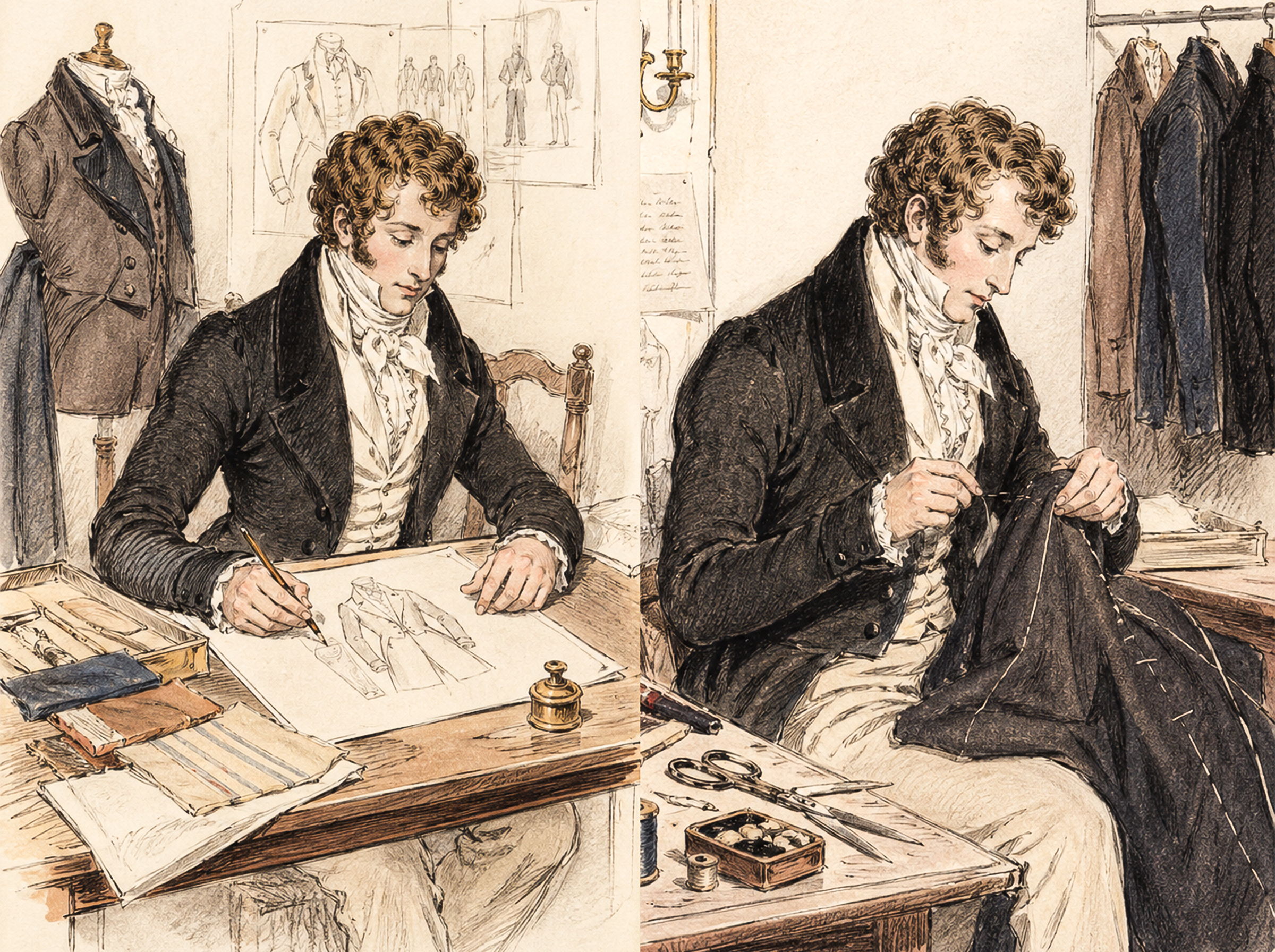
The genius of this aesthetic lay in its apparent effortlessness. Every element was calculated, but nothing was supposed to look calculated. Brummell understood, perhaps before anyone else, that true elegance is invisible: it is felt rather than seen, registered in the overall impression of a man rather than in any single dazzling detail. He insisted on bespoke tailoring, reportedly visiting his bootmaker, glovemaker, and tailor as separate appointments, each craftsman responsible for perfecting their single contribution. The fit of the garment was everything. The cloth had to move with the body, not against it.
This was, in its quiet way, a philosophical revolution. Brummell was democratising the idea of the well-dressed man not in terms of access, but in terms of aspiration. Any man, in theory, who could afford good cloth and a skilled tailor could dress as Brummell dressed. No title was required, no family crest, no inherited jewels. Elegance became a personal achievement rather than an accident of birth.
Impact on Modern Fashion
It is almost impossible to overstate how directly Brummell's choices echo through menswear today. The dark lounge suit the standard dress of business, formal dinners, and every significant occasion in the modern man's calendar is his direct descendant. The concept of grooming as a daily discipline, the importance of fit over ornamentation, the insistence on clean linen: these are all Brummellian principles, so thoroughly absorbed into our culture that we no longer recognise them as principles at all. They simply seem like common sense.
The fashion designer Ralph Lauren, among others, has spoken of Brummell as a foundational influence on the codes of classic menswear. The entire tradition of Savile Row tailoring that great British institution of bespoke suits, measured in millimetres and sewn by hand operates on premises that Brummell established. The emphasis on cloth quality, on construction, on the relationship between a garment and the body it clothes: these are his ideas, still alive in every fitting room on the Row.
Beyond the physical garments, Brummell contributed something subtler and perhaps more lasting: a model of masculine self-presentation based on intelligence and irony rather than brute wealth. He is, in many respects, the first modern dandy a figure who uses dress as a form of wit, a medium for self-expression, a way of engaging with the world on his own terms.
Personal Life and Downfall
The arc of Brummell's life was, in the end, a cautionary tale of spectacular proportions. He had no reliable income beyond his inheritance, and his lifestyle the club memberships, the tailoring bills, the gambling consumed money at a rate that no inheritance could sustain indefinitely. By the early 1810s, his finances were in serious disorder. His friendship with the Prince Regent, meanwhile, had curdled; the famous rupture came sometime around 1813, when Brummell reportedly addressed the Prince's companion with the words, “Who’s your fat friend?” a slight so devastating, delivered in so public a manner, that it could not be forgiven.
In 1816, with debts mounting and creditors circling, Brummell fled to Calais. He would never return to England. He spent the following two decades in France, first in Calais and later in Caen, where he served briefly as British Consul a position obtained through old connections, and lost again through neglect. His decline was slow and terrible. He grew eccentric, then confused, then destitute. In his final years, suffering from the effects of syphilis and general physical deterioration, he was cared for in the Bon Sauveur asylum in Caen, where he died in March 1840, aged sixty-one.
Legacy
The story of Beau Brummell did not end in that asylum room. It continued it continues still in every dark suit pressed for a business meeting, every shirt starched for a wedding, every man who stands before a mirror and gives serious thought to how he presents himself to the world. Brummell established the idea that how a man dresses is a matter of character as much as vanity; that attention to appearance is not frivolity but a form of respect for oneself, and for the people one encounters.
Historians of fashion from Elizabeth Langland to Ian Kelly, whose biography of Brummell remains the definitive account have consistently placed him at the pivot point between the ornate dress cultures of the eighteenth century and the streamlined, tailored aesthetic that defines menswear to this day. He was the hinge on which the door of modern men's fashion swung open.
What is perhaps most remarkable about Brummell is that his influence was achieved entirely through personal authority. He held no office, commanded no troops, published no manifesto. He simply appeared, each day, dressed with a perfection that made every other man in the room feel underdressed, and he made it look easy. That, ultimately, is the mark of a true original: not that he tried to change the world, but that the world changed because he was in it.